
GTA VI's Album Spins From Travis Scott to Michael McDonald at Hyperspeed
Rolling Stone calls the blockbuster game's genre-hopping soundtrack 'all over the place (in a good way)' - and the tracklist is a live test of whether a game can now launch music at global scale.
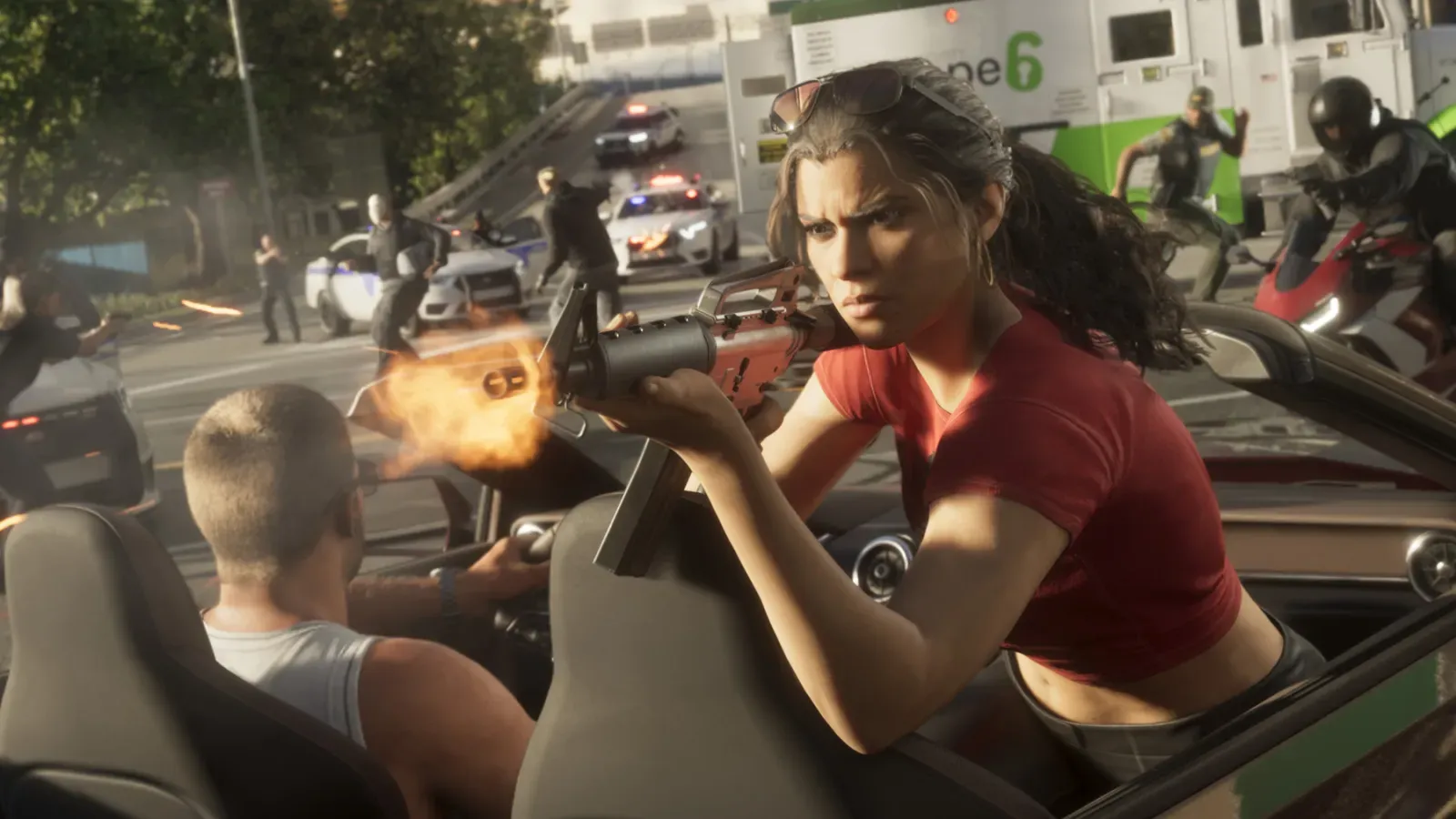
Grand Theft Auto VI's soundtrack, packaged as 'Grand Theft Auto VI: The Album,' stacks Travis Scott, Fuerza Regida and Michael McDonald on one tracklist, a lineup Rolling Stone calls 'all over the place (in a good way).' For labels, brands and marketers, the release confirms that a blockbuster game soundtrack now functions as a mass-reach, cross-genre distribution channel rather than a licensing afterthought.
The soundtrack to Grand Theft Auto VI, packaged as 'Grand Theft Auto VI: The Album,' puts Travis Scott, Fuerza Regida and Michael McDonald on the same tracklist. Rolling Stone's verdict is blunt and admiring: the record is 'all over the place (in a good way),' a soundtrack that plays 'like a radio dial spinning on hyperspeed.' Sit with that lineup for a moment. A Houston rap star who headlines stadiums, a regional Mexican group whose genre has moved from a regional circuit to global charts, and the voice behind some of the smoothest soft-rock hits of the 1980s do not share a lane by any conventional logic. That is the entire point.
The headline fact is simple. The album is not one sound, it is many, and whoever assembled it treated genre as a dial to spin rather than a lane to stay in. Grand Theft Auto has built its identity on that idea for most of its history. The franchise historically turned its in-game radio stations into a signature of the series, stacking licensed tracks across hip-hop, pop, Latin, rock and electronic channels so that players flipping stations mid-chase were also, without quite noticing, being introduced to music they would never have searched for. The album takes that logic out of the game and into the world.
Why does a tracklist matter to anyone outside music? Because a placement inside a title with the cultural reach of Grand Theft Auto is not a marketing line item, it is a distribution event. Sync licensing, the business of putting existing songs into games, film, ads and television, has historically been one of the quietest and most durable revenue streams in recorded music, and game placements sit at the high end of it. A single well-placed needle drop can push a decades-old catalog track back up the streaming charts, drive search traffic, and refill a touring pipeline. Michael McDonald's presence here is not nostalgia for its own sake. It is a bet that a global audience of players will hear a familiar voice in an unfamiliar context and go looking for it.
The genre-hopping also says something about who the audience is now. The audience for a blockbuster game is not a demographic, it is a crowd, spanning ages, languages and listening habits. Travis Scott brings a young, streaming-native following. Fuerza Regida brings a Spanish-language audience that has become one of the most valuable growth markets in music. Michael McDonald brings a generation that still buys tickets and still shows up. Curation that reaches all three is a deliberate reach play, and it only works because the modern listener's own library already looks like that dial. Genre mixing is not a risk with this audience. It is a mirror.
For labels, the implication is that a game soundtrack can now function as a release window rather than a promotional add-on. For artists, it is a discovery channel that pays in exposure and, eventually, in tickets. For brands and agencies watching from the sidelines, it is a reminder that the biggest youth-culture moments of the next cycle may not happen on a streaming service or a social feed. They may happen inside a world players live in for hundreds of hours. The companies that treat game worlds as media properties, with their own programming calendars and their own music supervisors, will get there first.
That shift is already visible in how game worlds are used. Publishers have spent recent years turning their titles into venues, hosting in-game concerts and events, and the record business has responded by treating those moments as release platforms rather than stunts. A soundtrack album attached to a blockbuster title is the same move in a slower, more durable form. It gives the music a life beyond the console: on streaming services, on playlists, and in the cultural conversation that surrounds a launch. For a legacy artist, that can mean a second act. For a newer one, it can mean a first global audience.
There is a real tension inside 'all over the place,' and it is worth naming. A tracklist that sprawls too wide can read as a focus group rather than a statement, and licensing a multi-genre, multi-rights catalog is expensive, slow and legally fiddly. Rolling Stone's parenthetical, 'in a good way,' is doing real work. It signals that the chaos is curated, that somebody made choices and defended them. That is the difference between a soundtrack that becomes a cultural reference point and one that becomes background noise.
The strategic takeaway for anyone with a brand, a catalog or a release calendar is that the wall between games, music and marketing has effectively come down, and the Grand Theft Auto VI album is what the other side of that wall looks like. Artists who say yes early, labels that build teams around game worlds, and marketers who stop treating playtime as somebody else's audience will capture the upside. Everyone else will be spinning the dial.
This story's Key Insights and Take-aways are locked.
Create a free account to unlock Executive Actions for one credit.
Register to UnlockAlways free for Executives Club members. Join the Club
More in Entertainment

GTA 6 banks $3.8bn in one day, torching every launch record
One game just out-earned every video game launch and every single-day film box office haul in history, and the fallout lands on every media CEO's forecast.

GTA VI Racked Up $3.79 Billion in a Single Day, Topping Every Film Ever
A 13-year wait produced a $3.79 billion day, more than any movie has made in its entire run, and it resets the launch math for every studio, streamer, and brand chasing the same attention.

GTA 6 sells 32.5M pre-sales and $3.79B day one, torches 13-year record
Rockstar's sequel didn't just beat Grand Theft Auto V's 13-year-old benchmark; it reset what a launch can be, with 32.5 million pre-sale copies and $3.79 billion in a single day.