
Harry Styles honors David Hockney as Wembley record run begins, with 12 shows
The Wembley residency kicks off June 12 with a tribute on the big screens and a plan to break the stadium record.
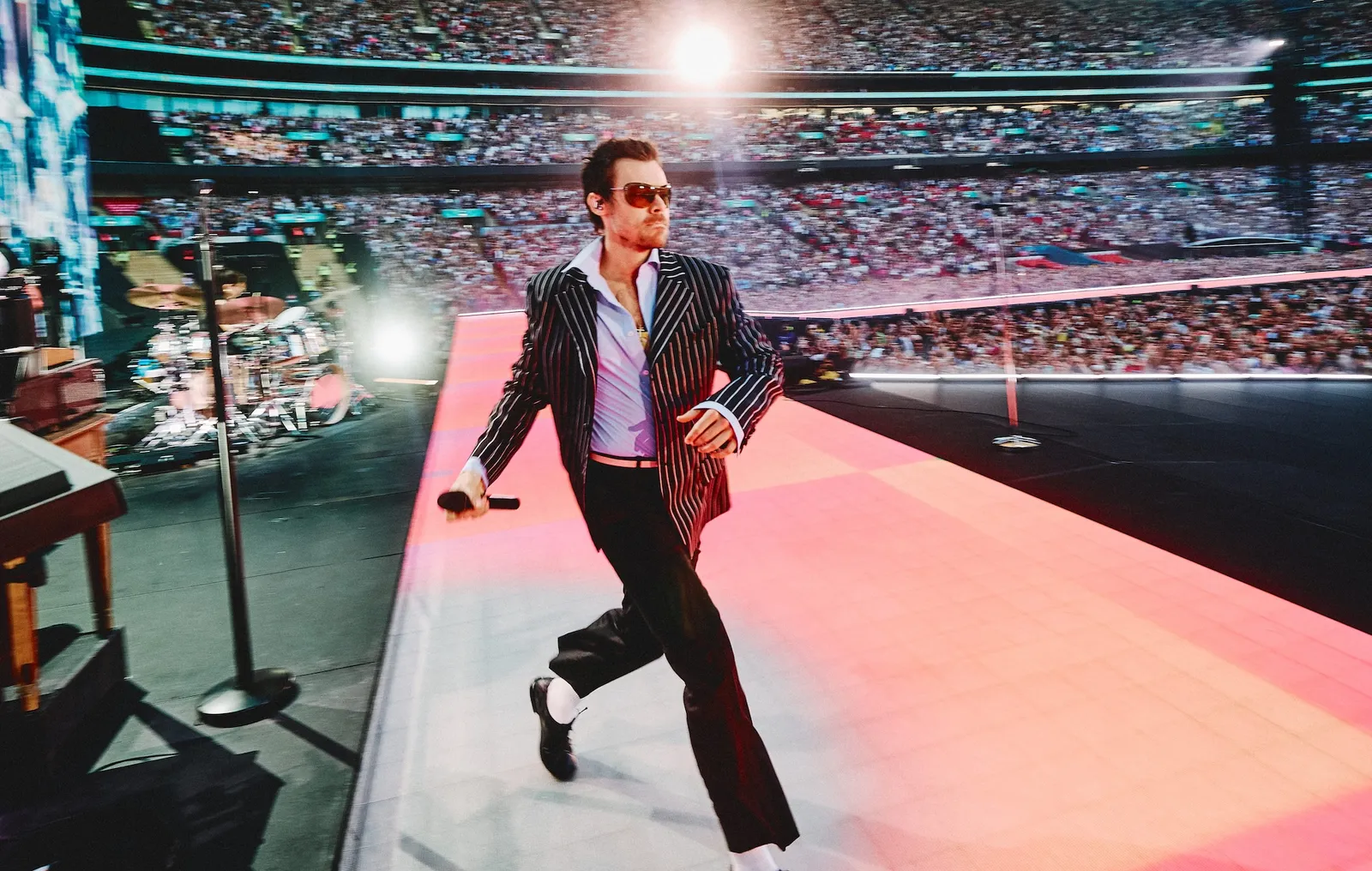
Harry Styles launched the first of 12 Wembley gigs on June 12, paying tribute to late painter David Hockney and reflecting on his One Direction days. For decision-makers, the rollout shows how live-entertainment stars blend brand partnerships, community funding, and fan-experience engineering at scale.
Harry Styles kicked off his record-breaking Wembley Stadium residency on June 12, opening the first of 12 gigs with a tribute to the late David Hockney. Hockney died on June 11 at age 88, and Styles honored him by displaying a quote from the painter on the big screens during his set: “What an artist is trying to do for people is bring them closer to something, because of course art is about sharing,” and “You wouldn’t be an artist unless you wanted to share an experience, a thought.” The show’s timing matters: this is not a generic “remembering a legend” moment. It lands immediately as the tour begins, turning the stadium from a venue into a cultural stage.
That cultural framing is tied to an on-the-ground business goal: Wembley’s record for the most shows at the venue in a single tour. Styles’ June 12 start marks the first of 12 gigs, which will see him break the record previously held by Coldplay, who delivered 10 gigs last year as part of their Music Of The Spheres tour. In other words, this is the rare pop event that behaves like a measurable operating campaign. It is also a demand-planning and capacity exercise, because each additional night increases staffing needs, logistics complexity, and operational risk. Styles is also running this residency right after the Together, Together tour began in Amsterdam in May, and the Wembley run is now the central anchor point in what will follow across São Paulo, Mexico City, New York, Melbourne, and Sydney.
The encore mechanics underline how carefully the fan experience is being managed night by night. The Together, Together setlist features a different surprise song each night at the start of the encore. On night one, Styles debuted “Little Freak,” taken from Harry’s House, for the first time since 2023. Even the earlier set contains “rework” behavior, where familiar songs get micro-interpolations from other artists: “Taste Back” is dedicated “to all the ravers in the house,” with a snippet of Underworld’s “Born Slippy” interpolated into it; “Treat People With Kindness” briefly introduces Talking Heads’ “This Must Be The Place”; and “Dance No More” pulls in the groove from Happy Mondays’ “Step On,” while Styles sang a snatch of Gorillaz’s “Clint Eastwood.” This is, practically speaking, how a touring artist extends shelf life. The audience gets the comfort of hits, plus the novelty of surprises.
And then there is the “brand in the building” layer. As Simon and Garfunkel’s “Bridge Over Troubled Water” played over the stadium PA, Styles moved through the venue to begin with “Are You Listening Yet?” From there, he explicitly set the emotional operating instructions for the crowd: “Our job tonight is to entertain you. Your job is to have as much fun as you possibly can.” He added that if fans want to sing or dance, they should feel free to be whoever they’ve always wanted to be that night, and that “We’ve got each other’s backs.” The business implication is simple: when the event is big enough, the artist becomes the front-end for a community contract. That contract is reinforced by guest support. The London leg includes Shania Twain, who delivered “a set of hits and new tracks from her upcoming album, ‘Little Miss Twain’.” In the source’s framing, this is not just star power. It is a scheduled audience expansion tool, with each city supported by a different artist, rather than a single fixed opener.
Styles also uses Wembley’s geography as part of the story economy. After “Keep Driving,” he reflected on the way the stadium connects to his and One Direction’s journeys. He said that just outside of the building is Wembley Arena, and that 16 years ago his sister brought him to London for his X Factor audition. He linked the driving route today to the original trip, then thanked his sister, Gemma, and described visiting the Natural History Museum and Big Ben during that earlier moment. The point is not nostalgia for its own sake. It is narrative consistency across a career arc, which matters because residency tours are long commitments for everyone involved, from promoters to local venue ecosystems.
There are also direct community funding mechanisms embedded in the run. The gigs will see Styles donate £1 from every ticket sold to LIVE’s levy to help protect UK grassroots music venues and support emerging talent. Before Styles’ headline performance, the big screens at the venue encouraged fans to support Music Venues Trust. For executives and boards in live music, these are the second-order signals: as audiences scrutinize ticketing and local impact, tours that attach measurable contributions to ticket flow can protect social license, reduce reputational risk, and strengthen relationships with venues that feed future talent pipelines. The donation structure is also operationally neat. It ties a simple per-ticket metric to a larger advocacy goal.
Finally, the residency sits inside a broader content and curation strategy. Styles’ London dates continue at Wembley Stadium tonight, with further dates on June 17, 19, 20, 23, 26, 27, 29 and July 1, 3, and 4. The tour is in support of his latest album, “Kiss All The Time. Disco Occasionally,” released in March. NME described the album as “an album that you’ll really want to spend a lot of time with,” and called it “the most exploratory album of his career so far,” noting it tries new things and steers his ship into new directions. Separately, Styles curated this year’s Meltdown Festival at the Southbank Centre, with a lineup including Stephen Fretwell, Nilüfer Yanya, Orlando Weeks, Bar Italia, Dev Hynes, Jon Hopkins, Getdown Services, LCD Soundsystem’s James Murphy, Soulwax, and more, plus an intimate gig from Styles himself. The festival kicked off June 11 with Warpaint performing their first show in nearly two years, including songs like “Love Is To Die,” “Billie Holiday,” and “Disco//Very,” plus a cover of Kate Bush’s “Running Up That Hill.”
For decision-makers watching from the sidelines, the headline lesson is that superstar touring is now part art, part operations, part community policy. Breaking a venue record is the visible outcome, but the underlying system is what matters: repeatable fan retention (surprise-song cadence), partnership leverage (different supporting artists by city), and measurable contribution mechanisms (LIVE’s levy and Music Venues Trust prompts). If you run production, invest in venues, or sit on a board that depends on live culture, this is the playbook being tested in real time, one Wembley night at a time.
This story's Key Insights and Take-aways are locked.
Create a free account to unlock Executive Actions for one credit.
Register to UnlockAlways free for Executives Club members. Join the Club
More in Business

SpaceX Nasdaq debut makes it the 6th most-valuable U.S. company at record scale
The IPO flips the usual tech script, putting a revenue-light rocket maker among megacap peers on day one.

SpaceX debuts Friday on Nasdaq at $135, surges to $160.95, valued near $1.8T
A Nasdaq opening pop turns SpaceX into a public company overnight, forcing new money questions fast.

Mena construction CPMI slips 12% in April 2026, but execution momentum rebounds to 1.01
GlobalData’s April CPMI shows resilience masking pre-execution caution, with conflict risk surfacing unevenly by country and sector.