
Hollywood still does not trust vanilla gen AI video models for real entertainment
Studios are seeing inconsistent results, and major AI partnerships are evaporating, forcing a rethink of how AI fits filmmaking.
The Verge reports that, despite hype about generative AI transforming filmmaking, major projects that feel like pay-to-watch entertainment are still rare. It also flags that AI video models often produce short, visually inconsistent footage and that some Hollywood AI partnerships have evaporated.
If generative AI is supposed to remake filmmaking, why does it still look like “short bursts of visually inconsistent footage” rather than a movie people actually want to pay for? That is the core tension The Verge highlights: the industry noise is loud, but the output that feels like finished entertainment is not there yet.
The Verge frames it as a credibility gap. Most AI firms' video models, even when they can generate striking images or moments, are still limited in a very practical way for production. They can churn out brief sequences, but those sequences can be visually inconsistent, which matters because film is not just about single shots. It is about continuity, character coherence, scene-to-scene logic, art direction that holds for an entire runtime, and a final product that audiences can follow without feeling like they are watching a machine improvise its way through reality.
And then there is the partnership angle, which is where the story gets even more pointed for decision-makers. The Verge notes that “some of Hollywood's biggest AI partnerships have suddenly evaporated,” and it suggests that studios might not be able to rely on new technology coming out of Silicon Valley. In other words, the risk is not only model quality. It is also ecosystem stability. When collaborations disappear, budgets get questioned, timelines slide, and internal stakeholders start treating AI experiments like prototypes that can disappear at the worst possible moment.
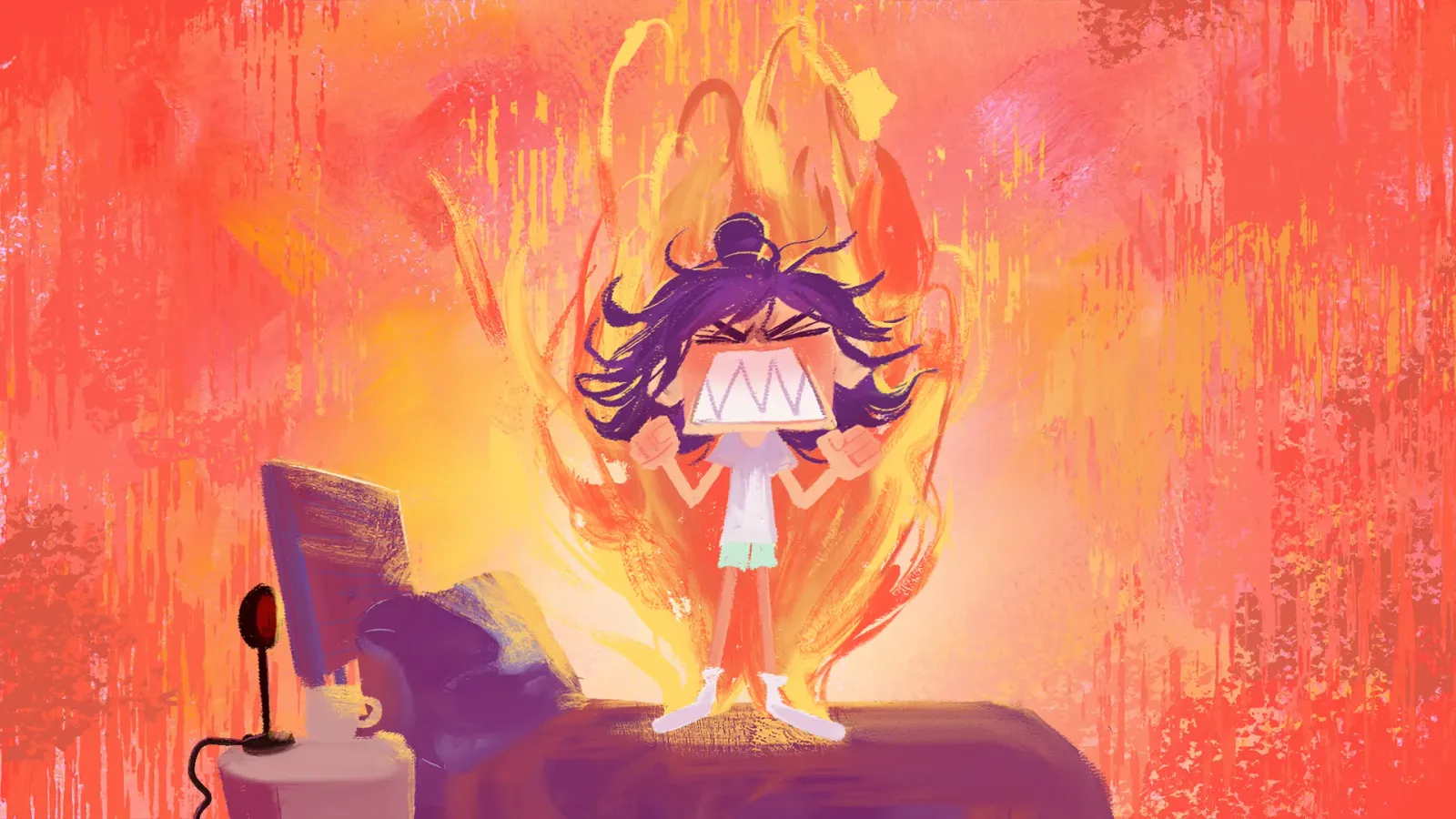
To understand why Hollywood is stuck, it helps to look at what people expected from the tech. For a while, the narrative has been that gen AI would take the creative process and accelerate it. Concept art became a proving ground, and The Verge includes an example of concept art from Dear Upstairs Neighbors. That concept art previously used custom builds of Google’s Veo and Imagen models. The signal here is important: customization and targeted model builds were a path to something more production-like than generic, off-the-shelf generators.
But the headline truth is not “AI is bad.” It is that feeding prompts into vanilla gen AI video models is not delivering the consistency and durability that film studios need. The Verge suggests the current reality is that most major production houses are limited to short-form “video slop” as the dominant use case. That phrase is editorial, but the meaning lines up with the technical constraint described in the article: short bursts can be visually compelling, yet they do not behave like a reliable sequence for storytelling.
This is where second-order effects start showing up in boardrooms and finance meetings. When AI capabilities are stuck at the “moment” level rather than the “project” level, AI becomes a demonstrator, not a production pipeline. That changes how money is allocated. Instead of funding AI as an end-to-end replacement or co-pilot for production, studios get pushed toward small pilots, controlled workflows, and vendor experiments. If those vendor partnerships then evaporate, the downside becomes very real: wasted integration effort, retraining costs for teams that built workflows around a vendor, and time lost before the next cycle.
There is also a regulatory and governance subtext, even when the article is mainly focused on technology and partnerships. Film and television sit inside a larger web of rights, licensing, and accountability expectations. When outputs are inconsistent and workflows depend on rapidly changing model partners, it becomes harder to standardize compliance and auditing practices. Decision-makers generally prefer systems they can explain, track, and reproduce. A system that works sometimes, then shifts, then breaks partnerships, forces legal and compliance teams to move faster than they like, and that rarely helps adoption.
So what is the strategic stake for executives in similar roles? It is the difference between “AI can generate content” and “AI can support a business.” The Verge’s framing implies that, for now, gen AI is not yet crossing the threshold from novelty to reliability. Studios and production houses can still experiment, but relying on vanilla gen AI video models for something audiences will pay for looks, at least today, like a bet that does not pay out in full. For anyone overseeing AI strategy, the question is not whether the tech is impressive. It is whether it is stable enough, consistent enough, and partner-dependent enough to build real entertainment on top of it.
This story's Key Insights and Take-aways are locked.
Create a free account to unlock Executive Actions for one credit.
Register to UnlockAlways free for Executives Club members. Join the Club
More in Technology

Nvidia's $89B data center quarter: the 9 companies cashing in
The AI buildout is minting fortunes beyond GPUs, and memory, cloud, and cooling suppliers are riding the same wave.

A YouTuber dissected the iPhone Duo and thinks he found crackgate's cause
CuriousHagi's teardown of Apple's foldable reveals a gear-like hinge that may explain why screens crack in the same spot within hours.

Google quietly links your phone number to every Android account on your SIM
Adding a SIM now ties your phone number to all Google accounts - and future accounts inherit it. Here's the security and privacy stakes.