

Hormuz oil shipments fall 15% as Iranian attacks escalate
A double-digit drop at the world's most important oil chokepoint is a logistics warning for every CFO with energy exposure, and the attacks driving it are still increasing.
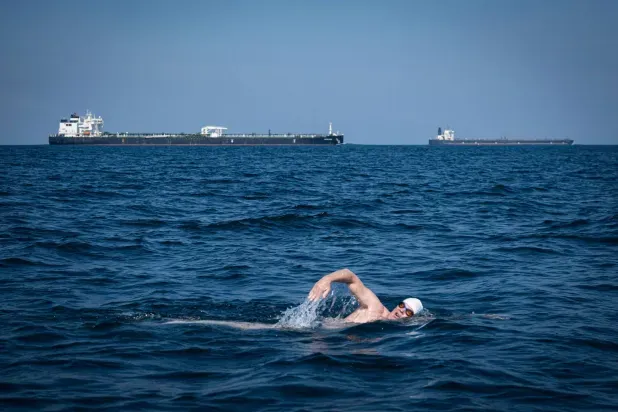
Oil shipped through the Strait of Hormuz has fallen 15% as Iranian attacks increase, according to Asharq Al-Awsat. For decision-makers the drop is less a price signal than a physical one: the world's busiest oil chokepoint is being repriced by risk, and the cost lands on freight, insurance, and eventually the delivered price of crude.
The volume of oil moving through the Strait of Hormuz is down 15%, and the reason is not demand. It is fear. Asharq Al-Awsat reports that oil shipped through the strait has fallen 15% as Iranian attacks increase, a decline that turns the world's single most important energy chokepoint into a live variable for anyone who buys, sells, moves, or prices crude. Hormuz is the narrow waterway connecting the Persian Gulf to the Gulf of Oman and then to the open ocean. Every barrel that leaves Saudi Arabia, Iraq, Kuwait, the United Arab Emirates, Qatar, and Iran by sea typically passes through it. When that flow drops by double digits, the shock does not stay in the Gulf.
Start with what a 15% decline actually is. It is not a rounding error or a seasonal dip. It is a measurable share of global seaborne crude and refined products choosing, or being forced, to stay put. Shipowners do not idle tankers for fun; they do it when the risk to a hull, a crew, or a cargo is judged too high relative to the freight on offer. Iranian attacks increase that judgment. The result is a chokepoint that is still open on paper but narrower in practice, and markets price that difference long before a single tanker turns around.
Hormuz has no real substitute. The pipelines that bypass it, running across Saudi Arabia to the Red Sea and across the UAE to the Gulf of Oman, historically carry only a fraction of normal Gulf exports, and they are not sitting idle waiting for a crisis. That asymmetry is the entire point of a chokepoint: geography hands a small number of actors leverage over a very large volume of trade. It is why the strait has been a fixture of military planning for decades, and why naval escorts, freedom-of-navigation patrols, and coalition statements tend to follow any uptick in attacks.
The first place the 15% shows up is insurance. War-risk premiums for vessels transiting the region are typically quoted voyage by voyage, and they move fast when underwriters reassess a route. A higher premium raises the cost of every cargo, which raises the freight rate, which raises the delivered price of crude for the refiner at the other end. Crews and charterers add their own friction: some operators will simply decline the voyage, and a declined voyage looks exactly like a lost barrel in the trade data. That is how an attack far from any refinery becomes a line item on a corporate budget.
Asia is where the pain lands first. The largest buyers of Gulf crude have historically been refiners in China, India, Japan, and South Korea, economies that import the bulk of what they burn. Qatar's liquefied natural gas, which also exits through Hormuz, adds a second exposure that has nothing to do with crude oil and everything to do with power generation and heating. A sustained 15% reduction in flows through the strait is therefore not one market's problem. It is a supply-chain problem with several front doors.
Markets usually transmit chokepoint risk in a predictable sequence. First, headline crude benchmarks react to the news. Then freight and insurance costs adjust. Then physical cargoes get rerouted, delayed, or cancelled, and only then do inventories at refineries start to draw down. The 15% figure reported by Asharq Al-Awsat sits at the physical end of that chain, which makes it more informative than a price tick. Prices can spike and fade on a single headline. A double-digit fall in actual shipments is harder to reverse, because it reflects decisions already made by the people who own and operate the ships.
What would reverse it? A credible de-escalation in the attacks, a visible naval presence that underwriters believe in, or a price high enough that the risk premium becomes worth absorbing. None of those is guaranteed, and each takes time. The number to watch is not whether Hormuz stays open, because it almost certainly will. The number to watch is whether the 15% becomes a floor, a temporary dip, or the start of a longer rerouting pattern. Those three outcomes imply very different costs for the global economy.
For executives, the practical lesson is that chokepoint risk is a scenario, not a headline. Companies with energy exposure should already be stress-testing procurement against a sustained disruption, checking hedge coverage, and mapping which of their suppliers sit behind the strait. Boards should ask a blunt question: if Hormuz flows stay 15% below normal for a quarter, what breaks first in our cost structure? The answer is usually freight, then input costs, then margin. The attacks are increasing. The 15% is the market's first honest answer about what that means.
This story's Key Insights and Take-aways are locked.
Create a free account to unlock Executive Actions for one credit.
Register to UnlockAlways free for Executives Club members. Join the Club
More in Business

Anthropic's record IPO lands a day before Nvidia's longest losing streak since 2008
Anthropic's record Nasdaq debut and Nvidia's longest weekly losing streak since 2008 landed within 24 hours of each other, and the contrast shows how fast the market is re-pricing the AI trade.
New World's HK$24.9B rights issue triggers 41% plunge as HK$50B debt target looms
New World Development has three levers left to erase up to HK$50 billion in borrowings by 2031, and shareholders just told the market what they think of the first one.
Chip supply chain warns new US export controls will spread beyond the target list
Suppliers, distributors and equipment makers say the latest US restrictions will not stay contained to the firms named on paper, putting orders, inventory and delivery timelines at risk across the global chip chain.