
House bill aims to standardize how stores give cash change
A new House-passed bill could force consistency in cash transactions, reducing confusion for customers and businesses.
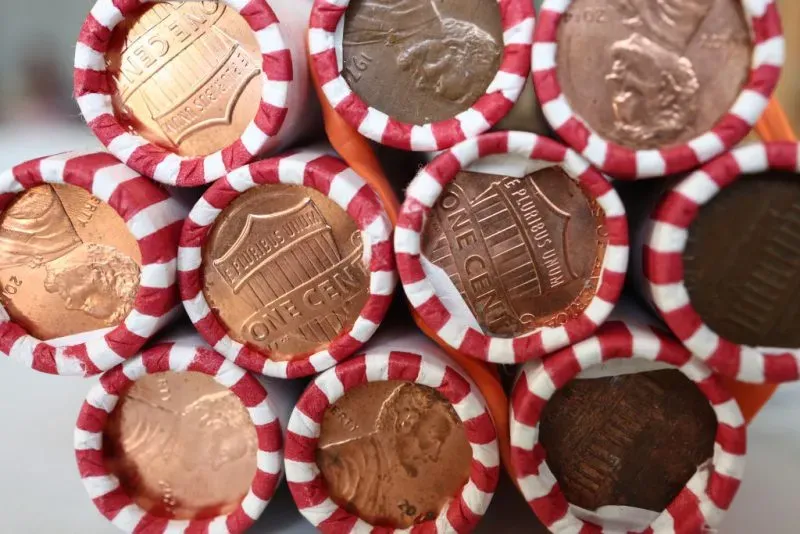
Businesses currently handle cash change inconsistently, and that mismatch is getting attention from lawmakers. A House bill passed this month could standardize those practices and make cash checkout less confusing.
Paying cash and getting change is one of those everyday frictions most people stop noticing until they experience it: some stores hand back coins, some round differently, and some make it feel optional even when it is not. The kicker is that the confusion does not come from customers being “bad at money.” It comes from businesses taking different approaches on how they return change in cash transactions. That inconsistency is exactly what a bill that passed the House this month is aiming to improve.
The headline stakes are simple: when you hand cash over the counter, you should be able to expect a clear, consistent way it comes back. The bill’s purpose, as reported, is to improve how businesses give back change on cash transactions. In other words, it targets the mismatch itself, not the customer’s math skills. If that bill advances, it could reshape the checkout experience for retailers and other cash-handling businesses, while also reducing the day-to-day “wait, so what do I owe?” moment that pops up when policies vary by store, location, or operator.
To understand why this matters beyond consumer annoyance, you have to look at how cash interacts with operations. Cash transactions are operationally expensive compared to card or digital payments because staff must handle physical money, count it, reconcile it, and then manage shortages, errors, and the downstream effects. When change-giving practices are inconsistent, training and auditing get harder. The first-order problem is customer confusion. The second-order problem is that inconsistent practices can multiply disputes, refunds, and lost goodwill, even if each incident is small.
There is also a compliance angle. Retailers and small businesses operate inside a web of rules and expectations that can vary depending on jurisdiction and payment handling policies. Even when the legal landscape does not perfectly dictate “the only correct approach,” operational policies can still drift. One store may emphasize returning specific denominations; another may prioritize minimizing coins; another may adopt a rounding habit. Over time, those micro-decisions become customer-facing behavior, and that behavior becomes part of the brand experience. A bill focused on standardization, especially one that has already passed the House, signals that policymakers see inconsistency as a systemic issue, not just a series of harmless local preferences.
It is worth noting that “improve the situation” can mean different things in public policy, but the direction is clear from the framing in this report: businesses have taken different approaches in giving back change, and the proposed fix is meant to make it better. For decision-makers, that means planning for change in how cash registers close out and how staff are instructed. If a bill becomes law, retailers would likely need to update procedures, retrain employees, and possibly revise point-of-sale settings and cash handling workflows. Even if implementation is staged, the operational lift can show up immediately in training materials, shift handoffs, and internal audit checklists.
There is also a competitive dimension. Consistency can become a quiet advantage. Customers tolerate inconvenience until it becomes frequent. If one chain creates fewer “change confusion” moments than another, it can tilt perceptions even among busy shoppers who do not track policy details. Boards and executives tend to think in risk and brand terms, and inconsistent cash handling can create reputational drag, particularly when disputes become visible online or at the local level.
Finally, the reason executives should care even if they are not a cash-heavy business is that cash policy rarely stays only in cash. Standardization efforts often set expectations for payment UX, training, and how retailers handle edge cases. Companies that operate across channels typically try to keep customer experiences uniform. If cash becomes more standardized, that becomes another anchor point for customers to compare experiences across stores, franchises, and regions.
A House-passed bill that could standardize how businesses give back change in cash transactions is the kind of mundane-sounding development that can matter in aggregate. It can reduce friction, reduce disputes, and lower operational uncertainty. And for executives watching regulatory signals, it is a reminder that small checkout mechanics can turn into policy priorities once lawmakers decide inconsistency has gone from annoying to unacceptable.
This story's Key Insights and Take-aways are locked.
Create a free account to unlock Executive Actions for one credit.
Register to UnlockAlways free for Executives Club members. Join the Club
More in Politics
LA County: DOJ's 20,000 'noncitizen' voter list is 'unreliable,' includes U.S.-born
Preliminary review by Los Angeles County election officials finds errors in the federal list, raising the stakes for voter roll integrity ahead of November.

Trump's $1.5B Pentagon chip investment lands in North Carolina
A $1.5 billion defense infusion for North Carolina chipmaking signals a new era of Pentagon-backed reshoring - here's what it means for the industry.

Nigeria confirms first Ebola case in Abuja, a woman just off a Uganda flight
Health Minister Muhammad Ali Pate says the patient flew in from Uganda, putting Africa's latest outbreak on Nigeria's doorstep.