
House bill could standardize cash change rules, ending store-by-store “make it up” behavior
A bill passed by the House this month aims to reduce confusion by clarifying how businesses return change on cash payments.
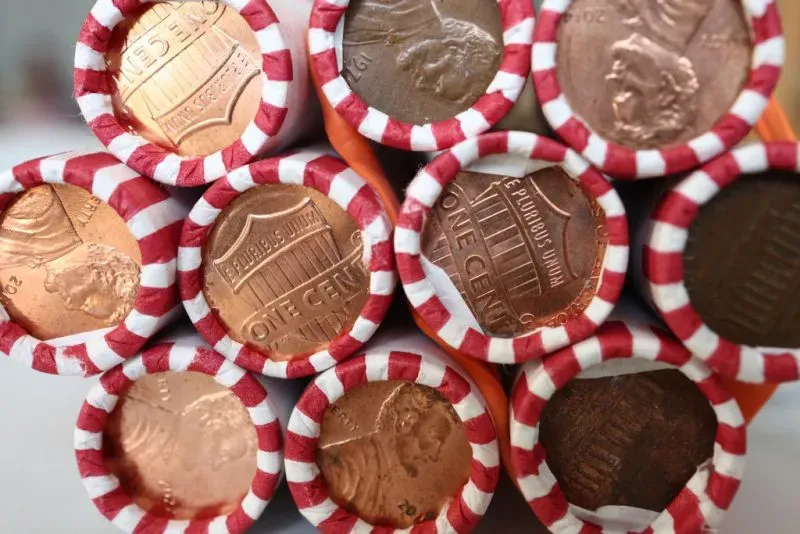
A bill that passed the House this month would address inconsistent approaches to giving back change in cash transactions. For decision-makers, clearer rules could mean fewer customer complaints, less operational friction, and more predictable compliance.
If you run a retail operation, you have probably seen it: the exact same cash purchase at two different stores, and two different change experiences. Sometimes it is straightforward. Sometimes it feels like the cashier is improvising. Businesses have taken different approaches to returning change on cash transactions, and customers notice. They do not always know the policy, but they do feel the inconsistency.
Now, a bill that passed the House this month could change that. The core idea is simple: stop the system from relying on store-by-store guesswork and make the “giving back change” part of cash payments less confusing. When lawmakers try to fix a small detail like this, the stakes are usually bigger than they look. Because in payments, small friction compounds across millions of transactions, and confusion turns into customer dissatisfaction, training overhead, and avoidable disputes.
To understand why a change-making rule can matter, you have to zoom out to how cash still works in the real economy. Cash is not uniform. It varies by store format, staffing model, geography, and customer demographics. But the operational problem is consistent: when a purchase total does not land cleanly on the bills a customer hands over, the business has to decide how to return the difference. Some businesses return exact change. Others handle rounding in ways that make the drawer easier to manage. Some rely on internal training and local practice. Even when every decision is “reasonable” on its own, the customer sees only outcomes. And outcomes that differ between competitors create a trust gap that is hard to patch with a customer-service script.
That is the backdrop for the bill’s potential impact. It passed the House this month, which matters because it signals that the legislative conversation is not just academic. It suggests lawmakers think the current patchwork is worth standardizing, even if the policy change targets a very specific moment in the transaction. For boards and executives, that distinction is important. Standardization often looks boring, but it can reduce the cost of compliance and training. It can also reduce the risk of inconsistent application across locations, which is a classic operational headache for multi-store operators.
There is also a compliance angle. Payments rules are a regulatory magnet. While the source here only states that the bill passed the House this month and is intended to improve how businesses give back change on cash transactions, the general pattern in regulation is that lawmakers step in when private actors converge on multiple “reasonable” solutions that collectively create a messy public experience. When rules are unclear, companies fill the gap with their own processes. Those processes can drift over time as managers change, training programs update, and store-level practices evolve. A new standard, if enacted, can become a benchmark that forces consistency.
So why does this matter now, not later? Because operational friction is not free. Every time a cashier has to interpret how to handle a cash amount, you are spending labor time on judgment calls. When a customer asks why they received a certain amount of change, you are spending goodwill. And when a mismatch turns into a complaint, it becomes time spent on support tickets and store investigations. Executives tend to underestimate how much “small transaction” inefficiencies can add up, especially across high-frequency retail categories.
Second-order implications for decision-makers go beyond cashiers. Standardization can affect how teams set up tills and cash management routines. It can also influence how companies design training, store signage, and customer communications. If your company has different regional practices today, you might eventually have to align them to the new legal or regulatory framework. That can be a project, even when the rule itself seems straightforward.
For peers facing similar situations, the strategic stake is clear: if the rules move toward consistency, companies that have already standardized internally may adapt faster, with fewer disruptions. Others could face a rework cycle for training materials, point-of-sale workflows, and store-level compliance. And even if the bill does not immediately change every detail of day-to-day operations, the fact that the House passed it this month is a signal that the policy direction is now more concrete than it was.
In short, the confusion around “paying cash without pennies” is not just an annoyance. It is a structural inconsistency in how businesses handle cash change, and a House-passed bill this month points to a push for a clearer, more uniform approach. For executives, the lesson is to watch these seemingly small payment-rule changes closely, because they can quietly reshape operations at scale.
This story's Key Insights and Take-aways are locked.
Create a free account to unlock Executive Actions for one credit.
Register to UnlockAlways free for Executives Club members. Join the Club
More in Politics

LA County: DOJ's 20,000 'noncitizen' voter list is 'unreliable,' includes U.S.-born
Preliminary review by Los Angeles County election officials finds errors in the federal list, raising the stakes for voter roll integrity ahead of November.

Trump's $1.5B Pentagon chip investment lands in North Carolina
A $1.5 billion defense infusion for North Carolina chipmaking signals a new era of Pentagon-backed reshoring - here's what it means for the industry.

Nigeria confirms first Ebola case in Abuja, a woman just off a Uganda flight
Health Minister Muhammad Ali Pate says the patient flew in from Uganda, putting Africa's latest outbreak on Nigeria's doorstep.