
House extends government funding to dodge a third shutdown; Senate fate remains unclear
A stopgap bill heads to the Senate as lawmakers try to prevent another interruption before the next election-year crunch.
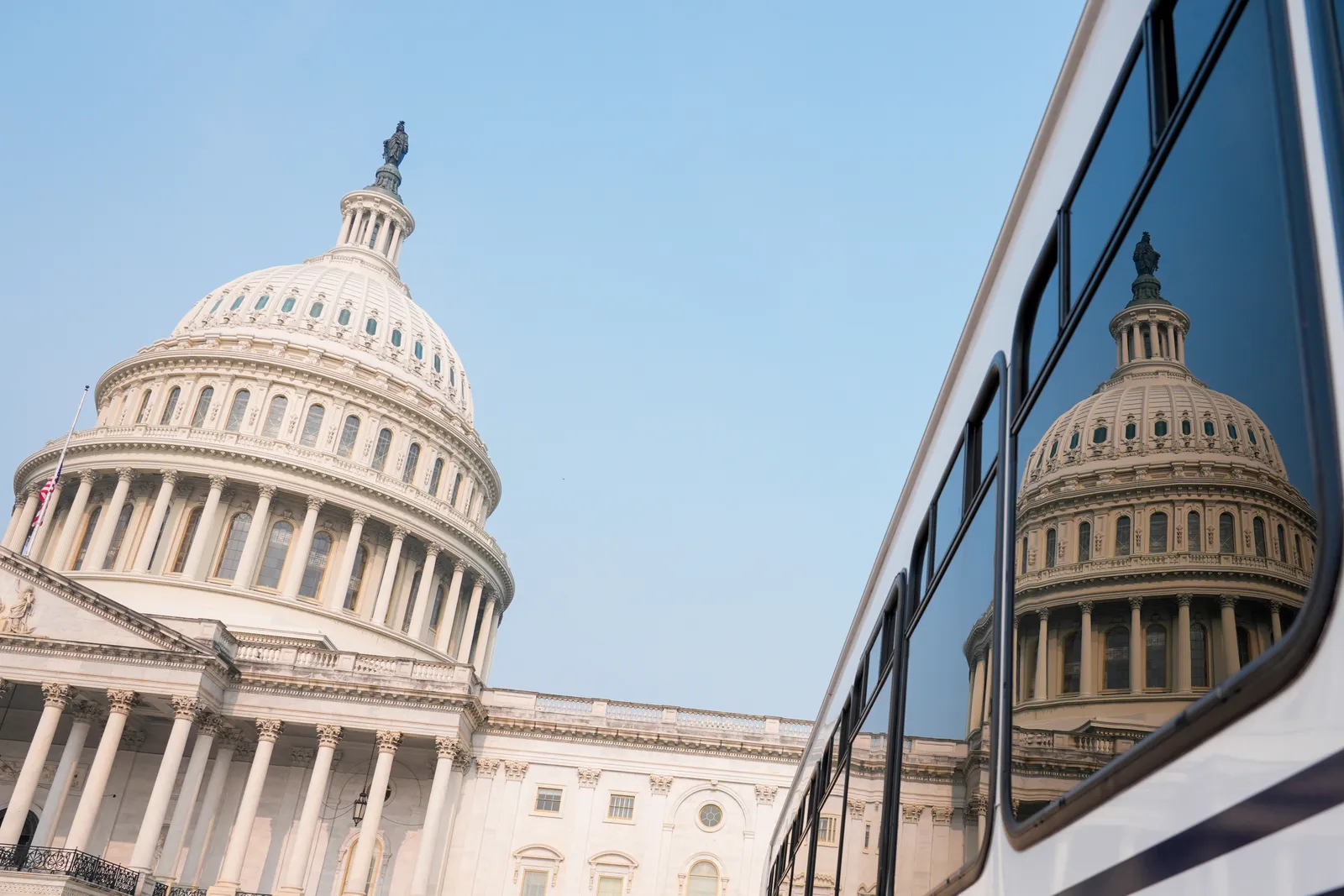
The House voted to extend government funding via a stopgap measure aimed at avoiding a third shutdown since last September. The bill now heads to the Senate, where its future is uncertain, putting pressure on decision-makers to plan around operational and political risk.
House lawmakers are trying to dodge a third government shutdown since last September. The move is not a sprawling rewrite of federal policy. It is the political equivalent of tightening the bolts while the machine is already vibrating: a stopgap funding measure that buys time.
Here is what matters right now. After the House action, the stopgap funding measure heads to the Senate, where it faces an uncertain future. That word, uncertain, is doing a lot of work. Government shutdown risk is not just a headline for DC insiders. It ripples outward into agency operations, vendor contracts, and the planning cycles that rely on predictable appropriations.
To understand why this kind of vote matters more than the text of the measure itself, you have to look at how Washington funding typically works. The federal government runs on budget timelines and appropriations that do not always align neatly with election calendars or the pace of negotiations. When lawmakers fail to pass new funding on time, the government can be forced to slow down or stop certain operations. That is the core mechanics behind the shutdown threat, and it is why lawmakers treat “extend funding” as an urgent, time-sensitive act rather than a routine legislative checkbox.
This is also why decision-makers outside government watch these votes like they are risk events. In practice, a shutdown can create cascading problems: delayed services, disrupted administrative work, furloughs, and uncertain timing for contracts and payments. Even when agencies are able to maintain some functions, the overall friction can force counterparties to reset expectations. Procurement schedules slip. Compliance timelines shift. Planning assumptions go stale. Executives do not need a political briefing to feel those impacts. They feel them through the government as a customer, as a regulator, or as the backbone of critical systems.
Now stack that against the specific political backdrop mentioned in the source: lawmakers are hoping to avoid a third shutdown since last September. That detail is a signal. Two shutdowns already happened during the current cycle. Each one raises the cost of failure, even if the political incentives never line up perfectly for the people in charge. For leaders trying to govern, repeating the same outcome becomes harder to justify operationally. For lawmakers who want leverage, repeated brinkmanship can become a bargaining tactic. Both pressures exist at the same time, which is exactly why stopgaps can become the dominant instrument in the later innings of negotiations.
The House vote is only step one. The bill now heads to the Senate, and the source is clear that its future is uncertain. That uncertainty is not abstract. The Senate is where different dynamics can slow down or complicate movement, including the ability of different factions to demand changes, the procedural realities that affect how quickly a measure can be brought forward, and the need to align votes across a narrower set of decision-makers than in the House.
For executives and boards, the second-order implication is simple: “funding extension” is not the same thing as “certainty.” You can still end up with gaps in operational planning if timelines in the Senate slip or if negotiations unravel. Even if the end state is ultimately favorable, the path can be rough, and the roughness matters for anyone managing risk exposure to the federal sector. That includes companies that depend on government contracts, financial institutions that interact with federally backed programs, and organizations that rely on agency rulemaking or enforcement schedules.
There is also a strategic layer inside government. When lawmakers reach for a stopgap, they are implicitly acknowledging that bigger negotiations are not ready to be finalized. That means the stopgap becomes a holding pattern, not a finish line. It can reduce immediate shutdown risk while pushing the harder decisions into a later window, which could be shaped by other political priorities, court timelines, or the next legislative deadlines. The source frames the goal as avoiding a third shutdown, and that goal itself is the tell: the political system is still operating under pressure.
So the stakes for decision-makers in similar roles are about timing and contingency planning. If you are managing teams that interface with federal agencies, your planning assumption should be that stopgaps buy time, not calm. The House has acted. The Senate is the gate that determines whether that time becomes stability or another episode of operational disruption. In other words, the bill’s journey is the risk, and the uncertainty is the event you have to plan around.
This story's Key Insights and Take-aways are locked.
Create a free account to unlock Executive Actions for one credit.
Register to UnlockAlways free for Executives Club members. Join the Club
More in Politics

LA County: DOJ's 20,000 'noncitizen' voter list is 'unreliable,' includes U.S.-born
Preliminary review by Los Angeles County election officials finds errors in the federal list, raising the stakes for voter roll integrity ahead of November.

Trump's $1.5B Pentagon chip investment lands in North Carolina
A $1.5 billion defense infusion for North Carolina chipmaking signals a new era of Pentagon-backed reshoring - here's what it means for the industry.

Nigeria confirms first Ebola case in Abuja, a woman just off a Uganda flight
Health Minister Muhammad Ali Pate says the patient flew in from Uganda, putting Africa's latest outbreak on Nigeria's doorstep.