
Hunger Games prequel hauls $120M+ as Lionsgate revives its biggest franchise
Sunrise on the Reaping notched the fourth-best opening Friday in the six-film series, a rebound Lionsgate badly needed after 2023's Ballad of Songbirds & Snakes.
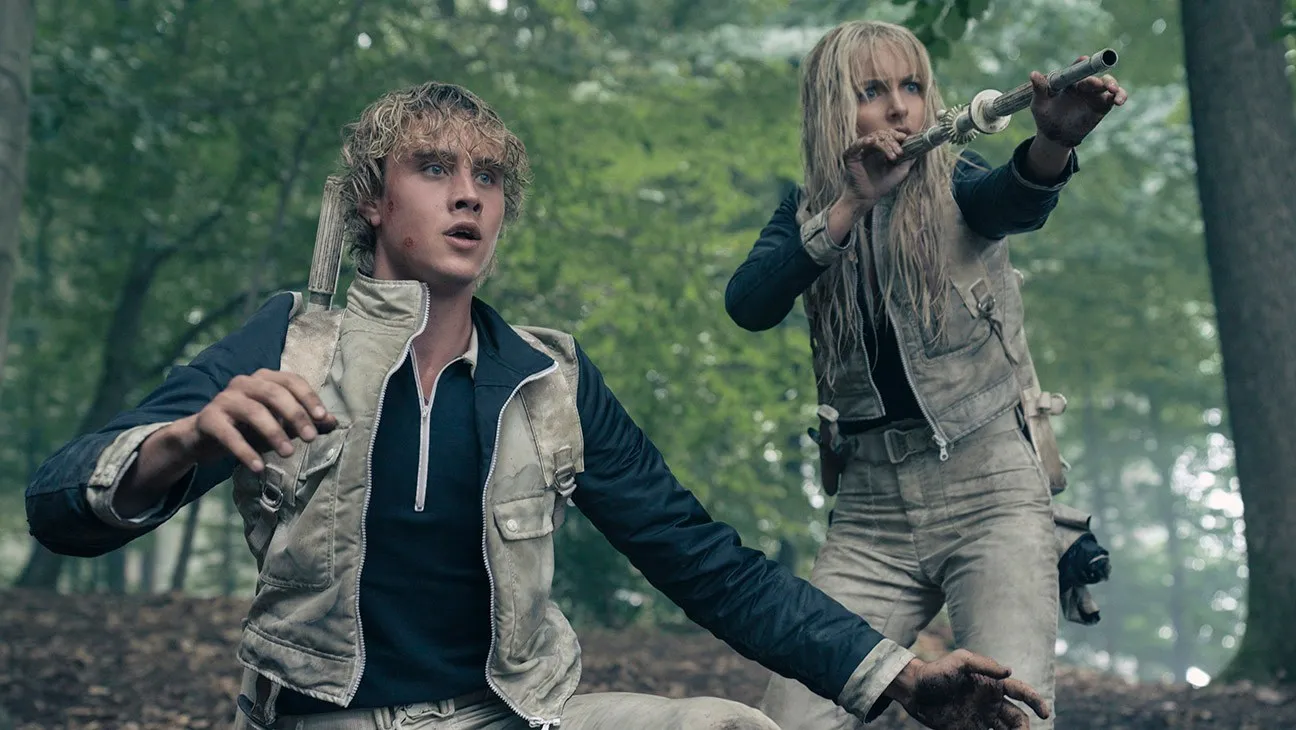
Lionsgate's The Hunger Games: Sunrise on the Reaping is feasting on $120M+ at the box office, landing the fourth-best opening Friday in the six-film dystopian series, per The Hollywood Reporter. For a mid-size studio with a thin tentpole bench, the result reframes a franchise that 2023's The Ballad of Songbirds & Snakes had left looking commercially spent.
Lionsgate's The Hunger Games: Sunrise on the Reaping is feasting on $120M+ at the box office, and it notched the fourth-best opening Friday in the six-film dystopian series. That is the number The Hollywood Reporter is putting on the table, and it lands as a reversal rather than a routine win. The franchise's previous entry, 2023's The Ballad of Songbirds & Snakes, had been read as evidence that the series' commercial peak was behind it. Fourth-best out of six can sound like a consolation prize until you look at what it is being measured against: a run that helped define a decade of young-adult blockbusters, and a studio that needed one of them to land again.
The revival framing is the real story. A franchise widely filed away as a relic of the 2010s just proved it can still pull a nine-figure haul, and it did it with a prequel rather than a straight sequel to the films audiences already knew. That distinction is the part other studios will study. Sequels sell familiarity; prequels sell curiosity, and they carry a lower casting bill because they do not require the original stars. Historically, the trade-off has been box office gravity: prequels and spinoffs typically open below the peak entries of a series, which is exactly why a fourth-best Friday in a six-film run reads as a win rather than a shortfall. The bar was reset by the 2023 film, and Sunrise on the Reaping cleared it.
For Lionsgate specifically, the stakes are structural. The studio has historically operated with a thinner tentpole slate than the major Hollywood players, leaning on its library and a small number of franchises to generate the theatrical events that drive downstream licensing, home entertainment and streaming deals. That model lives or dies on whether the franchises still work. A dormant property that suddenly produces a $120M+ opening is not just a good weekend; it is a signal to exhibitors, to retail partners and to the talent agencies that the studio still has a live, bankable brand in the vault. In a market where mid-size studios are perpetually asked why they do not simply sell or shrink, a working franchise is the answer.
The creative mechanics are worth understanding, because they are repeatable. Sunrise on the Reaping extends the prequel strategy Lionsgate used with The Ballad of Songbirds & Snakes, both drawn from Suzanne Collins' later novels set in the same dystopian world. That gives the studio something most franchise owners lack: a source author still actively writing in the universe, which means a pipeline of new material rather than a reboot of old material. Adapting a book that already has a built-in readership also de-risks the marketing spend, because the audience arrives pre-educated on the premise. For context, that is the same logic that has kept other young-adult and fantasy properties alive long past their original trilogies.
The broader market read is a counterweight to the loudest narrative in Hollywood right now, which is that franchise fatigue has finally arrived and audiences are rejecting sequels, spinoffs and shared universes. Sunrise on the Reaping does not disprove that thesis, but it complicates it. What appears to be failing is not franchise filmmaking as such, but franchise filmmaking without a reason to exist. A prequel anchored to a beloved character's backstory, adapted from a novel the fanbase already bought, is a different product from a fourth sequel assembled to protect a release calendar. The distinction is the difference between a $120M+ opening and a write-down.
Second-order effects will show up well beyond the box office line. A hit of this size resets the valuation of the underlying intellectual property, which matters for merchandising, licensing, theme-park and experiential deals, and for any future sale or spin of the studio's assets. It also strengthens Lionsgate's hand in negotiations over theatrical windows and streaming licensing, because a proven theatrical performer commands better terms than a title that went straight to a platform. And it gives the studio a credible argument for greenlighting further entries in the series, which in turn spreads fixed overhead across more films.
The strategic lesson for peers is narrower and more actionable than "make more sequels." It is that dormant IP is an undervalued asset class, and that the cheapest way to reactivate it is often a prequel or side-quel built on existing source material rather than a reboot built on new casting. Studios sitting on libraries of once-profitable properties should be asking which of them have an author, a fanbase and a story that has not yet been told on screen. Lionsgate just answered that question in public, with a number attached.
This story's Key Insights and Take-aways are locked.
Create a free account to unlock Executive Actions for one credit.
Register to UnlockAlways free for Executives Club members. Join the Club
More in Entertainment

GTA 6 banks $3.8bn in one day, torching every launch record
One game just out-earned every video game launch and every single-day film box office haul in history, and the fallout lands on every media CEO's forecast.

GTA VI Racked Up $3.79 Billion in a Single Day, Topping Every Film Ever
A 13-year wait produced a $3.79 billion day, more than any movie has made in its entire run, and it resets the launch math for every studio, streamer, and brand chasing the same attention.

GTA 6 sells 32.5M pre-sales and $3.79B day one, torches 13-year record
Rockstar's sequel didn't just beat Grand Theft Auto V's 13-year-old benchmark; it reset what a launch can be, with 32.5 million pre-sale copies and $3.79 billion in a single day.