

Hyundai and Honda Make US Hybrids the Main Event as Investment Wave Builds
Hyundai and Honda are putting US hybrids at the center of their auto show presence, a signal of where capital and consumer demand are converging.
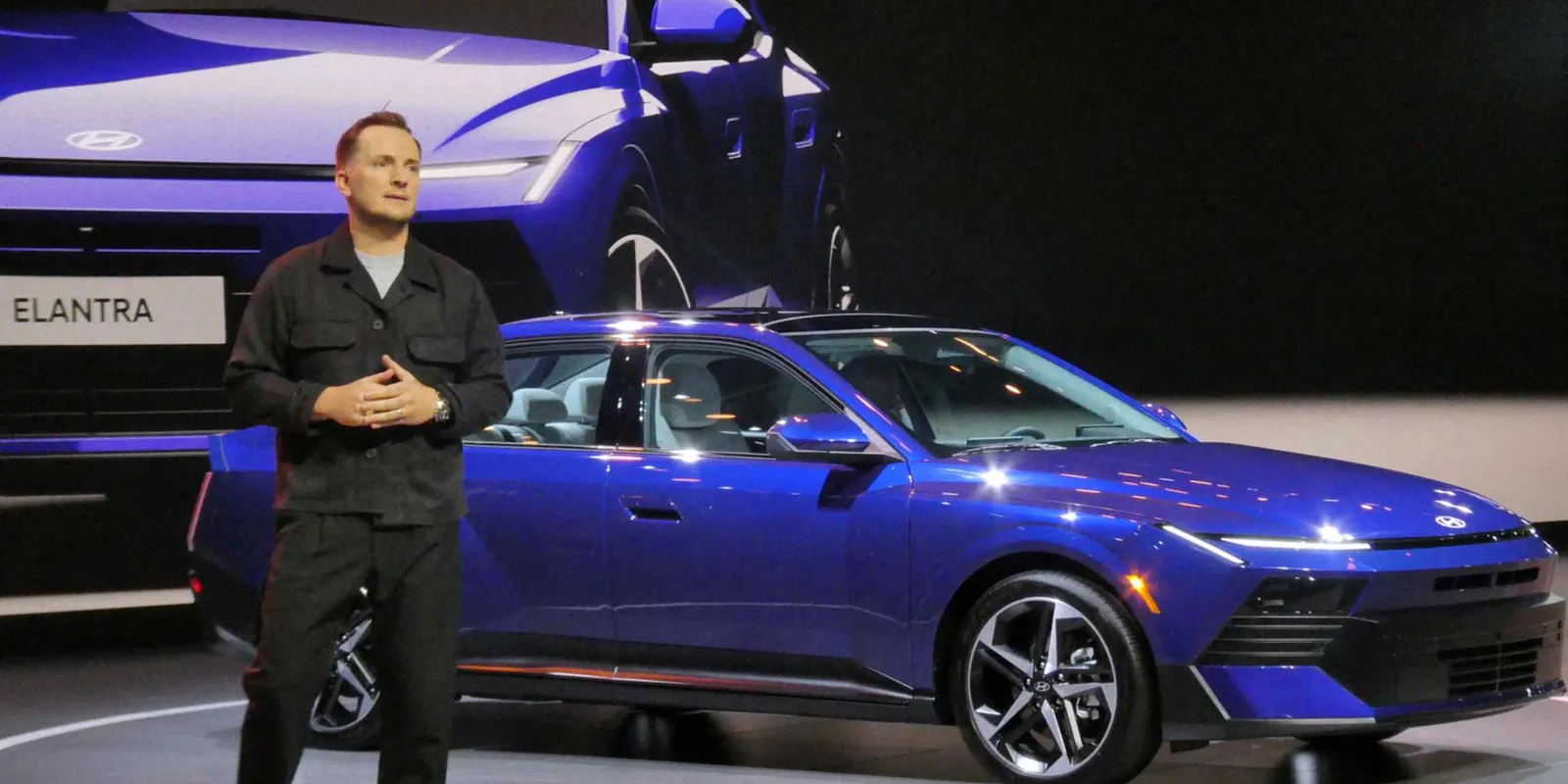
Hyundai and Honda are featuring US hybrids at an auto show, pushing the technology to the front of their American lineups while investment continues to flow into the segment. For executives and boards, the message is that the hybrid is being treated as a core product and capital commitment, not a stopgap on the way to an all-electric future.
Hyundai and Honda are putting US hybrids at the front of their auto show stands, according to Nikkei Asia, a placement choice that reads less like marketing and more like a capital-allocation signal. The two automakers are showcasing hybrid vehicles aimed squarely at the American market at a moment when money is pouring into the segment. Product on the floor, investment behind it. That combination is the thing to watch. Auto shows are not neutral events. What a company chooses to put under the lights is usually what it has already decided to build.
The headline fact is simple and worth stating plainly: two of the world's largest automakers are using a US auto show to feature hybrids rather than treating them as a footnote to a battery-electric lineup. For anyone who has spent the past few years assuming the industry's endgame was a straight line from gasoline to fully electric, that is a meaningful adjustment. Hybrids sit in the middle of that line by design. They pair a conventional engine with an electric motor and a battery, recharge themselves from braking and the engine rather than a plug, and typically deliver better fuel economy than a comparable gasoline-only vehicle without asking the driver to change how they refuel.
The economics explain a lot of the enthusiasm. A hybrid powertrain usually slots into an existing vehicle platform, which means an automaker can often add it to a plant it already runs instead of building a new one. That compresses the time between a board decision and a car arriving at a dealership. For context, the industry's electric push required enormous spending on new assembly capacity, battery cell plants, and charging infrastructure, commitments that typically take years to pay back. Hybrids do not erase that spending, but they can generate revenue sooner while those longer bets mature.
The investment wave referenced in the report is not abstract. Automakers have been committing capital to US manufacturing, in part because building where you sell has become a political and logistical advantage. Local production tends to reduce exposure to tariffs and currency swings, and it typically plays better with policymakers who want jobs in their districts. Hybrids fit that strategy neatly: they can be produced on lines that already exist, using supply chains that are more mature than the battery-electric ecosystem, and they sell into a customer base that is already comfortable with the technology.
Demand is the other half of the equation. For several years, hybrid sales growth in the US has outpaced the growth of fully electric vehicles, a pattern driven less by ideology than by arithmetic. Charging at home is easy if you have a driveway and cheap electricity. It is a project if you rent, park on a street, or live somewhere the grid is stretched. A hybrid asks for none of that. It delivers a measurable fuel saving on day one with no behavior change, which is exactly the pitch that lands with a mainstream buyer who is curious about electrification but not ready to restructure their week around it.
Regulation shapes the math too. US fuel economy and emissions standards tighten on a schedule that runs well past the current model year, and a handful of states have laid out timelines for phasing out sales of new gasoline-only vehicles. Automakers have to hit those targets across an entire fleet, not model by model. A hybrid typically counts as an improvement over a pure combustion vehicle, which makes it a useful compliance tool while battery-electric volumes ramp. For a product planner, that is not a compromise. It is a hedge that pays a dividend in the meantime.
None of this happens in a vacuum. Toyota spent decades turning the hybrid into a mainstream proposition and, historically, has been the benchmark others chase. Hyundai and Honda pushing hybrids into the spotlight at a US show is a direct statement that they intend to compete for that buyer rather than cede the middle of the market. The competitive question is not whether hybrids sell. It is who owns the customer when they do.
What to watch next is the mix. Watch whether the hybrid trims shown at the auto show arrive with pricing that undercuts comparable electric options, whether the companies disclose how much of their US volume they expect hybrids to carry, and whether hybrid capacity comes at the expense of EV programs or in addition to them. Watch the supplier base too. Motors, inverters, and hybrid batteries draw on a different set of vendors than pure EVs, and capacity there can become a bottleneck fast once several automakers chase the same parts.
For executives and boards in any capital-intensive industry, the lesson generalizes. The winning move is rarely the purest version of a technology. It is the version customers will actually buy at scale, on a timeline the balance sheet can survive. Hyundai and Honda just made that argument in public, on a show floor, with cars. Rivals will have to answer with their own product plans, and their own capital.
This story's Key Insights and Take-aways are locked.
Create a free account to unlock Executive Actions for one credit.
Register to UnlockAlways free for Executives Club members. Join the Club
More in Business

Anthropic's record IPO lands a day before Nvidia's longest losing streak since 2008
Anthropic's record Nasdaq debut and Nvidia's longest weekly losing streak since 2008 landed within 24 hours of each other, and the contrast shows how fast the market is re-pricing the AI trade.
New World's HK$24.9B rights issue triggers 41% plunge as HK$50B debt target looms
New World Development has three levers left to erase up to HK$50 billion in borrowings by 2031, and shareholders just told the market what they think of the first one.
Chip supply chain warns new US export controls will spread beyond the target list
Suppliers, distributors and equipment makers say the latest US restrictions will not stay contained to the firms named on paper, putting orders, inventory and delivery timelines at risk across the global chip chain.