
Israel unanimously recognizes Armenian genocide, targeting Turkey as rift deepens
Cabinet approval puts parliament on the clock and tightens a regional dispute that started with Gaza.
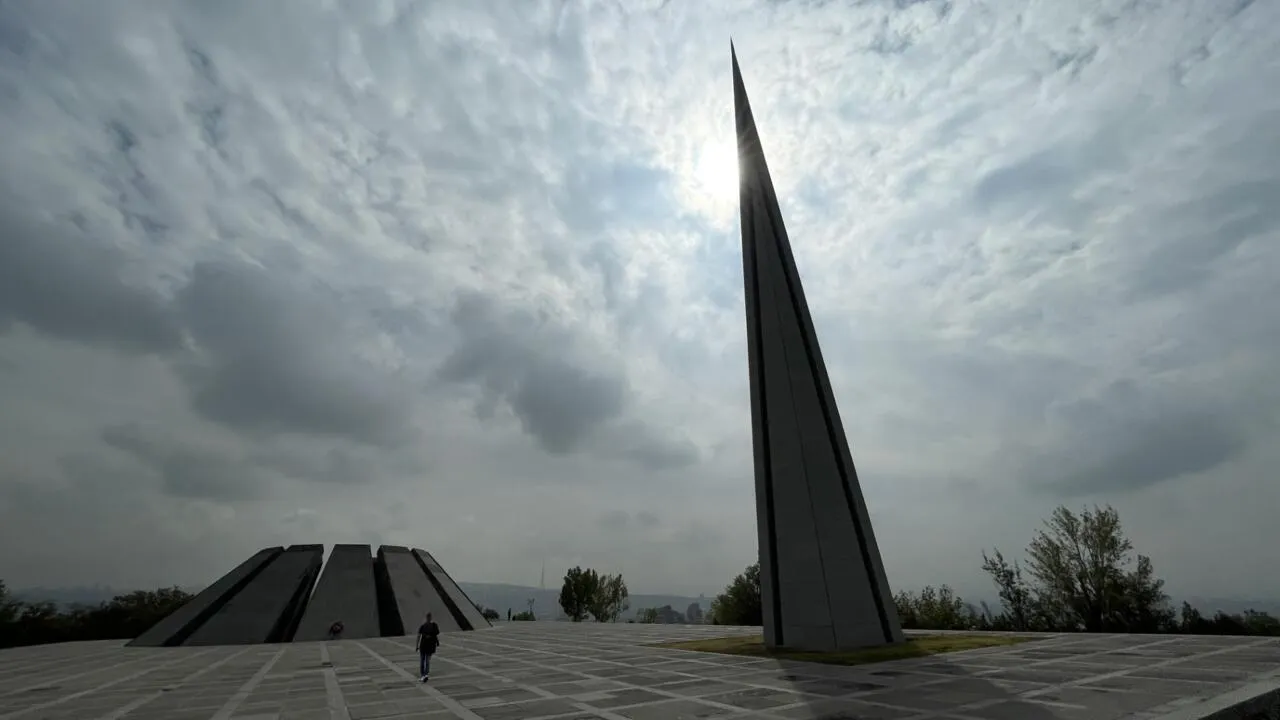
Israel's cabinet unanimously approved Foreign Minister Gideon Saar's proposal to recognize the Armenian genocide, with parliament still needing to ratify. The move heightens the Turkey-Israel rupture that has escalated amid Gaza, with Azerbaijan also denouncing it.
Israel’s government took an unusually direct step on Sunday: it unanimously recognized the massacres of Armenians during World War I as genocide, in a decision described by the foreign ministry as a rebuke to Turkey. The cabinet’s action, announced as Foreign Minister Gideon Saar’s proposal, is not yet final. It still must be ratified by parliament, setting up a near-term political checkpoint.
The significance is hard to miss in the language Israel used. Saar called it a “historic decision” and said the Armenian genocide remains the target of “an institutionalised campaign of denial and minimisation,” including “a manipulative rewriting of history, mainly by the Turkish government.” At the cabinet meeting, Saar framed recognition as a “moral and historical duty” and said “the time has come for Israel, as a Jewish state, to formally accept this position.” That is not just commemoration. It is a signal to a strategic relationship that has been cracking.
To understand why this matters beyond history classrooms, you have to look at the current incentives driving state behavior. Successive Israeli governments previously avoided formal recognition in part to preserve relations with Turkey, a former close strategic partner in the region. But the source ties the turning point to the war in Gaza. Turkey has regularly accused Israel of committing genocide in the Palestinian territory, a charge Israel strongly denies. Since then, Turkey’s stance has moved from diplomatic friction into rhetorical and economic escalation: Turkish President Recep Tayyip Erdogan has become one of the fiercest critics of the war, repeatedly comparing Israeli leaders to Nazi officials.
Israel responded in kind, and the rivalry shows up in the wording. Prime Minister Benjamin Netanyahu hit back at Erdogan by calling him an “anti-semitic dictator who commits genocide against the Kurds.” Turkey, according to the source, has suspended most trade with Israel and emerged as one of Hamas’s strongest diplomatic supporters. Into that environment, Saar’s recognition decision lands like a diplomatic counterweight. He explicitly called it “not an act of retaliation for the open hostility, along with the terrible rhetoric and the hostile action of Turkey, under Erdogan’s leadership, against Israel.” But then he underlined the core point: “The fact that Turkey promotes false narratives against Israel, does not grant it immunity from historical truths.”
For executives and investors, the headline subtext is that these decisions can rapidly turn into risk multipliers. When trade channels tighten, when governments suspend “most trade,” and when rhetoric links current conflicts to historic atrocities, business planning stops being only about markets. It starts being about compliance, country risk, reputational exposure, and where supply chains get caught in the crossfire. The source does not quantify economic impact, but it does establish the direction: Turkey and Israel have taken tangible steps away from normal trading patterns, and recognition decisions can make that drift permanent.
The ripple effect extends to Israel’s other partnerships too. Azerbaijan on Monday denounced the decision, calling it a “serious concern.” Azerbaijan and Israel are allies, but the source notes Baku’s closest foreign partner is Turkey. That detail matters: when a regional power is pulled between two relationships, public policy moves create secondary pressure inside alliance networks. Azerbaijan also hinted that the recognition could hit its bilateral relations, which means this is not a purely symbolic dispute. It is a test of alignment across the Caucasus, Middle East, and Turkey-centric diplomatic orbit.
There is also a longer-running geopolitical and legal backdrop here. The Armenian case is part of a broader international dispute over how to label mass killings under the Ottoman Empire from 1915 to 1917. The Armenians seek international recognition that the mass killings amounted to genocide. The source states a commonly cited death toll of 1.5 million, while Turkey strongly denies genocide and says that both Armenians and Turks died as a result of World War I. It also says Turkey puts the death toll in the “hundreds of thousands.” Armenia and Turkey have no diplomatic ties, but the source adds that both countries have signaled interest in warming relations in recent years. Israel’s move therefore collides with an even older map: recognition fights are frequently intertwined with attempts to manage or thaw other relationships.
Finally, this decision arrives in a world where many countries have already acted. So far, 32 countries have recognized the genocide, including the United States (citing multiple resolutions from 1920 to 2019 and President Biden’s declaration in 2021), Italy, Argentina, Brazil, Germany, France, Poland, the Czech Republic, Canada, Russia, Greece, Cyprus, the Vatican, and also Lebanon and Syria. That list matters because it signals that Israel is choosing a side in an ongoing international consensus fight rather than inventing a new stance. The difference is timing and context. With Gaza serving as the accelerant and Turkey Israel relations already strained, the cabinet’s unanimous approval and Saar’s direct framing make this a high-visibility political commitment that parliament must now formalize.
If you’re a board member, a risk officer, or an operator managing regional exposure, the practical takeaway is straightforward: cultural and historical recognition decisions are not insulated from current conflicts. They can harden alliances, reprice diplomatic risk overnight, and create new compliance and reputational questions for anyone operating across Turkey, Israel, the Caucasus, or markets tied to those relationships. The cabinet’s move is one step from becoming law, but its strategic intent is already clear from the way Israel named the target and the reason.
This story's Key Insights and Take-aways are locked.
Create a free account to unlock Executive Actions for one credit.
Register to UnlockAlways free for Executives Club members. Join the Club
More in Politics
Obama Defends Ilhan Omar After Agents Search Her Home in Trump Inquiry
The former president's intervention raises the stakes in a federal probe into immigration paperwork that has put a prominent progressive lawmaker in the crosshairs.

Blair-era minister: cut welfare to fund youth job support
Alan Milburn's call for welfare cuts to fund employment support opens a Labour fight over benefits and the Neet crisis.
Hot September CPI: energy costs surge, voters feel the squeeze before midterms
The latest inflation print lands as Trump campaigns for GOP control of Congress, putting cost-of-living worries at the center of the midterm fight.