
Ivan Shostak lost his sight in Bakhmut. Now he teaches blind veterans pottery.
A Vinnytsia rehab effort turned into a business for Ukraine’s blind veterans, built on touch, flow, and income.
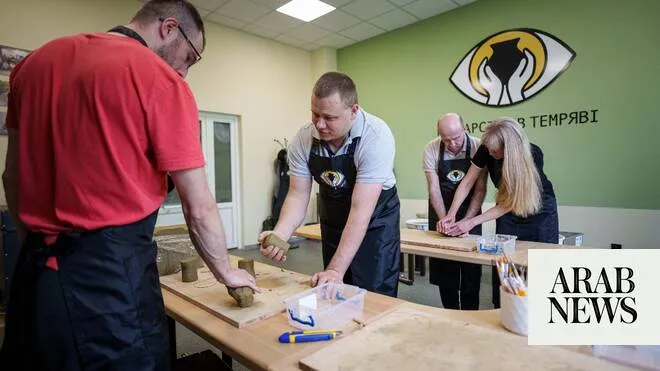
Ivan Shostak, 37, a blind Ukrainian veteran who lost his sight during the battle of Bakhmut in March 2023, has turned pottery into a business and a mentoring practice for other blind veterans. Supported by Sweden and the UN Development Program through the “Pottery in the Dark” project, his work now helps multiple participants earn income and build independence.
VINNYTSIA, Ukraine. Ivan Shostak, 37, lost his eyes in March 2023 while fighting in the battle of Bakhmut, and he says he has made more than 1,000 pottery pieces without ever seeing a single one. Two men sit on either side of the pottery wheel in silence, fingers buried in clay, sensing shape and progress through touch alone.
For Shostak, pottery was not a hobby that arrived on a calm day. He described how his real ordeal began at home after the injury, when his wife could not endure what he was going through and left him alone, and how he spent half a year bedridden while pain and despair took over. Then, a fellow soldier took him to a local rehabilitation center for people who had lost their sight, where staff taught him to use a phone and a cane and handle daily life. “It turned out you could live even in total darkness,” he said, and the turning point came when he and others from the center visited a pottery workshop and made his first plate.
That pivot matters because it shows how “rehabilitation” can evolve from therapy into an income engine. Shostak started attending classes regularly, sold his work, and became an instructor after the first “Pottery in the Dark” project in Vinnytsia, supported by Sweden and the UN Development Program. The program is specifically designed to help veterans who lost their sight, including in the war, and it was built with an end goal in mind: turning training into something sustainable rather than a one-time intervention.
The business side is structured, but not rigid. Shostak has three others on his team who help him sell the pottery, mostly through his Instagram page. He does not keep a strict schedule, working according to his mood in a workshop his older brother, also a soldier, set up for him in his apartment. Shostak explains the logic of craft in a way you can almost feel: clay will not “come out” if you feel bad. Everything breaks, comes out crooked. Only when you feel good do the pieces turn out right. Later stages involve another workshop where he gets help with firing and glazing, while he chooses every color himself, guided by imagination.
Each finished piece carries the emblem of the air assault forces he served in, with a dome, wings and a sword, plus the motto “Nobody but us” and his name. That branding is not just aesthetic. In a market where many post-conflict programs struggle to become legible and valuable to buyers, identity and symbolism make the work easier to understand, harder to forget, and more likely to convert from “charity project” into repeatable commerce.
The mentoring model is the other engine. Roman Shtohryn, director of the Podillia rehabilitation center in Vinnytsia, said six of the 11 project participants who completed the pottery training already earn income from it, and all but one are veterans. He also said, bluntly, “We planned all this so it would turn into a business.” Shtohryn described pottery as having multiple functions. Psychologically, working with clay forces concentration, pulls people out of rumination, and creates a flow state. Practically, clay yields an immediate result, meaning people can see progress in real time rather than waiting for abstract recovery timelines.
At the center, Shostak works with fellow veteran Viacheslav Sadovskyi, 47. During the session, Shostak asked, “All good? Hands working?” laughed, reached for Sadovskyi’s hands, and guided them toward the wheel so Sadovskyi could feel what was happening. Sadovskyi has been in the military since the start of Russia’s invasion, and in 2024 a drone exploded near him, damaging the left side of his face and forcing five surgeries. Shostak directed him throughout, his hands never leaving Sadovskyi’s. “It matters that a veteran teaches a veteran,” Shtohryn said. “We’re equals. We understand and support each other.”
For executives, investors, and operators watching “impact” initiatives mature into real businesses, this case lands for a reason: it uses a therapy-like activity to build employable skills, an audience, and a sales channel, while keeping the peer-to-peer mentoring loop intact. In a world where funding cycles can end before livelihoods do, the strategic question is simple. Can the program produce repeatable work, repeatable demand, and repeatable independence? In Vinnytsia, the answer is starting to look like yes, one cup-shaped piece at a time, taught by someone who will never see the results with his eyes.
This story's Key Insights and Take-aways are locked.
Create a free account to unlock Executive Actions for one credit.
Register to UnlockAlways free for Executives Club members. Join the Club
More in Business
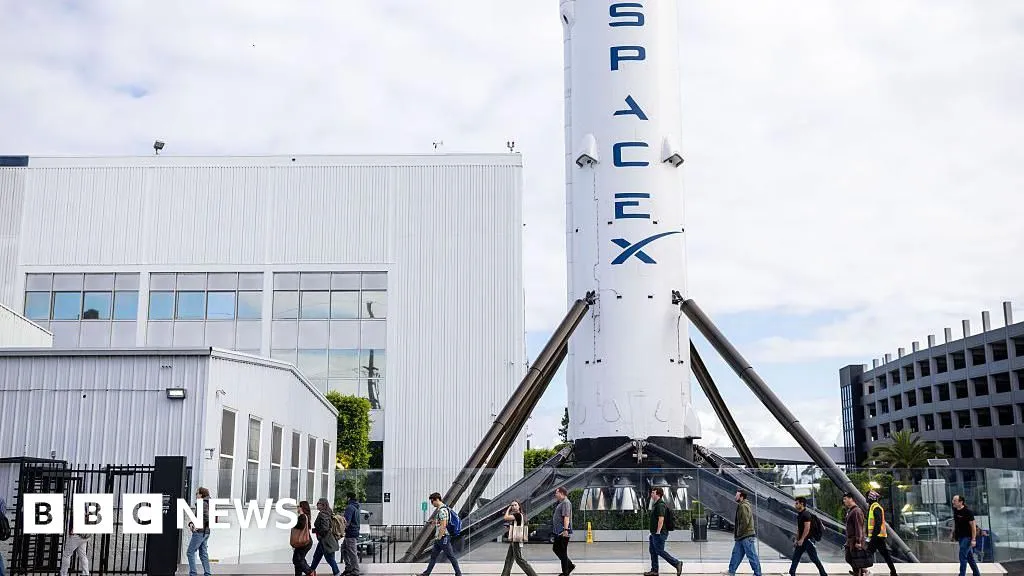
SpaceX raises $75bn in public sale, setting up Elon Musk’s record stock-market debut
A $75 billion public raise before a record listing turns SpaceX’s next chapter into a trillionaire test for markets.

SpaceX sets IPO at $135, selling 555M+ shares and launching trading Friday
Elon Musk's rocket company prices its world-scale IPO at $135 per share, moving into public markets immediately.

SpaceX prices IPO at $135 per share, starting the biggest listing ever
SpaceX moves from rumor to price point: $135 per share signals a new bar for private-market exits and public-market gravity.