
Jamie Dimon vows to claw back UK's 'unfair' bank tax rise
JP Morgan's CEO says the surcharge jump from 3% to 6% is unfair and he is 'setting an example' by seeking to offset it, a warning to governments weighing bank taxes.
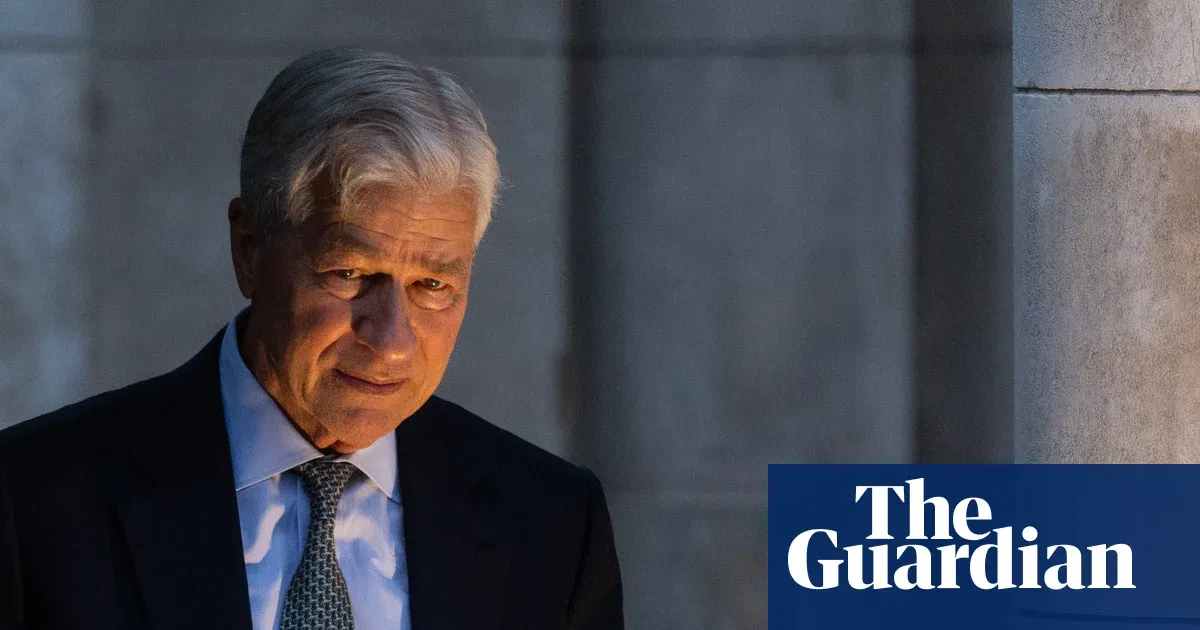
Jamie Dimon, chief executive of JP Morgan, said in London on Thursday that he will find ways to offset the UK chancellor's tax rise for banks, calling Labour's increase in the bank surcharge from 3% to 6% unfair. His public pledge to claw back the increase is a signal to UK policymakers and other governments that taxing global banks carries trade-offs they may not have priced in.
Jamie Dimon, the chief executive of JP Morgan, used a London event on Thursday to say he will find ways to offset the UK chancellor's tax rise for banks, calling the increase unfair. The specific target is Labour's increase in the bank surcharge, which the source says rises from 3% to 6%. Dimon said he would seek to claw back the increase and was "setting an example so that [governments] understand the trade-offs of these unfair penalties". That is the headline payoff: the boss of JP Morgan is not merely complaining about a tax; he is publicly committing to neutralize it.
The number matters because the surcharge rate doubles. A jump from 3% to 6% is not a rounding error for a bank with large UK profits. It changes the after-tax return on UK business, and it changes the relative attractiveness of London versus other financial centers. Dimon's phrase "trade-offs" is the tell. Governments can raise revenue from banks, but banks can respond. They can cut costs, reprice products, shift capital, or allocate future investment elsewhere. None of that is illegal. It is the ordinary behavior of a global company facing a higher tax bill.
For context, UK banks typically pay corporation tax on profits, a bank surcharge on profits, and a bank levy on parts of their balance sheets. The surcharge was introduced after the 2008 financial crisis, when governments wanted banks to contribute more after taxpayer bailouts. The source says Labour's change takes the surcharge from 3% to 6%. That is the backdrop for Dimon's claim that the increase is unfair. For a global bank like JP Morgan, the UK surcharge is one input into a global effective tax rate. That is why Dimon's comments resonate beyond London. If a US bank can offset a UK tax increase, other multinationals will ask why they should not do the same.
Dimon did not spell out the mechanisms in the reported remarks. But the phrase "find ways to offset" points to the levers that global banks typically have. They can adjust transfer pricing between entities, choose where to book certain revenues, manage deductions and credits, or change how much capital they deploy in a jurisdiction. They can also pass costs to customers through higher fees or lower deposit rates, though competition limits that. They can cut discretionary spending. The point is not that any one lever is certain. The point is that a CEO of Dimon's stature is saying publicly that he will use them.
The political risk cuts both ways. Calling a tax unfair can play well with investors who want lower costs. It can play badly with governments that need revenue and with voters who remember bank bailouts. Dimon's "setting an example" line suggests he wants other executives to follow. That is a collective-action play. If enough banks say they will offset the tax, the government may reconsider. If only JP Morgan says it, the bank may face political blowback while peers stay quiet. Boards will watch which way the industry moves.
Competitive dynamics matter. If JP Morgan offsets the surcharge and a UK-focused rival cannot, JP Morgan gains a relative cost advantage. If JP Morgan absorbs the tax and rivals offset it, JP Morgan loses. That uncertainty is why tax policy is now a board-level issue, not just a compliance matter. CFOs need to model not only the statutory rate but also the behavioral response of competitors, the reaction of regulators, and the reputational cost of being seen as tax-avoiding. The surcharge increase from 3% to 6% is small in global terms, but it is a test case for how far governments can push before global banks push back.
The strategic stakes for peers are clear. Every bank with UK operations should know its effective UK tax rate, its legal entity structure, and its options if the surcharge rises again. Every board should ask whether its public posture on tax matches its private planning. And every government weighing a bank tax should ask Dimon's question: what are the trade-offs? The answer may not be a bank exodus. It may be quieter: slower hiring, fewer UK investments, or a lower share of global profits booked in London. Those effects are harder to see than a headline, but they are real. Dimon's comments are a reminder that tax policy is a negotiation, and he just made his opening bid.
This story's Key Insights and Take-aways are locked.
Create a free account to unlock Executive Actions for one credit.
Register to UnlockAlways free for Executives Club members. Join the Club
More in Business

GTA VI hauls $3.79bn in one day, out-earning every film ever made
Rockstar's own estimate covers a single Thursday plus a record 32.5m prerelease units, and it lands on every board weighing IP concentration, pricing power and launch risk.

FBI's crime database breached again, the second hack in months
CNN reports hackers hit the National Crime Information Center, the shared backbone of US policing, and the repeat timing is the part every security team should study.

S&P 500 Enters Correction, Down 10% From Its High on AI Worries
The index's slide past the 10 percent line is a symbolic verdict on investor mood, and the AI trade that powered the rally is now the thing testing it.