
Japan banks on US force: middle-power “coalitions” are losing their deterrence bet
Asian allies are converging on a blunt conclusion: only America can deter China, so they stay close to Washington.

Japan and its neighbours are shifting away from the idea that middle-power coalitions can deter China on their own. The consequence for decision-makers is a hard strategic dependence on America, not a flexible regional workaround.
Forget middle-power coalitions. Japan and its neighbours are acting like the math is already done: only America can deter China.
That is the core message behind the Economist's framing. The region does not sound interested in building a clever alternative coalition of “middle” states that could somehow substitute for the United States. Instead, Japan and its neighbours treat American deterrence as the necessary backbone of regional security. In other words, the policy priority is not to gamble on autonomy; it is to keep the link strong, because the deterrent gap would be too risky to ignore.
Why does this matter beyond geopolitics? Because deterrence is not just a slogan. It shapes how governments plan, how firms price risk, and how markets assign probabilities to tail events. When allies believe only one actor can credibly deter an adversary, the region’s planning horizon tightens around that actor’s choices. That affects everything from supply-chain location decisions to industrial policy, cyber risk management, and contingency planning for disruptions. Even if an executive is not thinking about “deterrence” in the formal sense, their board is still managing exposure to instability, sanctions risk, and trade volatility.
There is also a second-order effect that tends to surprise people outside government: dependence can become a governance constraint. If you accept that only America can deter China, then your options shrink. Domestic political debates shift from “how do we hedge?” to “how do we align quickly enough?” That often means faster adoption of shared standards, deeper intelligence coordination, and closer interoperability across defense-adjacent systems. For corporate leaders, the downstream implication can be regulatory and compliance pressure. When allies move in lockstep, rules tend to converge too, whether that is through procurement standards, export controls, technology governance, or reporting expectations that reflect security priorities.
Now zoom out to the idea being rejected: middle-power coalitions. In theory, coalitions of like-minded states can pool diplomatic leverage and signal unity. They can also reduce the burden on any single country. But deterrence is a high bar. It requires credibility, capacity, and a political willingness to follow through under stress. The Economist’s point is that Japan and its neighbours have internalized the belief that this is not something they can manufacture purely through coalition-building. That belief changes incentives. It encourages bilateral focus with the United States rather than collective experimentation among regional partners.
For decision-makers in adjacent sectors, the strategic stake is whether this dependence leads to predictable policy paths or sudden, hard pivots. Closely aligned allies tend to expect continuity, which can help businesses plan. But they also inherit the volatility of the dominant power. If America’s posture changes, the region’s risk calculus changes quickly. Boards that assume stability may find themselves behind the curve if alignment suddenly becomes less reliable, or if alignment triggers new compliance requirements and procurement constraints.
The practical takeaway for leaders is that this is not just a regional story. It is a template for how small and medium states behave when a single superpower is seen as the only credible deterrent. When that assumption holds, “middle-power” strategies do not disappear, but they become secondary. They are used to support alignment, not to replace it. That is the heart of the Economist’s argument: Japan and its neighbours are choosing closeness to America over coalition fantasies, because the deterrence job cannot be outsourced.
Executives and investors should read this as a signal about how policy risk is likely to cluster. If American deterrence remains the anchor, then regional alignment with US priorities becomes a standing variable, not an occasional event. Companies that can respond quickly to security-driven regulatory shifts, cross-border compliance changes, and geopolitical-driven demand swings will be better positioned. The larger strategic stake is simple: if you design your strategy assuming a coalition will solve the security gap, you are betting against what Japan and its neighbours already believe.
This story's Key Insights and Take-aways are locked.
Create a free account to unlock Executive Actions for one credit.
Register to UnlockAlways free for Executives Club members. Join the Club
More in Politics
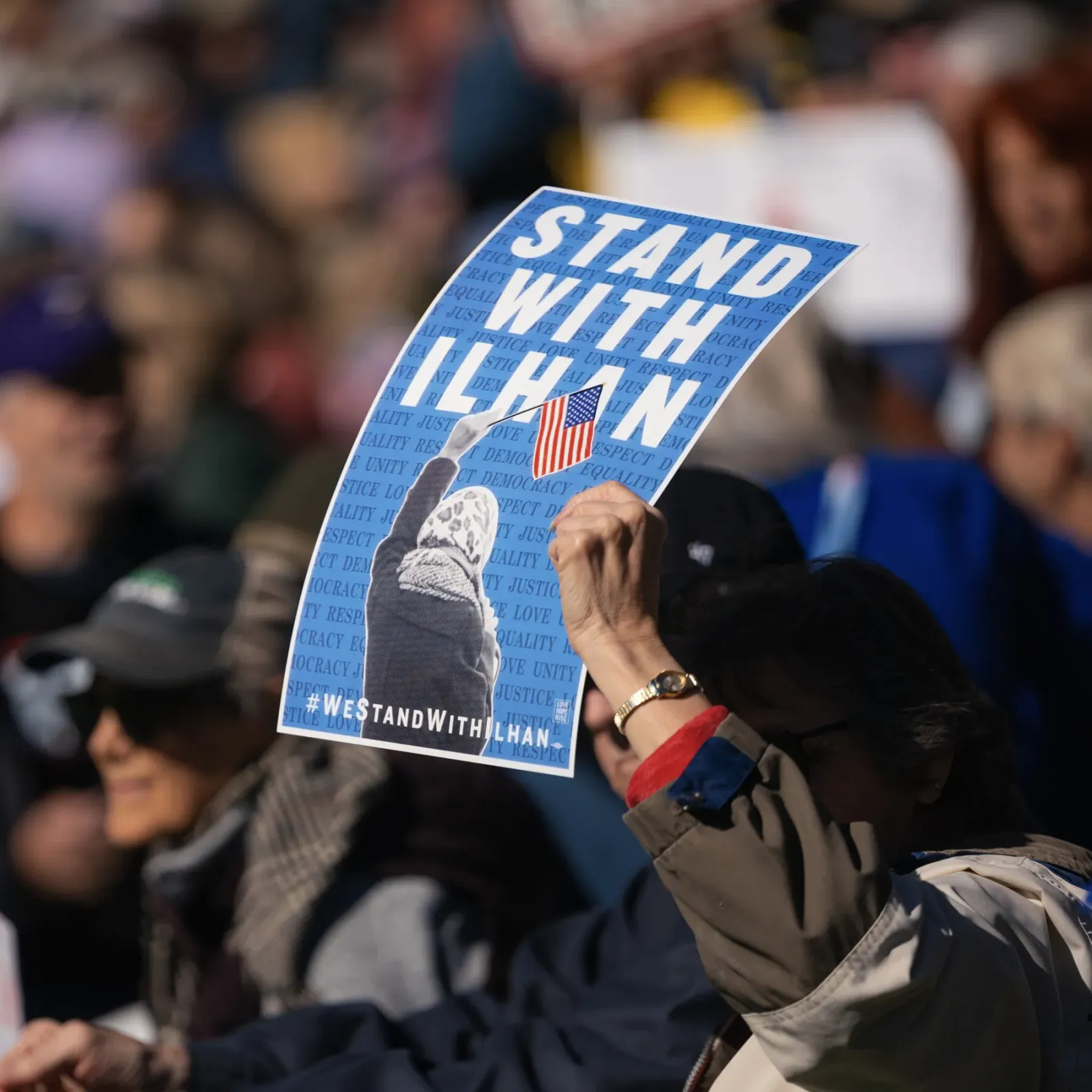
Obama Defends Ilhan Omar After Agents Search Her Home in Trump Inquiry
The former president's intervention raises the stakes in a federal probe into immigration paperwork that has put a prominent progressive lawmaker in the crosshairs.

Blair-era minister: cut welfare to fund youth job support
Alan Milburn's call for welfare cuts to fund employment support opens a Labour fight over benefits and the Neet crisis.
Hot September CPI: energy costs surge, voters feel the squeeze before midterms
The latest inflation print lands as Trump campaigns for GOP control of Congress, putting cost-of-living worries at the center of the midterm fight.