
Jensen Huang plots Nvidia return days after board pushed him out
The FT reports the ousted CEO is already discussing a comeback, while US officials scrutinize a relationship tied to suspected Chinese espionage.
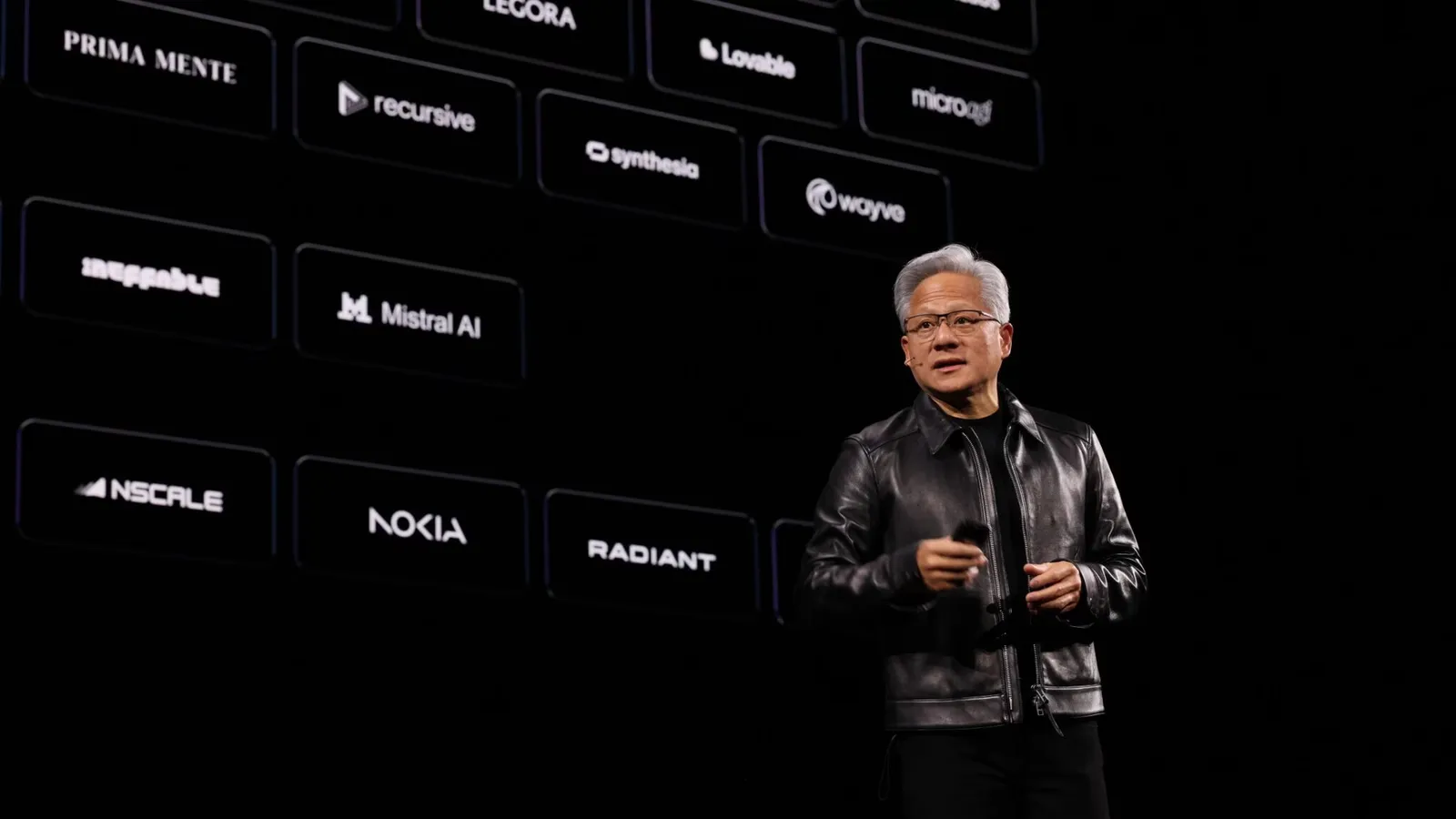
Jensen Huang is discussing a possible return as Nvidia's chief executive days after the board pushed him out, according to a Financial Times report relayed by Bloomberg on Sunday. For boards and investors, the episode turns personal conduct and national-security exposure into a live CEO-succession problem at one of the most strategically important companies in tech.
Jensen Huang is already working the phones. The ousted Nvidia chief executive has been discussing a possible comeback as the company's CEO, the Financial Times reported, with Bloomberg relaying the report on Sunday. The detail that makes it extraordinary is the clock: Huang resigned on Thursday, which means the window between his exit and talks about his return is measured in days, not quarters. The same reporting says Huang had admitted an affair with Alice Huang, whom US officials suspect of spying for China, and that he was reported to have had a second relationship involving Nvidia, details of which were not fully spelled out in the account Bloomberg carried.
That is a lot of story for one weekend. Strip it back and there are two separate crises running on the same track. The first is a governance crisis: a board concluded, apparently quickly, that its chief executive could not stay. The second is a national-security question: a personal relationship at the top of a strategically vital company is now tangled up with suspicions of foreign espionage. Huang's reported comeback bid suggests he believes the first problem is survivable and the second is not fatal. Whether the board agrees is the whole ballgame.
Start with the board's bind. Removing a CEO is the single most consequential decision a board makes, and it is normally the end of a process, not the start of a negotiation. Reinstating the same person days later would be an admission that the original call was rushed, or that the company cannot function without him. Both are uncomfortable. But boards also weigh a different risk: a leadership vacuum at a company whose products and roadmap matter to customers, partners, and investors far beyond its own walls. When the cost of an empty chair is high enough, directors have historically been willing to eat the reputational hit.
The espionage angle is what makes this harder than a standard misconduct story. US officials suspect Alice Huang of spying for China, according to the reporting. Suspicion is not a charge, and no allegation against her has been proven in this account. But for a semiconductor company, the perimeter around the CEO's personal life is not really personal anymore. Chip design and manufacturing sit at the center of US-China technology competition, and Washington has spent years tightening the rules around who can access what. In that environment, a relationship that intelligence officials find interesting becomes a board-level risk item, and directors will want an independent review before they put the keys back in anyone's hand.
History offers both a playbook and a warning. Steve Jobs was pushed out of Apple in 1985 and returned in 1997, when the company was near collapse and had little left to lose. Howard Schultz came back to Starbucks. Jack Dorsey returned to Twitter in 2015. The pattern is consistent: founder-CEOs get second acts when the institution is weak enough to need them, or when the founder still controls enough of the equity and the narrative to force the issue. The pattern is also consistent in what it costs. Every comeback forces the board to explain what changed, and "we were wrong the first time" is a hard sentence to say in public.
So what would a return actually require? Directors would need answers to questions that do not go away with a press release. Was the resignation voluntary or forced, and does the record now say something different? What did the board know, and when? Has anyone independent looked at the relationship that triggered the scrutiny, and what did they find? And if Huang comes back, who supervises the parts of the business that touch export controls, government contracts, and classified work? A comeback without those answers is not a comeback. It is a pause.
For every other board watching, the lesson is uncomfortable and useful. CEO succession plans assume departures are orderly and permanent. This one was neither. Personal conduct that once stayed in the HR file now lands in the national-security file, and the two clocks run at different speeds. The companies that handle this well will be the ones that already know, before the phone rings, what they would do if their founder wanted his job back.
This story's Key Insights and Take-aways are locked.
Create a free account to unlock Executive Actions for one credit.
Register to UnlockAlways free for Executives Club members. Join the Club
More in Technology

Anthropic mathematician claims Claude helped crack the Riemann hypothesis
If the proof holds, AI has toppled math's most famous open problem; if it does not, it is a case study in announcing breakthroughs before anyone verifies them.

AI's $4 Trillion Wipeout Erases Nasdaq's Gains for the Year
A brutal week took roughly $4 trillion off the AI sector and left the Nasdaq flat for the year, and the damage ran the full length of the supply chain.

Anthropic mathematician says AI proved the Riemann hypothesis. Verification will take time.
A single unverified claim from inside Anthropic now sits against more than 160 years of open mathematics, and the gap between asserting a proof and surviving peer review is the entire story.