
Jensen Huang resigned as Nvidia CEO. The Beijing chip deciders stayed out of reach.
Huang spent years courting Beijing but struggled to reach the officials who decided Nvidia's fate there, the FT reports, and he resigned Thursday after admitting an affair with a former Megaspeed executive US officials suspect of spying.
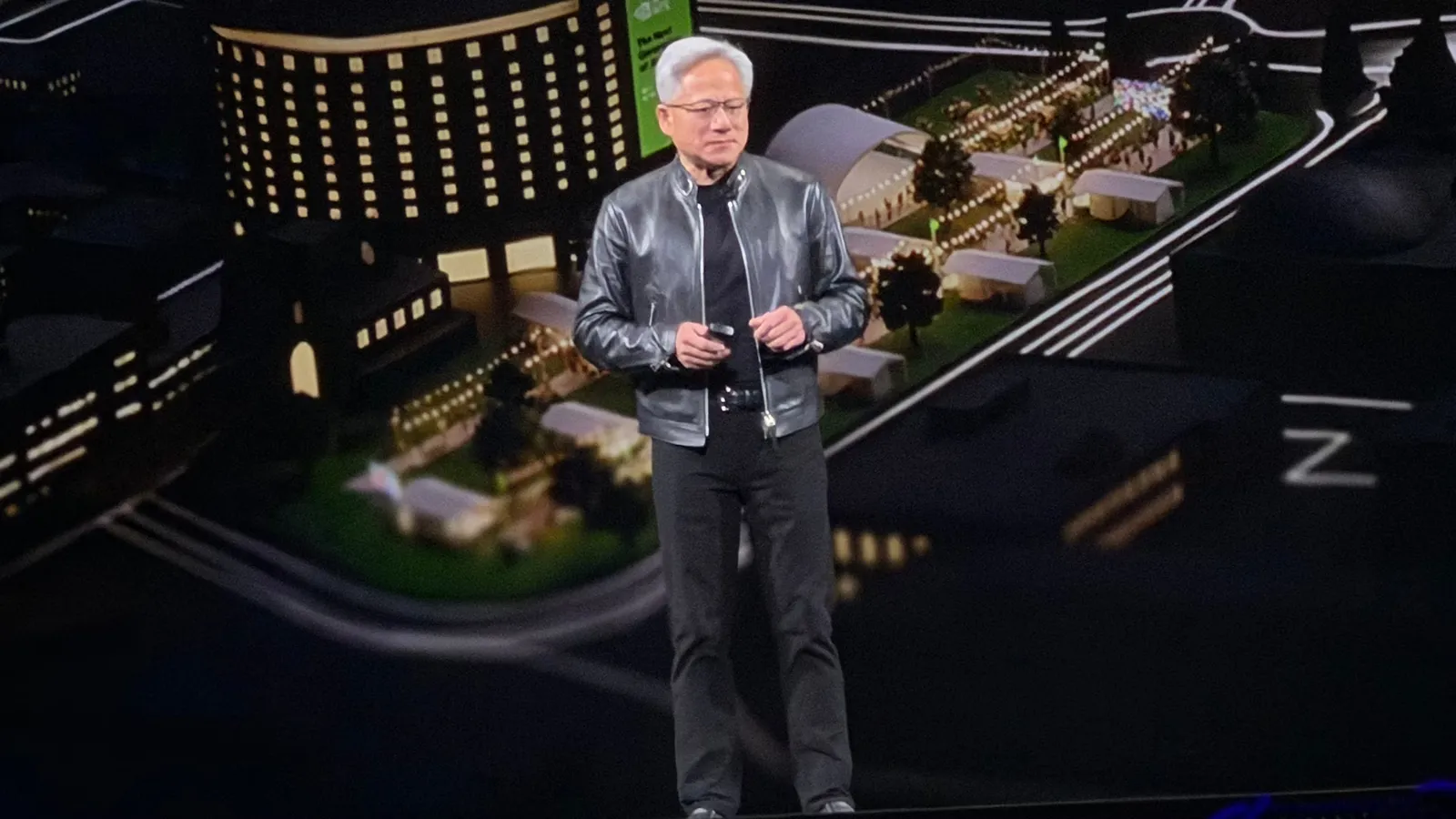
Jensen Huang resigned as Nvidia's chief executive on Thursday, and the Financial Times reports he spent years courting China without reaching the officials who decided Nvidia's fate there. For boards with China exposure, the exit is a case study in how fast personal-conduct allegations, espionage suspicion, and geopolitical choke points can converge on a single CEO seat.
Jensen Huang resigned as Nvidia's chief executive on Thursday, and the detail that makes the exit worth studying is not the departure itself. It is what the Financial Times reported alongside it: Huang spent years courting China but struggled to reach the officials who decided Nvidia's fate there. The paper cited people familiar with the matter. Read that again. The most visible CEO in semiconductors, the man who turned a graphics-card company into the load-bearing wall of the AI boom, could not get through to the small group of people who actually set the terms his business had to operate under.
That is the real story here, and it is a story about access, not charm. For most of the past several years, Nvidia's China business has been shaped less by anything Huang said on a stage than by decisions made in two places: Washington, which writes the export controls, and Beijing, which decides how strictly they are enforced and what domestic alternatives get funded. The officials who matter in that equation are not typically the ones who show up at trade delegations, industry summits, or ribbon-cuttings. They are regulators, customs authorities, and procurement gatekeepers. Courting a market and reaching its decision-makers are two different jobs, and the FT's reporting suggests Huang did the first one well and the second one poorly.
The report also says Huang had admitted an affair with Alice Huang, a former Megaspeed executive whom US officials suspect of spying. That is a serious allegation, and it arrives attached to a CEO exit, which is exactly the combination that turns a personnel story into a national-security story. The source material available here is truncated at that point, so the full scope of the allegation, the identity of the agency or agencies involved, and Nvidia's own response are not established in the record we can see. What is established is the shape of the risk: when a chief executive's personal life touches a company inside a supply chain that Washington treats as strategically contested, the vetting question stops being an HR question.
For boards, the mechanics of a Thursday resignation are unforgiving. A CEO exit announced late in the week compresses the window for disclosure, succession messaging, and investor calls into hours rather than days. Directors at any company with meaningful China exposure should be asking now, not later, three things: who inside the organization actually owns the government relationships that matter, what the company knows about the personal and financial ties of its senior people to counterparties in sensitive jurisdictions, and whether the succession plan can survive a midweek trigger. Nvidia's own board has not been described in the reporting available here, and no successor has been named in it either. That silence is itself the pressure point.
Zoom out and the geopolitical backdrop explains why this lands so hard. Advanced chips are the choke point in the US-China relationship, and Nvidia sits directly on top of it. Export controls have repeatedly redrawn what the company can sell into China and to whom, forcing product redesigns and reshaping revenue expectations quarter by quarter. Any CEO in that position is effectively running a business with two regulators: one in Washington that can cut off a product line, and one in Beijing that can cut off a customer base. Huang's reported difficulty reaching the second one is not a personal embarrassment so much as a structural warning about how little control a single executive has over that equation.
The second-order effects will show up in hiring, compliance, and deal diligence across the sector. Expect boards to tighten how they vet senior hires and advisors with ties to China-linked entities, and expect counterparties in the AI cloud and hardware distribution space to face sharper questions about who their executives are and who they answer to. Espionage suspicion, once it attaches to a name, travels through a supply chain fast. Companies that treat counterparty vetting as a legal checkbox rather than a strategic function are the ones most exposed.
The strategic lesson for peers is blunt. Influence in a contested market is not built at conferences; it is built through the unglamorous work of mapping who signs, who blocks, and who enforces. Huang spent years courting China and, per the FT, still struggled to reach the people who decided his company's fate there. Every CEO with China revenue should assume the same gap exists inside their own organization, and should find out before a Thursday forces the question.
This story's Key Insights and Take-aways are locked.
Create a free account to unlock Executive Actions for one credit.
Register to UnlockAlways free for Executives Club members. Join the Club
More in Technology

Anthropic mathematician claims Claude helped crack the Riemann hypothesis
If the proof holds, AI has toppled math's most famous open problem; if it does not, it is a case study in announcing breakthroughs before anyone verifies them.

AI's $4 Trillion Wipeout Erases Nasdaq's Gains for the Year
A brutal week took roughly $4 trillion off the AI sector and left the Nasdaq flat for the year, and the damage ran the full length of the supply chain.

Anthropic mathematician says AI proved the Riemann hypothesis. Verification will take time.
A single unverified claim from inside Anthropic now sits against more than 160 years of open mathematics, and the gap between asserting a proof and surviving peer review is the entire story.