
Jensen Huang resigns as Nvidia CEO, its biggest crisis in 33 years
The founder who built Nvidia into the defining company of the AI boom is out, and the chipmaker now has to answer the question it has never faced: what does Nvidia look like without him?
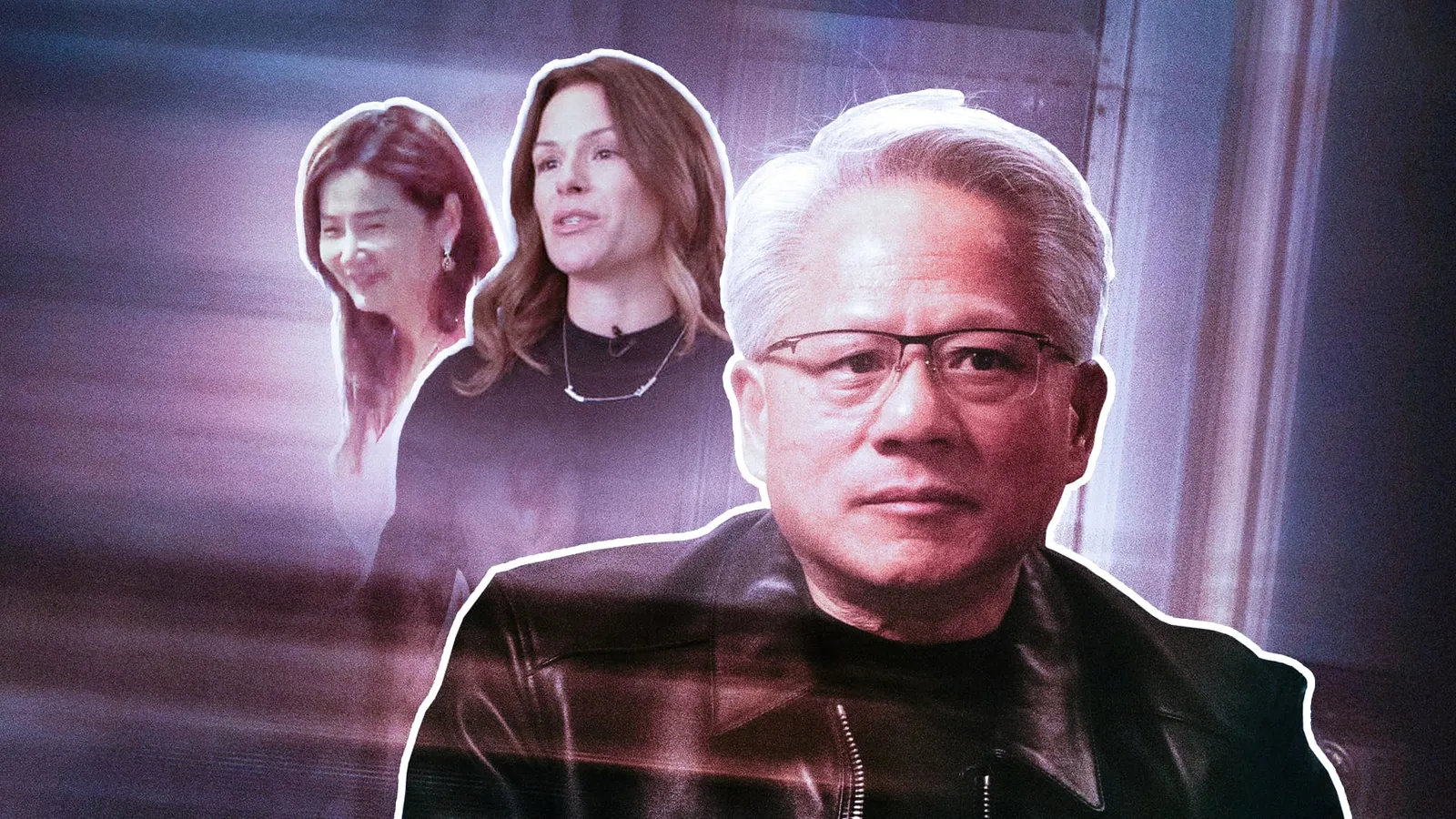
Nvidia founder and CEO Jensen Huang is resigning, leaving the chipmaker in the biggest crisis of its 33-year history. For executives, the immediate stakes are succession, customer confidence, and whether the AI buildout's most important supplier can hold its roadmap without the leader who defined it.
Jensen Huang is resigning as CEO of Nvidia, the company he founded and led across its entire 33-year history, and the chipmaker is now facing the biggest crisis it has confronted in those three decades. That is the core of what has been reported, and it is already the defining corporate story of the AI era. Huang is not a hired operator who can be swapped out with a press release and a 90-day transition plan. He is the founder, the public face, and the strategic constant Nvidia has had since it was a graphics company selling cards to PC gamers. His departure removes the one variable that never changed.
The immediate question is what it does to Nvidia's AI dominance. The company's position in artificial intelligence rests less on any single chip than on an ecosystem: hardware, software, developer habits, and the assumption among customers that Nvidia will keep shipping on schedule. Founder exits put that assumption under a microscope. Buyers who have committed billions to build data centers around Nvidia's roadmap now have to price in the possibility of a strategy shift, a slower cadence, or a leadership vacuum at exactly the moment the AI buildout is at its most capital-intensive.
The arc that got here is worth understanding, because it explains why this lands so hard. Nvidia built its early business on graphics processors for gaming, then discovered that the same parallel-computing architecture was unusually well suited to the math behind machine learning. That insight turned a component supplier into the picks-and-shovels vendor of the AI boom, and it turned Huang into one of the most recognizable chief executives in technology. A company that spent its first two decades as a niche hardware maker became the reference point for an entire investment cycle. The fall, as the reporting frames it, is the other half of that story.
Founder-CEO departures at large technology companies are historically rare, and they are typically messier than ordinary successions. When a founder leaves, the market's first instinct is not to evaluate the incoming operator but to re-underwrite the company's strategy. Boards usually respond by naming an interim leader, running a search, and spending the first weeks reassuring customers and large shareholders that nothing about the roadmap has changed. Whether that playbook holds here is the thing to watch, because Nvidia's customers are not passive. They are hyperscalers, cloud providers, and governments building sovereign AI capacity, and they have alternatives in development.
That is the second-order risk. Nvidia's dominance has always been partly a function of how expensive it is to leave. Rivals have spent years trying to build accelerators and software stacks that can compete, and the single strongest argument against switching has been that Nvidia's leadership, roadmap, and support model were reliable. A leadership crisis weakens that argument without any competitor having to ship a better product. Every large buyer now has a fresh reason to fund a second source, and every second source now has a fresh reason to accelerate.
For boards and executives watching from outside, the lesson is about concentration. Companies that built their capital plans around one supplier, one roadmap, or one founder's judgment are now exposed to a risk they did not model. The same logic applies inside Nvidia: a 33-year run built on a single leader's continuity is a governance structure that has never been stress-tested. Succession planning at founder-led firms is typically deferred because the founder is the strategy, and deferral is cheap right up until it is not.
What comes next is a set of questions rather than answers. Who takes over, on what mandate, and with what authority over a roadmap that was built around one person's judgment. How customers and partners respond in the first quarter, when procurement teams decide whether to hedge. And whether the AI trade, which has been priced on the assumption of uninterrupted execution, can absorb a leadership shock at its most important company. For anyone running a business that depends on Nvidia silicon, the practical move is not to panic but to audit the dependency: how much of your plan assumes Nvidia ships what it promised, and what is your fallback if it does not.
This story's Key Insights and Take-aways are locked.
Create a free account to unlock Executive Actions for one credit.
Register to UnlockAlways free for Executives Club members. Join the Club
More in Technology

Anthropic mathematician claims Claude helped crack the Riemann hypothesis
If the proof holds, AI has toppled math's most famous open problem; if it does not, it is a case study in announcing breakthroughs before anyone verifies them.

AI's $4 Trillion Wipeout Erases Nasdaq's Gains for the Year
A brutal week took roughly $4 trillion off the AI sector and left the Nasdaq flat for the year, and the damage ran the full length of the supply chain.

Anthropic mathematician says AI proved the Riemann hypothesis. Verification will take time.
A single unverified claim from inside Anthropic now sits against more than 160 years of open mathematics, and the gap between asserting a proof and surviving peer review is the entire story.