

Jensen Huang Resigns From Nvidia After Spy-Linked Affair; CFO Takes Over
Nvidia's board hands the AI chip giant to finance chief Colette Kress as interim leader, turning a personal-conduct scandal into a succession and national-security problem.
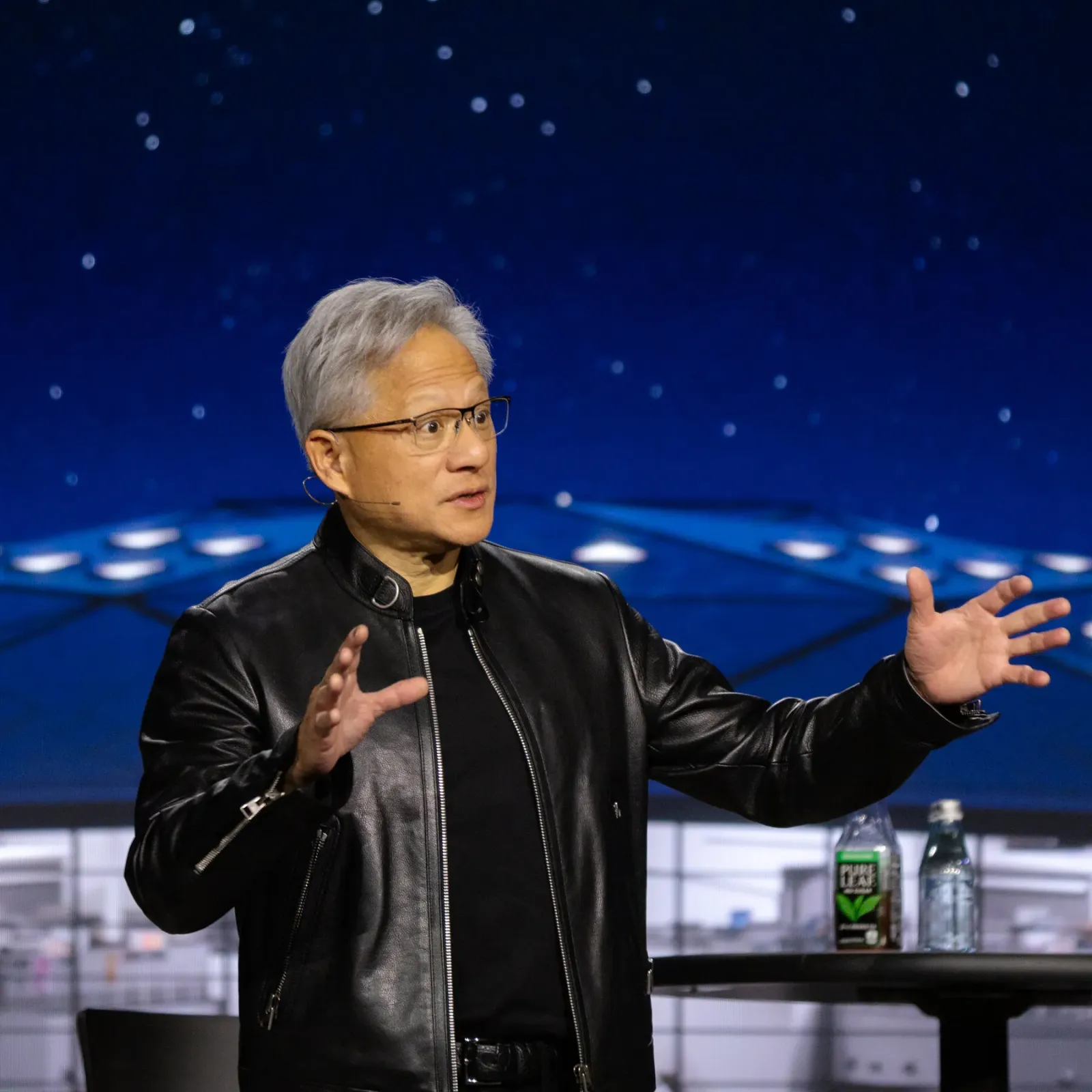
Nvidia chief executive Jensen Huang has resigned after scrutiny over an affair with a woman said to be a Chinese spy and a relationship with a subordinate at his AI chip company, with finance chief Colette Kress named interim leader. For decision-makers, the exit puts the most strategically important company in the AI supply chain under an interim CFO-turned-CEO while a spy allegation pulls the story into national-security and regulatory territory.
Jensen Huang has resigned as chief executive of Nvidia, ending one of the most consequential runs in modern technology and handing the AI chip giant to an interim leader: Colette Kress, the company's finance chief. The exit follows scrutiny on two fronts, an affair with a woman said to be a Chinese spy and a relationship with a subordinate at his AI chip company. Kress, whose job until now has been running Nvidia's numbers, suddenly runs the whole company.
Sit with that for a second. The executive who turned Nvidia into the default supplier of the chips that train and run modern artificial intelligence is out, and the person stepping in, at least for now, is the one who has spent her tenure explaining the company's financials rather than setting its product roadmap. The word "interim" is carrying a lot of weight in that sentence, and everyone from Wall Street to Nvidia's largest customers will read it the same way: this is a holding pattern, not a plan.
For context on why this lands so hard: Nvidia's chips became the workhorses of the AI boom, the hardware that hyperscalers, startups, and research labs queue up for when they want to train a model. That position made the company one of the most strategically important firms on the planet, and it made its chief executive one of the most closely watched. Nvidia's fortunes have been tied to a single architecture roadmap and, until this week, to a single founder-CEO whose public appearances moved markets. Remove that person abruptly and you remove a load-bearing wall.
The spy allegation is what turns a personal-conduct story into a geopolitical one. Nvidia sits at the intersection of American AI ambition and US-China technology tensions, a position that has already made it a fixture in export-control debates and semiconductor policy fights. Any suggestion that someone close to the chief executive is linked to Chinese intelligence will draw attention from lawmakers, regulators, and national-security officials, even when the claim is unproven. The reporting hedges carefully, describing the woman as "said to be" a spy, and that hedge matters: no charge has been established. But in Washington, an unproven allegation attached to the most important chip company in the world is still a hearing waiting to happen.
Then there is the governance problem. Boards typically treat an interim chief executive as a bridge, a signal to customers and employees that operations continue while a permanent search runs in the background. Naming the finance chief is the most common version of that move, because the CFO already knows the numbers, the debt, and the guidance. But a CFO is not automatically a product or strategy leader, and Nvidia's next chapter is a product and strategy fight. The interim label also invites the questions boards dread: Is the search real? Is the bench thin? Who else is leaving?
The second-order effects will show up fast. Customers with multi-year capacity commitments now have to ask whether delivery schedules and roadmaps survive a leadership change. Suppliers and contract manufacturers watch for order signals. Employees, especially the engineers Nvidia competes fiercely to keep, watch for drift. And investors confront the oldest risk in tech, key-person risk, the possibility that a company's value is inseparable from one individual. That risk was always present at Nvidia. It is now being priced in real time.
For peers in the C-suite, the lesson is not subtle. Personal-conduct exposure is corporate exposure when the person involved runs a systemically important company. Boards that have not audited their conflict-of-interest and disclosure policies should assume someone eventually will. Succession benches that exist only on paper should be tested before a crisis tests them. And the geopolitical vetting of a leader's inner circle, historically an afterthought at most companies, now belongs on the same list as financial controls.
Kress's first job is continuity: keep the roadmap on schedule, keep the largest customers calm, and give the board room to run a credible search. Her harder job is credibility, because an interim leader running a company this exposed gets judged on every signal. The AI buildout does not pause for a leadership vacuum. Neither, for that matter, do Nvidia's competitors.
This story's Key Insights and Take-aways are locked.
Create a free account to unlock Executive Actions for one credit.
Register to UnlockAlways free for Executives Club members. Join the Club
More in Technology

Anthropic mathematician claims Claude helped crack the Riemann hypothesis
If the proof holds, AI has toppled math's most famous open problem; if it does not, it is a case study in announcing breakthroughs before anyone verifies them.

AI's $4 Trillion Wipeout Erases Nasdaq's Gains for the Year
A brutal week took roughly $4 trillion off the AI sector and left the Nasdaq flat for the year, and the damage ran the full length of the supply chain.

Anthropic mathematician says AI proved the Riemann hypothesis. Verification will take time.
A single unverified claim from inside Anthropic now sits against more than 160 years of open mathematics, and the gap between asserting a proof and surviving peer review is the entire story.