
Jodie Whittaker to star and exec produce Ella Grace Kennedy’s dystopian short The Country
A role-reversal thriller built around bodily autonomy and an extremist religious commune brings high-profile talent to the screen.
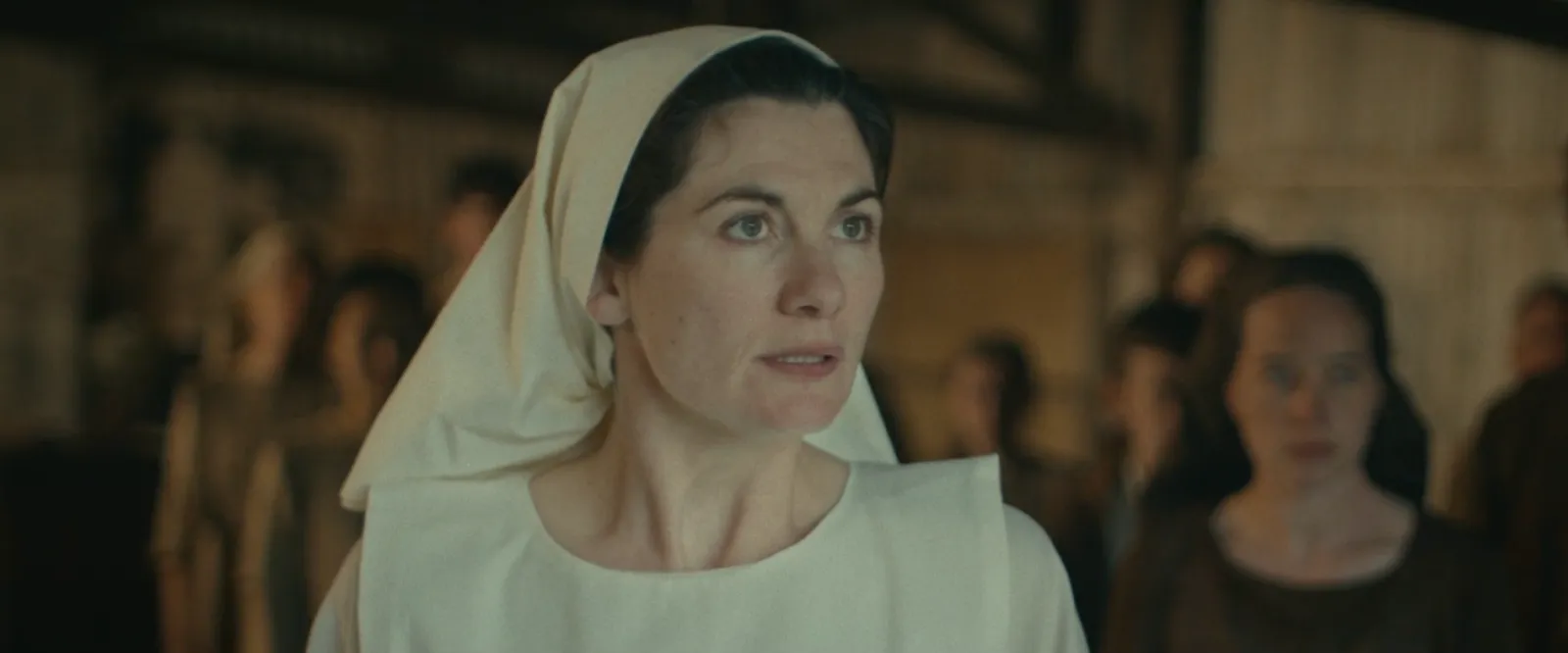
Jodie Whittaker will star in and serve as executive producer on Ella Grace Kennedy’s short film The Country. The cast also includes Eoin McCaul, Anna Popplewell, and Jake Kenny-Byrne, with the film tackling bodily autonomy, oppression, and control through an extremist religious commune lens.
Jodie Whittaker is stepping into a new creative lane as the star and executive producer of The Country, a short film from filmmaker Ella Grace Kennedy. Deadline reports this as an exclusive casting and production win, with Whittaker attached not just to perform, but to exec produce, putting her in the driver’s seat for how the story gets made and messaged.
The Country is described as a role-reversal dystopian thriller that tackles bodily autonomy, oppression, and control. It does that through the lens of an extremist religious commune, which instantly signals why this project is worth attention beyond casting chatter: the themes are not abstract. They are about governance over bodies, the mechanics of coercion, and how ideology becomes a control system. And in media markets right now, that kind of content tends to travel fast, because it speaks to both entertainment appetite and cultural urgency.
The cast matters because it suggests the production is aiming for credibility and range, not just a single recognizable name. Joining Whittaker are Eoin McCaul, Anna Popplewell, known for The Chronicles of Narnia, and Jake Kenny-Byrne, known for Miss Austen. That mix of established screen presence and genre-adjacent work helps position The Country to move across audiences, from viewers who follow talent to those who seek out dystopian and socially charged thrillers.
For executives and decision-makers in entertainment, the “star plus exec producer” model is the part that often changes the outcome. When a performer is also executive producing, they can influence development choices, creative guardrails, and even where the story lands with distributors and marketing partners. In practical terms, it can tighten alignment between performance and message. The story is explicitly about bodily autonomy, oppression, and control, and the production leadership will likely be more invested in ensuring those themes are handled with intention rather than treated as seasoning for plot.
There is also an industry incentive hidden in plain sight: short films are frequently the high-velocity testing ground for future careers, new production collaborations, and audience insights. A dystopian thriller can be designed to hook quickly, and the role-reversal element implies the film is built to unsettle assumptions early. That matters for boards and producers because short projects can function like focused bets: lower time and budget than a feature, but with the potential to generate strong reputational signals. If The Country lands, it can sharpen Whittaker and Kennedy’s positioning for bigger, higher-risk projects.
From a rights and compliance perspective, The Country’s subject matter also puts a spotlight on how productions think about extremism and coercion on screen. Deadline frames the film through an extremist religious commune. Any project touching extremism typically requires careful handling in editing, marketing, and how claims are represented within fiction. Even when the story is fictional, the depiction can intersect with platform policies, audience sensitivities, and institutional standards. That makes exec production even more consequential for Whittaker, because executives tied to leadership roles are usually the ones who ensure the final product stays within acceptable and distributable boundaries.
There is a second-order implication here for investors and studio strategists watching talent pipelines. Whittaker’s involvement as both star and executive producer signals that high-profile actors are continuing to move upstream, seeking creative control and participation in outcomes. That shift can reshape bargaining dynamics. Talent that can credibly drive development can command different kinds of deals. It can also raise expectations for production quality and for the consistency of the film’s thematic thesis, especially when the plot is explicitly centered on bodily autonomy and oppression.
If you are running a media company, investing in content, or operating within a creative ecosystem, The Country is a reminder that today’s “what gets made” decisions are tightly coupled with “how it gets positioned.” A project that uses an extremist religious commune as its lens is not just a genre exercise; it is a message-carrying story about control. And when you combine that with Whittaker’s exec production involvement and a supporting cast that includes Anna Popplewell and Jake Kenny-Byrne, you get a package built for attention, conversation, and, potentially, impact. The strategic stake is simple: the strongest shorts do not just entertain. They define what the industry believes is worth taking seriously.
This story's Key Insights and Take-aways are locked.
Create a free account to unlock Executive Actions for one credit.
Register to UnlockAlways free for Executives Club members. Join the Club
More in Entertainment

12TB Steam 'teraleak' goes beyond Valve: GTA 3, Mafia 2 prototypes exposed
A 12-terabyte dump of Steam data reveals prototypes and builds of third-party classics like GTA 3 and Mafia 2, plus unreleased Valve content, rewriting game history.

LinkedIn's romance problem: 1 in 4 workers say dating on it is fair game
A new survey shows a quarter of U.S. employees treat the professional network as fair game for romance, even as LinkedIn bans it and removes hundreds of thousands of offending posts.

Enhypen's first No. 1 album breaks K-pop's Billboard 200 streak
The K-pop group's 98,000-unit debut tops the chart while Dolly Parton's catalog reentry shows how death reshapes streaming.