
Kane out 'for months' after ankle surgery in Bayern's Cologne draw
England's captain tore ankle ligaments in Friday's 1-1 Bundesliga draw with Cologne, handing Bayern a multi-month hole at centre-forward and a live test of key-man risk.
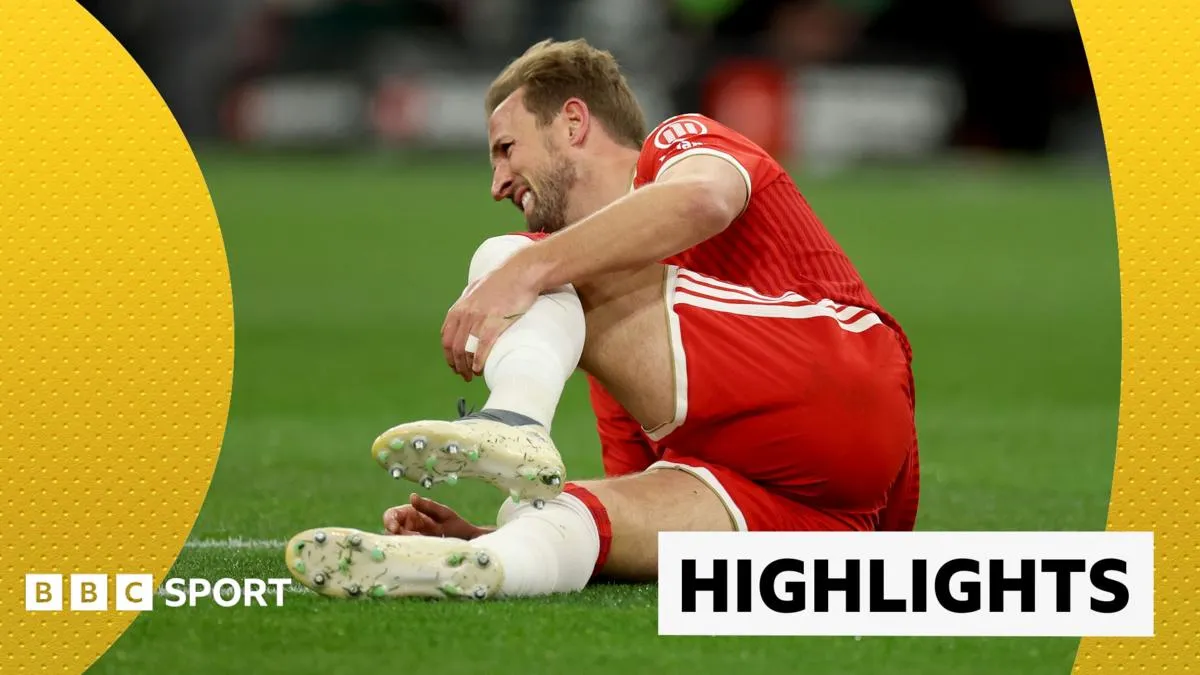
Harry Kane, England captain and Bayern Munich striker, will be out "for the next few months" after undergoing surgery on torn ankle ligaments sustained in Friday's 1-1 Bundesliga draw with Cologne. For decision-makers, it is a case study in concentration risk: one indispensable asset, two institutions depending on him, and a market that reprices the moment he goes down.
Harry Kane, the England captain and Bayern Munich's centre-forward, will be out "for the next few months" after undergoing surgery on torn ankle ligaments, an injury he sustained in Friday's 1-1 Bundesliga draw with Cologne. That single sentence carries the whole story, and it is a heavy one: the most recognizable English footballer of his generation goes under the knife, and the club that built its attack around him loses its focal point for a stretch measured in months rather than matches.
The timeline is the number that matters, and it is deliberately elastic. "A few months" is the phrase attached to the diagnosis, and ankle ligament surgery typically carries a recovery measured in months, not weeks. Read that against a football calendar that runs on weekly results and it becomes a planning problem, not a medical footnote. The 1-1 draw with Cologne already cost Bayern two points on the night. The surgery costs them their primary goalscorer for far longer, and it removes him from the pitch at the exact point in the season when squads are supposed to be hardening, not thinning.
Context matters here. Bayern Munich is historically Germany's dominant club, the institution the Bundesliga's global audience is built around, and its operating model assumes a title challenge every season and a deep run in Europe every season. That model leans on a small number of elite players, and no position concentrates the dependency more than centre-forward. A club that structures its attack around one No. 9 is running a single point of failure. Friday night is what that failure looks like in practice: a draw instead of a win, and a striker in surgery instead of in the box.
Kane's second job complicates the picture. He captains England, and the international calendar does not pause for club injuries. International windows fall inside the recovery period, which puts the national team's planning in the same waiting room as Bayern's. The calculation differs for a federation: there is no transfer market to fix a missing captain, only the depth chart, the medical staff's timeline, and whatever the next man does with the minutes he is handed.
Second-order effects show up quickly in football's transfer economy. When a top club loses a striker for months mid-season, the market reprices. Selling clubs know the buyer is under pressure, so asking prices for proven goalscorers tend to rise, loan fees harden, and any agent with a client on an expiring contract suddenly has a much better week. None of that is guaranteed in this case, but it is the standard pattern, and Bayern's rivals will be watching the club's next move as closely as its next result. Squad depth is a strategy until it is tested; then it is a scoreline.
For executives outside sport, the shape of this story is uncomfortably familiar. One asset carries the output, the asset fails, and the organization discovers in real time how much of its plan was actually a bet on one person. Sports clubs hedge with contracts, medical staff and squad depth. Companies hedge with succession plans, redundancy and key-person insurance. The useful question for a board is not whether the star gets injured. It is what the plan says when they do, and who is accountable for the answer.
Three things to watch from here. First, the recovery timeline: "a few months" will sharpen as Bayern's medical staff update it, and in a title race every week is worth points. Second, Bayern's results without Kane, which will show whether the squad was built to absorb this or merely hoped it would not happen. Third, England's selection, where the captain's absence reshapes who gets minutes and who gets the chance to claim them permanently.
The headline is a medical update. The substance is a live stress test of how two of football's biggest institutions, a dominant club and a national team, handle the loss of the one player both were built around. Kane's surgery is the news. What Bayern and England do in the months that follow is the story.
This story's Key Insights and Take-aways are locked.
Create a free account to unlock Executive Actions for one credit.
Register to UnlockAlways free for Executives Club members. Join the Club
More in Entertainment

GTA 6 banks $3.8bn in one day, torching every launch record
One game just out-earned every video game launch and every single-day film box office haul in history, and the fallout lands on every media CEO's forecast.

GTA VI Racked Up $3.79 Billion in a Single Day, Topping Every Film Ever
A 13-year wait produced a $3.79 billion day, more than any movie has made in its entire run, and it resets the launch math for every studio, streamer, and brand chasing the same attention.

GTA 6 sells 32.5M pre-sales and $3.79B day one, torches 13-year record
Rockstar's sequel didn't just beat Grand Theft Auto V's 13-year-old benchmark; it reset what a launch can be, with 32.5 million pre-sale copies and $3.79 billion in a single day.