

Kuwait accuses Iran of hitting power and desalination plants again, raising energy risk
The allegation centers on critical infrastructure, and the fallout is immediate for regional energy and water reliability.

Kuwait has accused Iran of again attacking critical power and desalination plants in the Middle East. For decision-makers, the claim raises the probability of supply disruptions, insurance and security cost pressure, and harder regulatory scrutiny of infrastructure resilience.
Kuwait is accusing Iran of again attacking critical power and desalination plants, a charge that matters because those facilities do not sit on the edge of the system. They are the system. When power goes, desalination plants lose their ability to turn seawater into usable drinking and industrial water. And when desalination falters, even short disruptions quickly become a public health and economic problem.
The key point for executives is that Kuwait is not describing a routine incident or a “local” outage. It is accusing Iran of another strike on infrastructure that keeps daily life running: electricity generation and water production. In other words, the accusation is about continuity. It is also about vulnerability, because power and desalination are high-value targets, and they are also tightly coupled. The operational takeaway is simple: resilience failures cascade.
Zoom out and the strategic picture starts to look like a risk management problem disguised as geopolitics. Middle East grid operators and water authorities typically plan around demand growth, fuel supply volatility, and maintenance cycles. They do not plan around adversarial disruption of critical assets, especially not repeatedly. That changes how boards think about capital allocation. It pushes infrastructure spending from “normal reliability” into “security-by-design,” including hardening, redundancy, and faster restoration playbooks.
There is another layer: critical power and desalination plants tend to be cross-linked with logistics and industrial demand. Refineries, petrochemicals, ports, and large commercial customers depend on stable electricity. Even when water is produced, distribution networks and storage become bottlenecks if outages force shutdowns or slow restart sequences. That means an incident does not just affect households. It can also affect export capacity, contract performance, and the near-term economics of energy and water operators.
From a regulatory and compliance standpoint, allegations like this usually trigger a different set of questions than ordinary reliability reporting. Regulators and ministries tend to focus on business continuity requirements, emergency response coordination, and the adequacy of contingency measures. In a tightening security environment, oversight can become more formal and more frequent, which can raise costs even if physical damage is limited. Executives should expect the compliance burden to expand in parallel with security spending.
For markets, the story is also about second-order pricing. Energy reliability and water reliability feed into operational costs, workforce productivity, and, in extreme cases, emergency procurement. Investors and lenders often price “risk of disruption” separately from “risk of demand.” If critical infrastructure is perceived as repeatedly exposed, risk premiums can rise. That can influence everything from the cost of refinancing to how quickly insurers respond with coverage terms, deductibles, and exclusions.
The Middle East context matters here because water systems are structurally dependent on power. Many desalination setups are electricity-intensive, and they require stable operations to avoid damage and to safely restart after disturbances. So an attack on power can become an attack on water even if desalination equipment itself is not directly struck. For boards, this coupling should change how contingency plans are tested. It also changes what “success” looks like in drills: not just power restoration, but rapid stabilization of the full water production chain.
Finally, look at the incentive alignment for governments and state-linked utilities. In environments with elevated threat claims, operators can face pressure to demonstrate preparedness quickly. That can accelerate project timelines for protective measures, but it can also create procurement and governance stress. Executives should pay attention to how authorities coordinate between energy regulators, water agencies, and security departments, because the slowest stakeholder process is often the weakest link when restoration is urgent.
Kuwait’s accusation that Iran is again attacking critical power and desalination plants is therefore not only a diplomatic headline. It is a risk signal. For peers across the region, it is a reminder that infrastructure resilience is now inseparable from national security, public health, and financial planning.
This story's Key Insights and Take-aways are locked.
Create a free account to unlock Executive Actions for one credit.
Register to UnlockAlways free for Executives Club members. Join the Club
More in Politics

LA County: DOJ's 20,000 'noncitizen' voter list is 'unreliable,' includes U.S.-born
Preliminary review by Los Angeles County election officials finds errors in the federal list, raising the stakes for voter roll integrity ahead of November.

Trump's $1.5B Pentagon chip investment lands in North Carolina
A $1.5 billion defense infusion for North Carolina chipmaking signals a new era of Pentagon-backed reshoring - here's what it means for the industry.
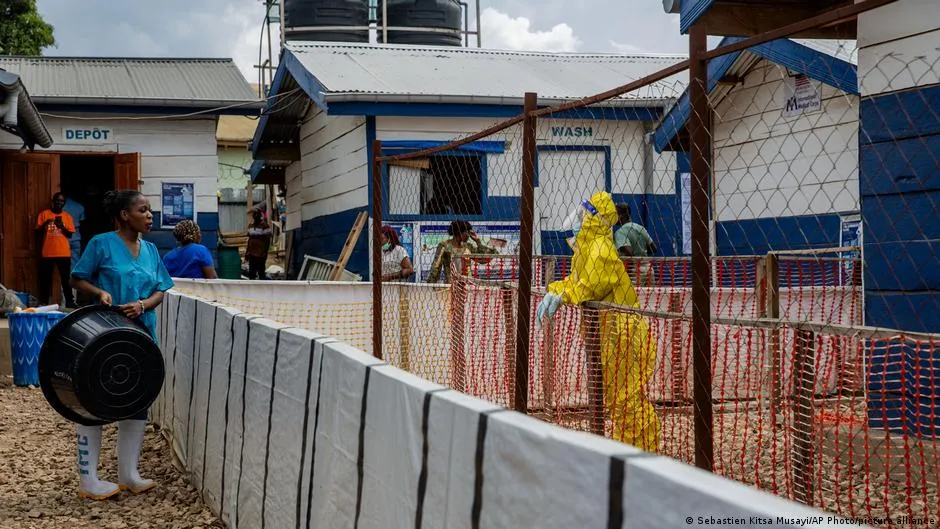
Nigeria confirms first Ebola case in Abuja, a woman just off a Uganda flight
Health Minister Muhammad Ali Pate says the patient flew in from Uganda, putting Africa's latest outbreak on Nigeria's doorstep.