

Lindsey Graham dies at 71, leaving Trump-era checks and balances suddenly unbalanced
The Senate returns to work as Washington digests Graham's death and renewed strikes against Iran raise new risks.

Sen. Lindsey Graham, the South Carolina Republican who shifted from criticizing Donald Trump to becoming one of his most consistent defenders, has died at 71. The change lands as Congress comes back in session and the U.S. conducts strikes against Iran, increasing uncertainty for lawmakers and markets alike.
Sen. Lindsey Graham has died at 71, a sudden loss that has shocked Washington. NPR frames the core arc of his political life in one line: Graham was once a fierce critic of then-candidate Donald Trump, but later became one of the president's most consistent defenders. That transition matters because it maps onto a broader question executives, investors, and operators are always asking in real time: when the people who shape enforcement, oversight, and messaging disappear, what changes fast, and what stays the same?
In the immediate term, the practical stake is simple. Graham was not just another member of Congress. He helped set the tone in policy fights where national security and foreign policy collide with domestic priorities, and NPR connects his death to a moment when Congress is back in session and the U.S. is striking Iran. That timing turns a personal headline into an institutional stress test. Leadership gaps, committee influence, and day-to-day legislative momentum are all harder to predict when a key political actor is gone before the next votes, hearings, and negotiations.
To understand why this is more than Washington theater, it helps to remember how congressional power actually functions. In the U.S. system, lawmakers shape what agencies can do by changing authorizations, tightening or loosening oversight, and directing attention during the appropriations and confirmation cycles. Executives watching regulation typically do not track ideology. They track process. Who will control the hearing schedule? Who will push for a tougher posture? Who will soften timelines or shift enforcement focus? When someone like Graham passes away unexpectedly, it can change the “temperature” inside committees even before any formal replacements are named.
NPR also points to the most consequential second-order detail: the magnitude of Graham's political pivot. He began as a fierce critic of then-candidate Donald Trump and ended as one of the president's most consistent defenders. That is not just a biography footnote. For decision-makers, it suggests Graham had real adaptability in how he navigated the coalition dynamics of Trump-era governance. When that kind of bridge figure is removed, the chain between administration priorities and congressional buy-in can weaken. Sometimes the outcome is delay. Sometimes it is sharper conflict. And sometimes it is a brief period of ambiguity where staff scramble to keep legislation moving.
Now add the second part of NPR's update: Congress is back in session, and the U.S. is striking Iran. That combination is a classic setup for fast-moving policy pressure. National security actions tend to accelerate follow-on government work, from intelligence oversight to sanctions policy to funding decisions. For corporate leaders, the operational risk is not only the headline itself. It is the knock-on effects that follow when lawmakers push agencies to respond quickly or tighten compliance expectations. Sanctions and export controls are the usual channels, but there is also the human side: pressure changes how quickly hearings occur, how aggressively agencies interpret authority, and how cautious companies become about supply chain and cross-border exposure.
So where does that leave boards and executives who want to plan? It leaves them in a familiar posture: scenario management under uncertainty. A sudden leadership loss at the federal level can impact regulatory calendars and the likelihood of certain legislative outcomes. Meanwhile, active military actions abroad tend to raise volatility in markets and to increase the probability of emergency or expedited political action at home. Even without speculating about what replaces whom or which policies win, it is rational to prepare for the transitional period where messaging, committee staffing, and legislative timelines are not stable.
The bigger strategic stakes are for peers in similar roles. Graham's death is a reminder that political influence is not evenly distributed. Some lawmakers are loud but not decisive. Others are experienced operators who can translate positions into votes and procedures. When a consistent defender of a sitting president disappears, the system can become less predictable, at least until new alignment forms. For executives and investors, that is the real takeaway: leadership shocks in Washington, timed alongside congressional resumption and major foreign policy action, can reshape the decision environment quickly. The question is not whether Congress will function. It will. The question is how turbulent the path will be to the next set of votes, authorizations, and oversight decisions.
For now, NPR captures the essentials: Graham's death at 71 has shocked Washington; his political journey ran from fierce criticism of then-candidate Donald Trump to steadfast support of the president; Congress is back in session; and the U.S. is striking Iran. Put together, it is a high-speed intersection of personnel change and national security pressure, where the cost of waiting for clarity is that the market and the policy process may already have moved.
This story's Key Insights and Take-aways are locked.
Create a free account to unlock Executive Actions for one credit.
Register to UnlockAlways free for Executives Club members. Join the Club
More in Politics

Glacial collapse, not rain, killed 180 in Nepal's Himalayan flood
The Himalaya's extreme geography hid the true cause of Nepal's catastrophic flood, a glacial collapse that turned a geological battleground into a mass-casualty zone.

Iran’s Esmail Baghaei says Oman talks start shipping via Hormuz, not US talks yet
Temporary route plans with Oman aim to restart commerce while Tehran says Washington dialogue is not on the table.
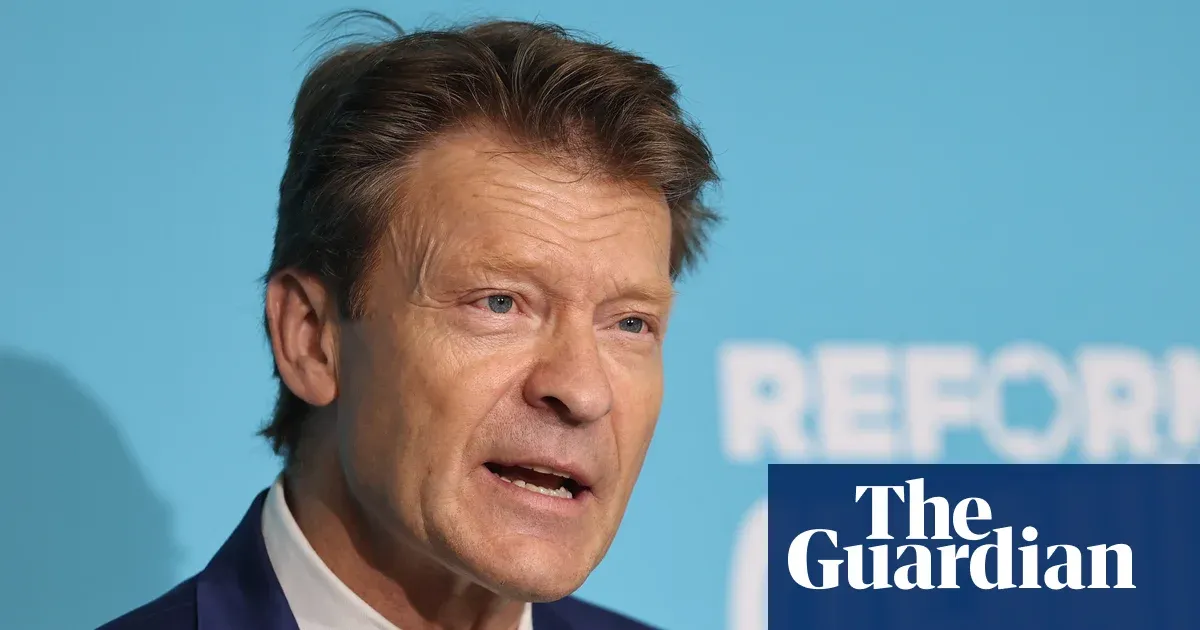
Standards watchdog opens probe into Reform UK deputy leader Richard Tice over interests
The parliamentary standards commissioner says it began an investigation on 28 July into a possible undeclared interest.