
Mark Carney turns Canada’s World Cup run into a political mic-drop
Prime Minister Mark Carney’s matchday appearances and locker-room talk are reshaping how leaders show up in public moments.
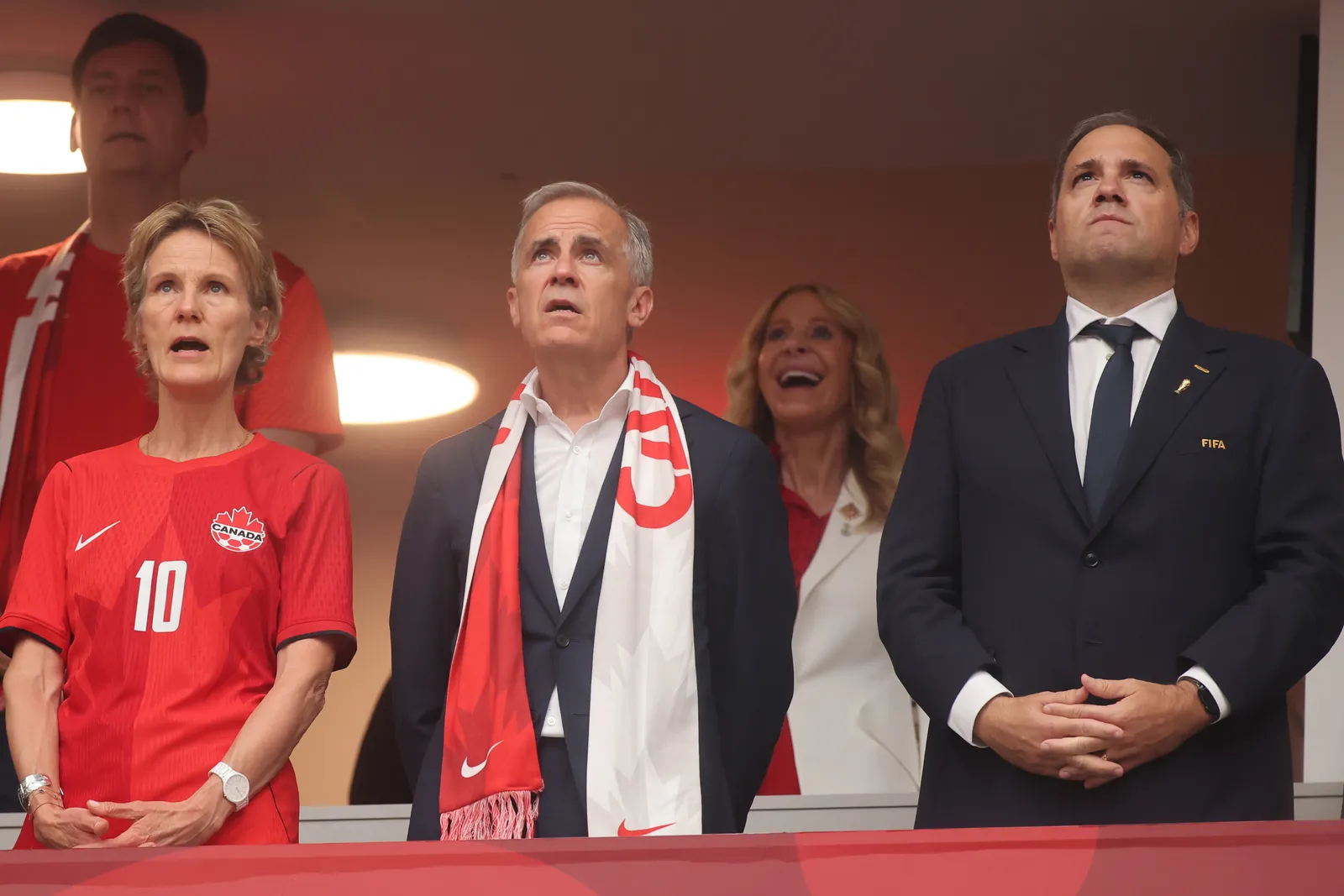
Canadian Prime Minister Mark Carney has attended two Canada group-stage World Cup matches and delivered a locker-room talk after Canada’s win over Qatar. The political attention machine around his presence is now blamed for Canada’s lone group-stage loss, while he also used the tournament to pursue diplomacy with South Africa.
LOS ANGELES - Canadian Prime Minister Mark Carney attended two of Canada’s group-stage World Cup matches, then gave a locker-room talk to the team after its defeat of Qatar that spread widely on social media. In other words, Carney did not just attend a tournament. He turned it into a visible, repeatable leadership pattern, with instant feedback loops from the public, the press, and the team.
That visibility matters because Canada’s run has come with a superstition attached to it: one defeat, against Switzerland, has been blamed on the "Carney Curse." The specific claim is that Carney briefly stepped away from his seat when a crucial goal was scored. Carney has not said whether he is traveling to Los Angeles for today’s knockout fixture against South Africa, but his actions so far are already shaping the narrative of who is “in the room” when results swing.
To understand why this is more than sports theater, look at what else is happening around the tournament. President Donald Trump has stayed away from the World Cup after making himself the main character of the months leading up to it. Mexican President Claudia Sheinbaum prominently gave away her tickets to Mexico’s matches, which was seen as a populist rebuke to FIFA. Against that backdrop, Carney’s approach is basically the opposite: he leans into the event, shows up in person, and then reinforces it with a moment that feels intimate and team-first.
There is also a timing incentive for leaders watching each other. High-profile international competitions compress attention into a short window. They give governments and leaders a stage where communication happens in real time, without the usual filters of policy announcements. When a locker-room talk spreads on social media, it becomes a story that travels faster than any official statement. That kind of velocity can influence domestic politics because it sets an emotional frame, not just a factual one.
But the story gets sharper when you connect it to diplomacy. The article notes that Carney used the South Africa matchup as an occasion to call President Cyril Ramaphosa, and that the two men discussed "growing cooperation in agriculture and agrifood," according to a readout provided by the prime minister’s office. That detail is a reminder that even a tournament built for entertainment sits on top of real-world economic interests. Agriculture and agrifood cooperation is not a throwaway topic; for governments, it can touch trade, supply chains, investment, and regulatory alignment.
For executives and boards, the second-order implication is not that you should track political locker-room speeches like quarterly results. It is that public leadership narratives increasingly affect stakeholder expectations. When leaders attach themselves visibly to performance, they raise the salience of the organization they are backing, whether that is a national team, a national brand, or a cross-border partnership. In practice, that can influence how partners interpret momentum. It can also change how regulators and public institutions prioritize attention, particularly around politically resonant sectors like agriculture.
There is one more layer: the “curse” itself shows how quickly causality gets constructed when a public figure is present. Carney’s name becomes a shorthand for timing, presence, and outcome. Even if the claim is superstition, it demonstrates how reputational narratives can attach to leaders and then ricochet across media cycles. In a business context, think about the equivalent of a CEO becoming a symbol for progress or setbacks. The lesson is uncomfortable but useful: the more your personal visibility overlaps with a public outcome, the more your name can get used as an explanation, even when causation is murky.
Carney’s approach also highlights a governance style question for leaders in similar roles: do you optimize for proximity to the moment, or for distance that reduces personal entanglement? The source tells us Carney has not confirmed travel to Los Angeles for today’s knockout fixture against South Africa, but he has already demonstrated a pattern of showing up, engaging, and then leveraging the attention for policy-adjacent conversations like agriculture and agrifood cooperation with South Africa. In a world where narratives travel faster than policy memos, that balance can determine whether a leader’s public brand amplifies institutional goals or becomes trapped inside the next headline.
Today’s knockout fixture against South Africa is the next test. Not only for Canada’s national team performance, but for whether the “Carney Curse” story sticks, fades, or escalates. For decision-makers, it is a reminder that high-stakes public visibility is never neutral. It shapes interpretation, it invites speculation, and it can even influence how diplomacy is packaged for the public, especially when leaders link sports moments to economic priorities.
This story's Key Insights and Take-aways are locked.
Create a free account to unlock Executive Actions for one credit.
Register to UnlockAlways free for Executives Club members. Join the Club
More in Politics
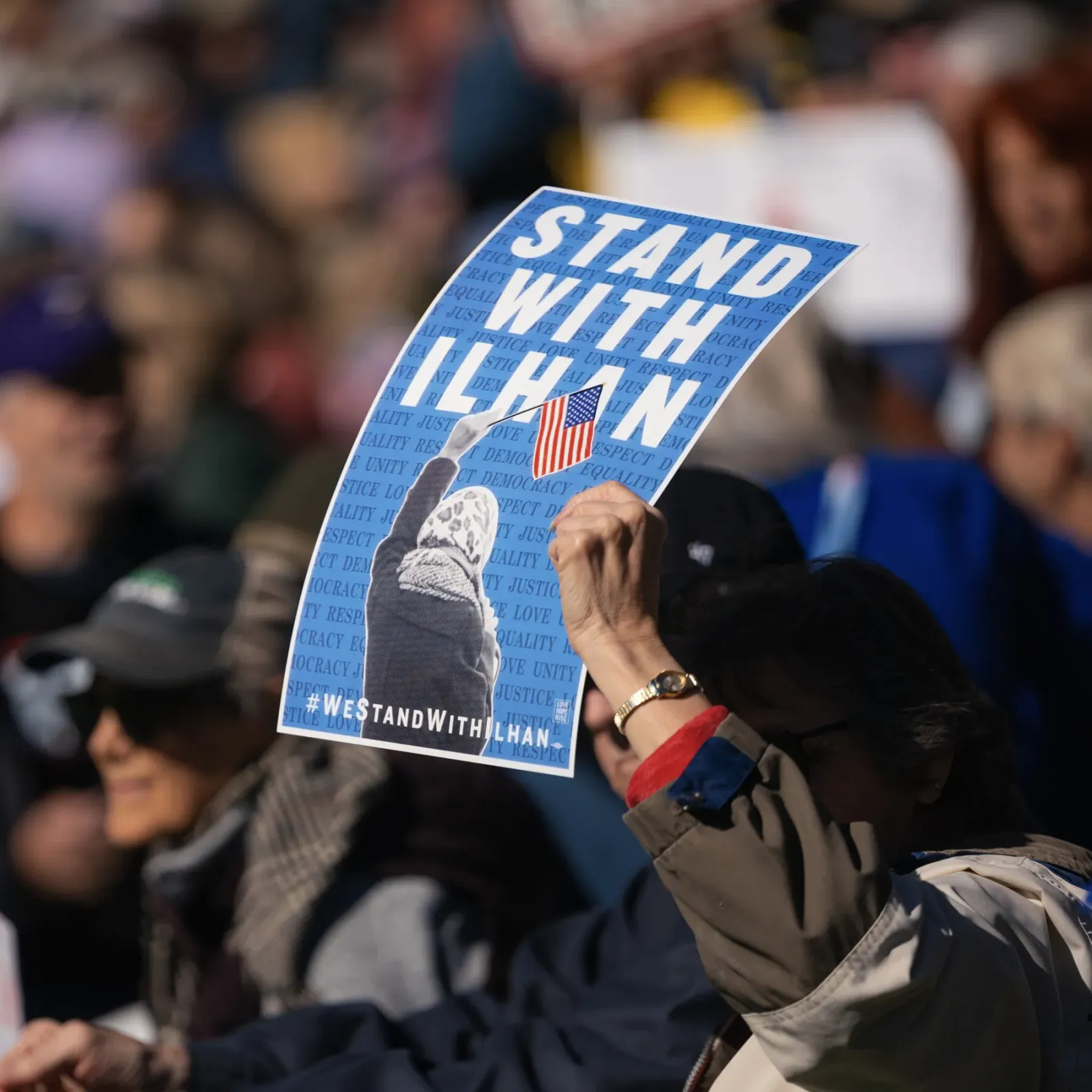
Obama Defends Ilhan Omar After Agents Search Her Home in Trump Inquiry
The former president's intervention raises the stakes in a federal probe into immigration paperwork that has put a prominent progressive lawmaker in the crosshairs.
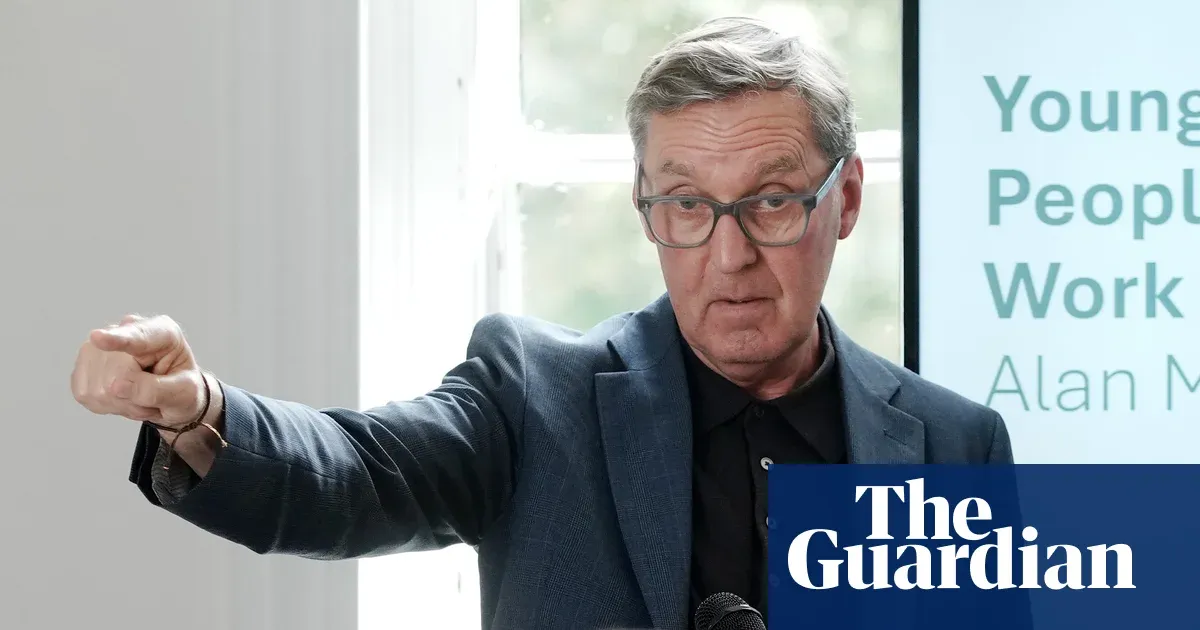
Blair-era minister: cut welfare to fund youth job support
Alan Milburn's call for welfare cuts to fund employment support opens a Labour fight over benefits and the Neet crisis.
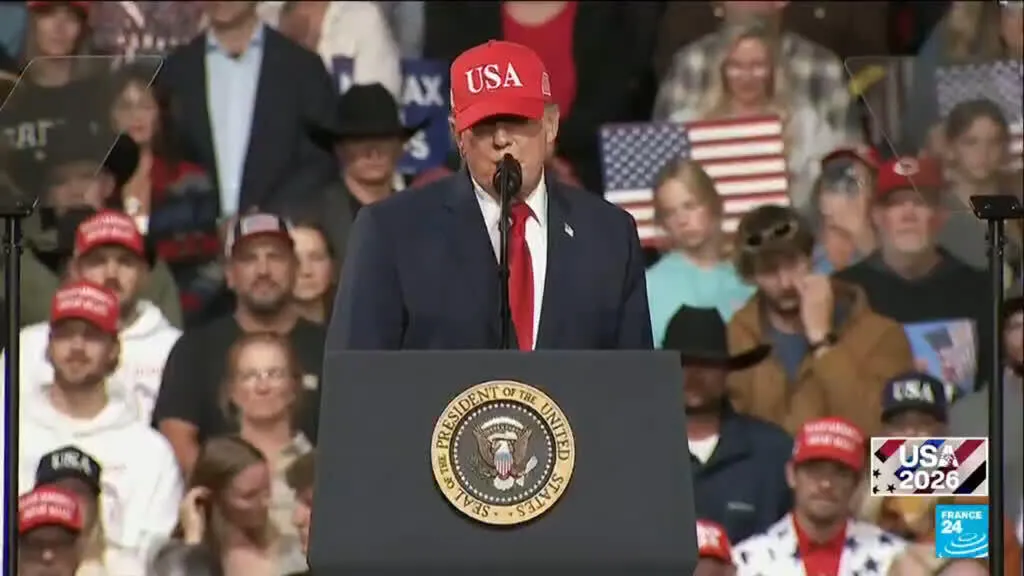
Hot September CPI: energy costs surge, voters feel the squeeze before midterms
The latest inflation print lands as Trump campaigns for GOP control of Congress, putting cost-of-living worries at the center of the midterm fight.