
Mayor Jeffrey Lahullier’s 10,000-person town balloons 800% for MetLife events
MetLife Stadium turns East Rutherford into a temporary megacity, and parking-lot politics decides the real capacity.
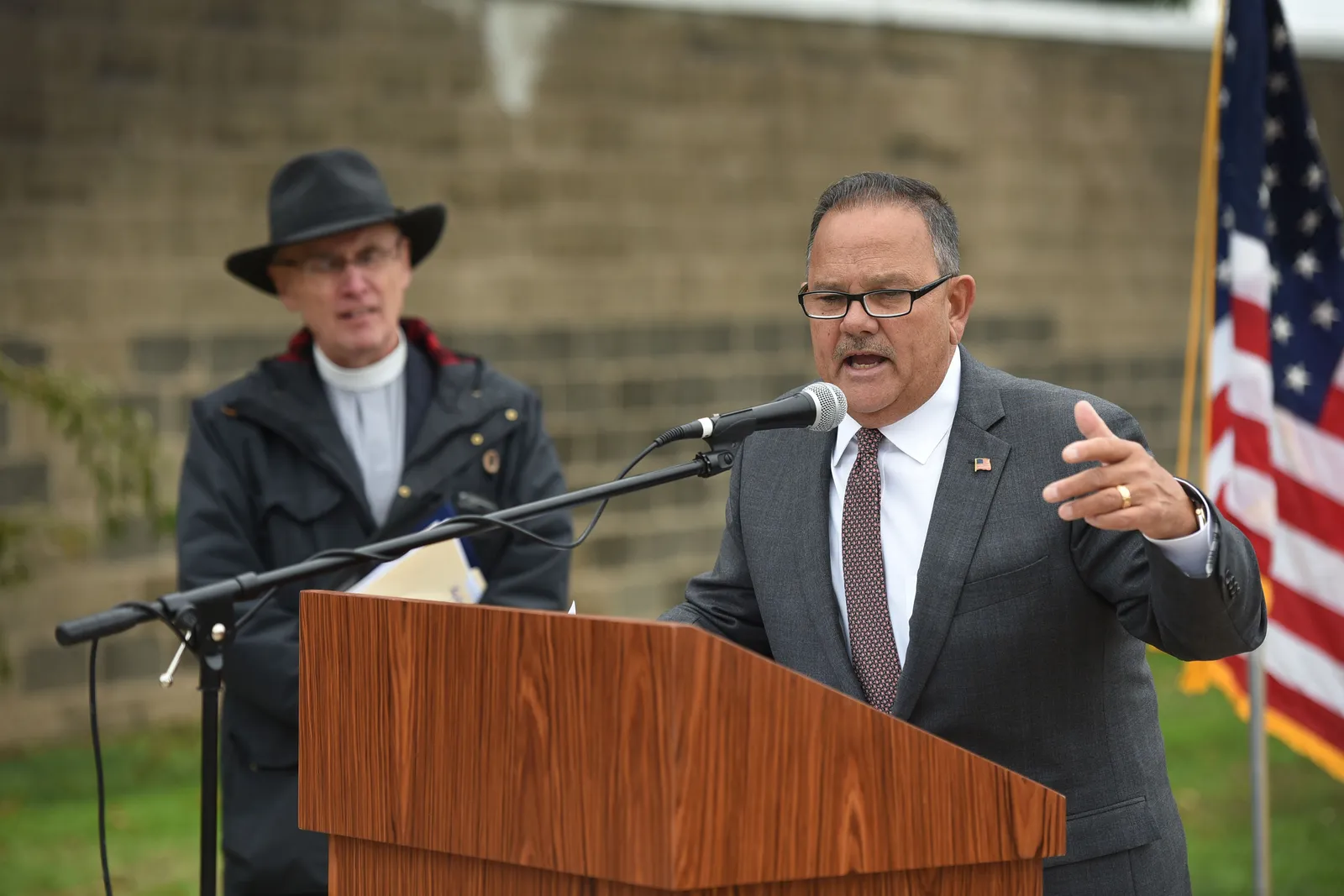
East Rutherford mayor Jeffrey Lahullier governs a 10,000-person town that swells by more than 800% whenever events hit the MetLife Stadium complex, The scale of these surges reshapes operations, compliance, and stakeholder coordination for stadium-city decision-makers.
Forget the players. The real crowd in the room during a big MetLife Stadium weekend is not on the field, it is in the local governance and logistics ecosystem that makes the turnout possible.
POLITICO’s Will McCarthy frames the pivot point through East Rutherford, New Jersey mayor Jeffrey Lahullier. McCarthy writes that Lahullier’s town has a population of 10,000 and grows by more than 800% whenever there is an event at the stadium complex in the middle of his turf. It is the kind of fact that sounds like trivia until you connect it to the practical reality of stadium cities: everything from parking to traffic flow to local service strain has to scale fast, and it has to scale with the town’s authority and constraints.
This is why Lahullier is a useful lens for executives, board members, and investors thinking about event-driven revenue. The stadium might look like one facility, but for the municipality it functions more like a short-lived city-state with its own demand curve. When a World Cup final or another major event arrives, the resident base is basically irrelevant compared to the sudden transient population. That means the municipality becomes the operational quarterback for a surge it did not “create,” but must manage. Even if stadium management handles the gates and the bowl, local infrastructure has to absorb the before and after: ingress, egress, crowd staging, and the swarm of vehicles that arrive expecting space and predictable movement.
POLITICO also points to the other people who, in effect, “rule” stadium-city life. McCarthy describes “the parking-lot poobahs who rule over America’s stadium cities.” The phrasing is colorful, but the underlying structure is familiar in U.S. venues: land use around stadiums often sits in a patchwork of privately controlled lots, local arrangements, and semi-formal power centers that can influence how capacity gets monetized and how smoothly it all runs. For a town like East Rutherford, those operators are not just vendors. They are leverage points that can affect the visitor experience, local enforcement workload, and political heat when something goes wrong.
Put differently, an 800% population spike is not only a transportation story. It is a compliance and risk story. When crowds surge, the day becomes a stress test for local systems and coordination. That includes enforcement of ordinances and permits, coordination across jurisdictions that share roads or services, and the administrative effort of making temporary operations fit within permanent rules. For elected officials like Lahullier, the stakes include public safety outcomes and the political cost of service breakdowns. For event sponsors and stadium operators, the stakes include reputation and revenue protection, because a chaotic arrival or exit can convert paying attendees into angry critics who take the story online.
Second-order implications show up on the money side too. Stadium cities frequently treat these weekends as profit opportunities, but the profit depends on predictable throughput. If parking capacity behaves like a bottleneck, it does not just slow cars, it can spill into everything else. That creates a subtle incentive structure: stakeholders who control access and staging near the venue can exert outsized influence on pricing, vendor flows, and how quickly traffic clears after the final whistle. Boards and executives should recognize that “event success” is partly a municipal and adjacent-land coordination product, not just a marketing and operations product.
Finally, there is a governance angle that matters for anyone managing large venues or financing infrastructure. Lahullier’s position highlights how local leadership can become the de facto integrator for extreme but temporary demand. In a regulatory environment shaped by permitting regimes, public safety requirements, and practical enforcement realities, the town’s ability to coordinate with venue stakeholders can decide whether a major event feels like a spectacle or like a logistical failure. McCarthy’s story, centered on Lahullier and his 10,000-person town swelling by more than 800% for MetLife events, is essentially a reminder that the “center of gravity” for stadium outcomes often sits in local hands, even when the spotlight stays on athletes.
For executives and boards weighing event strategies or infrastructure investments, the message is clear. Big-game days behave like sudden market re-rates, except the variables are traffic, parking control, and public service capacity. You do not only plan for the game. You plan for the temporary city, and you plan with the local actors who can make that temporary city work.
This story's Key Insights and Take-aways are locked.
Create a free account to unlock Executive Actions for one credit.
Register to UnlockAlways free for Executives Club members. Join the Club
More in Politics

LA County: DOJ's 20,000 'noncitizen' voter list is 'unreliable,' includes U.S.-born
Preliminary review by Los Angeles County election officials finds errors in the federal list, raising the stakes for voter roll integrity ahead of November.

Trump's $1.5B Pentagon chip investment lands in North Carolina
A $1.5 billion defense infusion for North Carolina chipmaking signals a new era of Pentagon-backed reshoring - here's what it means for the industry.

Nigeria confirms first Ebola case in Abuja, a woman just off a Uganda flight
Health Minister Muhammad Ali Pate says the patient flew in from Uganda, putting Africa's latest outbreak on Nigeria's doorstep.