
Microsoft outage hits spy agencies, courts and city halls worldwide
The disruption reached from US city governments to Australian spy agencies, exposing how much of government now runs on one vendor's stack.
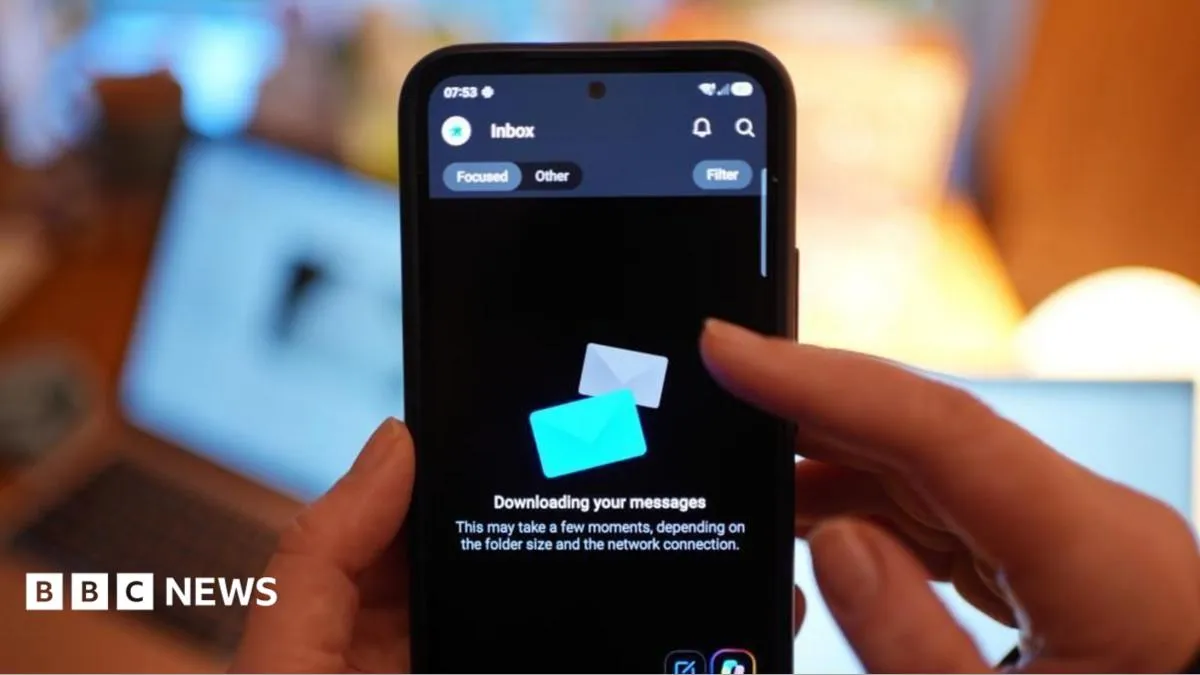
Microsoft's outage has been felt from city governments in the United States to spy agencies in Australia, with courts and MPs also caught up in it, according to the BBC. For decision-makers, the lesson is concentration risk: the same vendor consolidation that saves money in procurement is the dependency that stalls courts, legislatures and intelligence agencies when it fails.
The Microsoft outage did not stay inside one country, one industry or one budget line. According to the BBC, the disruption has been felt from city governments in the United States to spy agencies in Australia, with courts and members of parliament also caught up in it. Read that list again. A municipal IT department and a national intelligence service, in the same boat, on the same day. That is the story, and it is bigger than a bad patch or a slow morning.
The mechanics are mundane, which is exactly why they matter. Governments do not build most of the software they run. They buy it. Email, calendars, identity and access management, document collaboration, video calls, file storage: nearly all of it sits on a handful of enterprise platforms, and Microsoft is the vendor most public bodies default to. When a core layer of that stack degrades, the failure does not stay contained. Staff cannot log in. Case files will not open. Hearings cannot be scheduled. The workarounds, the phone calls, the shared spreadsheets, start piling up within the hour.
This is concentration risk, and it is a choice, not an accident. Public-sector procurement historically pushes toward fewer vendors, not more. Every additional supplier means another security accreditation, another contract to negotiate, another integration to maintain, another set of training materials. Consolidating on one stack is cheaper, faster to deploy and easier to audit. The trade-off is that cost efficiency and resilience pull in opposite directions, and the bill for resilience tends to arrive all at once.
The Australian spy agency detail is the one worth pausing on. Intelligence services typically run their most sensitive work on segmented or hardened networks, with redundancy built in precisely because they assume the outside world is hostile. So the interesting question is not whether classified material was exposed. It is which unglamorous, unclassified systems turned out to be load-bearing. Usually the answer is identity, email, scheduling and HR: the plumbing nobody budgets for until it stops.
Courts and legislatures bring a different kind of exposure: continuity of government. Court schedules, filings and statutory deadlines do not pause because a vendor had a bad day. Legislatures have votes to hold, committees to run and public records to publish. When the underlying platforms wobble, the response is typically a scramble of extensions, adjournments and manual triage, and the cost lands on citizens who showed up expecting the system to work.
The second-order effects are where this gets expensive. Governments are among the largest enterprise buyers on the planet, and their contracts typically include service-level commitments. But service credits are rounding errors next to the cost of a stalled court docket or an agency running at half speed. Expect the fallout to surface in three places: procurement reviews that add resilience and exit clauses, regulatory scrutiny of how critical vendors get designated, and political blame, because voters rarely distinguish between a supplier's failure and their government's.
For executives and boards outside government, the useful move is to treat this as a stress test you did not have to pay for. Ask the uncomfortable questions now. Which of our processes stop dead if our single largest vendor goes dark for a day? Can we operate in a degraded mode, and have we actually rehearsed it? How long is our realistic recovery time, and who owns that number? Do we have a credible exit plan, or just a clause in a contract? Concentration is a bet. Most organizations have made it without ever writing down the odds.
Outages get resolved. The dependency does not. The organizations that come out of this looking competent will be the ones that already knew which systems were load-bearing, how fast they could restore them, and who was accountable when they could not. Everyone else gets to find out in public.
This story's Key Insights and Take-aways are locked.
Create a free account to unlock Executive Actions for one credit.
Register to UnlockAlways free for Executives Club members. Join the Club
More in Technology

Anthropic mathematician claims Claude helped crack the Riemann hypothesis
If the proof holds, AI has toppled math's most famous open problem; if it does not, it is a case study in announcing breakthroughs before anyone verifies them.

AI's $4 Trillion Wipeout Erases Nasdaq's Gains for the Year
A brutal week took roughly $4 trillion off the AI sector and left the Nasdaq flat for the year, and the damage ran the full length of the supply chain.

Anthropic mathematician says AI proved the Riemann hypothesis. Verification will take time.
A single unverified claim from inside Anthropic now sits against more than 160 years of open mathematics, and the gap between asserting a proof and surviving peer review is the entire story.