

Millie Bobby Brown says she can't connect with peers after growing up around men on crews
The Stranger Things star explains why adult talk shaped her childhood friendships and how she is adapting now.
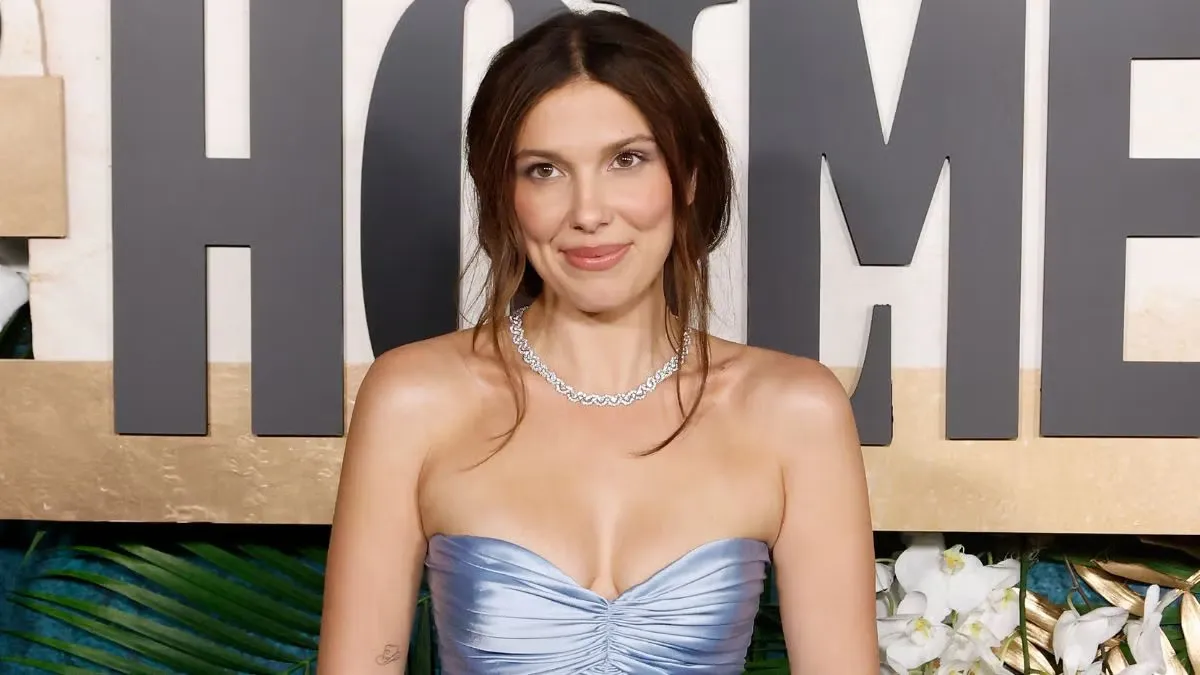
Millie Bobby Brown, known for Stranger Things and Enola Holmes, opened up on the Happy Sad Confused podcast about struggling to connect with people her own age after growing up around “primarily men on crews.” For decision-makers watching celebrity influence and media audiences, her comments spotlight how production environments shape identity and social behavior.
Millie Bobby Brown says she struggles to connect with people her own age, and she traces it back to one very specific childhood reality: “primarily” growing up around “men on crews.” The Stranger Things star said the mismatch still shows up when she’s around age peers, and she described how her social instincts were trained by an industry environment that sounded more like work talk than kid talk.
Brown made the point during a recent appearance on the Happy Sad Confused podcast, where host Josh Horowitz asked whether she felt like she missed certain milestones because of her child star status. Brown’s answer was direct. “Maybe a bit of socialization,” she said, explaining that when fans approach, she can stumble through the interaction, but her bigger issue is that she “just don't know how to react sometimes to people my own age.” She then sharpened the reason: “I have a harder time. Because I grew up with primarily men on crews, let's change that.”
So what does “adult talk” mean in a working set? Brown laid out the gap with examples. She said she heard plenty of adult conversation, including industry language that kids normally would not have to decode. She specifically recalled hearing crew-style talk like “Where's the grip?” and “Let's grab a ladder.” In her telling, that becomes the rhythm of conversation. “So that's your whole conversation,” she said. She can talk shop, at least in the way that production requires, and she gave a concrete example of what that skill looks like: she could discuss camera and lighting work “for hours,” including “different lens changes and shots.” But the social conversation that comes naturally to peers, she said, is different. She contrasted that with the kind of “Oh My god” chatter a kid might have about local preferences or everyday experiences, and she admitted she doesn’t know how to enter that zone. “Oh My god, what bars do you like around this area?” she said she thinks, and her response is basically, “I don't know.”
This is where the celebrity interview becomes more than just a personal anecdote. Brown is describing a common second-order effect of early fame and production immersion: when you spend your formative years in a professional environment, you may become excellent at work fluency and less practiced at age-matched social fluency. That does not mean anyone is “broken.” It means the feedback loops that build confidence and belonging might have been different. On a set, adults set the pace and the topics. If you’re surrounded by people whose job is to execute lighting, grip, and camera needs, you learn those references. But if you’re less surrounded by other kids your age, you may not get enough reps in the kinds of conversations that usually happen between peers.
Brown also tied her comments to a shift happening in her current life. She said she is making more of an effort to be in her “social era,” and she contrasted that with her husband Jake Bongiovi, calling him “the most social butterfly.” That matters because it suggests her “socialization” is not fixed biology or a permanent ceiling, but something she can actively adjust. Brown married Bongiovi in May 2024, and the couple welcomed a daughter via adoption the next year. At the time of the adoption announcement, Brown and Bongiovi wrote on Instagram, “We are beyond excited to embark on this beautiful next chapter of parenthood in both peace and privacy.”
For media executives, producers, and anyone who deals in talent development, these remarks land with extra weight because production is not just a filming machine. It is an ecosystem. Brown’s quote offers a window into how crews, schedules, and who is in the room can shape a performer’s lived experience, including emotional comfort in certain social contexts. That has implications for on-set culture and mentorship, especially for younger actors who spend years juggling professional demands with growth that typically happens in more age-structured settings.
And for boards or leaders making decisions about casting, production plans, or talent support, the underlying takeaway is simple: environment creates habits. Brown’s story shows that being “good with the camera crew” does not automatically translate into feeling at ease with peers, because the conversational grammar of work can crowd out the conversational grammar of childhood. Brown’s attempt to enter a “social era” now is her way of closing that gap in real time, but the better question for industry stakeholders is how early that gap starts to form, and what systems can help young talent build both skill sets, the work talk and the kid talk, before they become years apart.
This story's Key Insights and Take-aways are locked.
Create a free account to unlock Executive Actions for one credit.
Register to UnlockAlways free for Executives Club members. Join the Club
More in Entertainment

Russell Brand's accuser 'bewildered and confused' as he denies 7 sex charges
The criminal case against the comedian is a live test of how media companies manage talent risk when serious allegations go public.

'It's a Magic Trick': Ballet Experts Say Rosalía's SNL Pose Is Impossible
Three ballet experts tell Rolling Stone Rosalía's gravity-defying SNL stillness shouldn't be possible - and why the debate is now part of the show.

Activision CMO: GTA 6 Will Boost Call of Duty, Not Bury It
Activision's top marketer says Rockstar's blockbuster will drive players back to consoles and into Modern Warfare 4, even as the company admits its recent strategy failed.