
Steam Deck runs Dragon Age: Origins at locked 60 fps even while Steam calls it Unsupported
BioWare’s 2009 RPG booted cleanly after launcher friction, and it is also $3 right now on Steam.
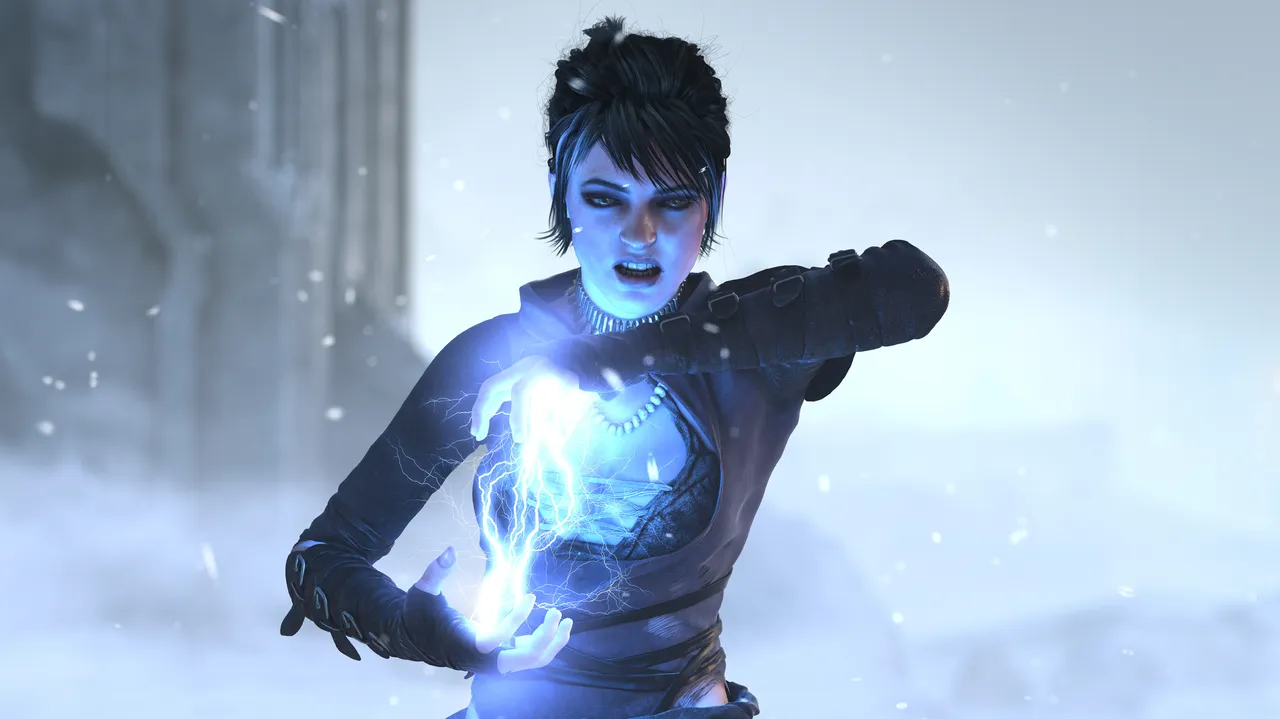
BioWare's Dragon Age: Origins for PC runs on Valve's Steam Deck even though Steam marks it 'Unsupported'. A $3 Ultimate Edition deal makes the mismatch between badge and experience a timely lesson for decision-makers.
Steam is waving a big red “Unsupported” flag at Dragon Age: Origins on Steam Deck, but the game itself is behaving. After an initial 4:3-era launcher obstacle, the title runs at the Deck’s native resolution 1280x800, with graphics and texture detail set to “very high”, and the author reports an “unwaveringly locked 60 fps.” If you need 90 fps, you can do that too, though it is “not as consistent.”
The other reason this is worth paying attention to: the Steam Summer sale puts Dragon Age: Origins Ultimate Edition at a negligible $3. That bundle includes the Awakening expansion and additional content (the source notes there is no Standard Edition on Steam anyway), so the stakes are not just technical. For buyers, it is a very low-friction way to pull a long-wanted “wishlist for well over a decade” title off the shelf. For companies and partners, it is a reminder that platform labels do not automatically predict real-world performance.
So what happened in the “Unsupported” story? The first clue is old-school. The author downloads the game on the Deck, and the first thing they see is an antiquated 4:3 game launcher. After tinkering with graphics settings in that launcher, there is no option to save changes and back out. That leads to a stopgap: pending troubleshooting, the author needs to make do with an 800x600 display and low graphics detail.
Here is the part that flips the narrative. Dragon Age: Origins does not force a launcher loop for graphics changes. From within the game itself, the author can change resolution to the Deck’s native 1280x800, and raise graphics and texture detail all the way to “very high.” With those settings in place, performance hits a locked 60 fps. That is the kind of outcome that turns an “Unsupported” badge from an immediate “skip it” into a “wait, what did they mean?” question.
But performance is only half the problem. The source highlights a second friction point that matters a lot on handhelds: the PC version of Dragon Age: Origins for PC does not have gamepad support like the console versions. That is exactly the sort of issue that can sink handheld play, because without controller support you get broken menus, awkward targeting, and general friction.
The workaround is not just theoretical. The author uses “an amazing Community Layout” by “Khar,” which maps movement to the left stick and maps the mouse pointer to the right track pad. The mouse pointer can then activate objects, trigger conversations, and select hot bar items at the bottom of the screen. The layout also maps the mouse pointer to the right stick, but the author says that feels really bad, so the trackpad mapping is the key.
Even with a good layout, there can be small footguns. The author finds that the configuration maps quick load to L4. They accidentally press it instead of L5, which serves as right mouse click, and that is “obviously problematic.” To reduce the risk, they change the mapping so quick load opens the map instead, and they map quick save to the upper D-pad button. This is a very real signal about the practical overhead of “Unsupported” titles: even when they run, the control layer may need care.
All of this circles back to why the badge matters to decision-makers. Platform labeling affects discovery, purchase intent, and partnership behavior. Steam’s “Unsupported” designation can scare off users who would otherwise try a game that is functionally playable with the right settings and community controller profiles. Meanwhile, Valve and other platform operators benefit from a consistent truth in their compatibility communications, because mismatches can create both lost revenue and avoidable support churn. For publishers and developers, there is also an indirect lesson: if the experience hinges on community layouts and internal settings rather than official support, you may see a gap between “works” and “is expected to work.”
Second-order implications are where the executive brain should kick in. When a $3 Ultimate Edition retro RPG lands on a handheld through community tooling and in-game settings, it suggests a repeatable pattern: handheld viability is often decided by a mix of runtime performance, control mapping, and UI behavior more than by the title’s age. For boards and teams tracking gaming ecosystems, this is a reminder that player experience can outrun initial platform signals. The strategic stake is simple: if compatibility communications lag behind real performance, the market will route around you. Users will either dig in and improvise, or they will walk away. The author’s conclusion is that Dragon Age: Origins takes far less tinkering than some 'Playable' games they have booted, and that this might even push them toward Dragon Age 2.
In other words, the “Unsupported” badge is not the whole story. The whole story is a locked 60 fps handheld RPG, a community control solution for missing gamepad support, and a sale price low enough to turn “someday” into “right now.”
This story's Key Insights and Take-aways are locked.
Create a free account to unlock Executive Actions for one credit.
Register to UnlockAlways free for Executives Club members. Join the Club
More in Entertainment

Russell Brand's accuser 'bewildered and confused' as he denies 7 sex charges
The criminal case against the comedian is a live test of how media companies manage talent risk when serious allegations go public.

'It's a Magic Trick': Ballet Experts Say Rosalía's SNL Pose Is Impossible
Three ballet experts tell Rolling Stone Rosalía's gravity-defying SNL stillness shouldn't be possible - and why the debate is now part of the show.

Activision CMO: GTA 6 Will Boost Call of Duty, Not Bury It
Activision's top marketer says Rockstar's blockbuster will drive players back to consoles and into Modern Warfare 4, even as the company admits its recent strategy failed.