

Sony Music Indonesia launches joint-venture label Lunar with Sun Eater Group
A new Indonesian imprint, PT Lunar Musik Indonesia, debuts with Kecoud, Alee, and Nandoshi.
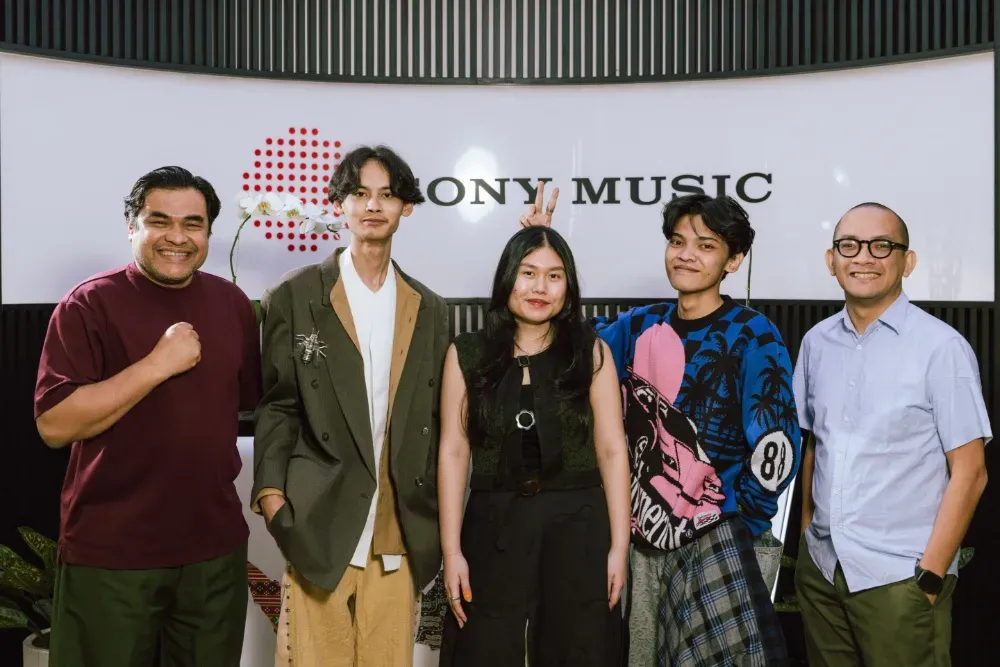
Sony Music Indonesia and Sun Eater Group have launched Lunar, a joint-venture record label incorporated as PT Lunar Musik Indonesia. The venture’s initial roster includes Kecoud, Alee, and Nandoshi, with the stated goal of building and distributing Indonesian artists globally.
Sony Music Indonesia and Sun Eater Group have launched Lunar, a joint-venture record label built to develop and distribute Indonesian artists with global ambitions. The new imprint is formally incorporated as PT Lunar Musik Indonesia, and it opens with three artists on its initial roster: Kecoud, Alee, and Nandoshi.
For decision-makers, the headline stake is simple: Lunar is not just branding. It is a structure designed to plug Indonesian talent into Sony Music’s international distribution engine, while Sun Eater Group brings local development and momentum. That pairing matters because global scale in music is rarely earned on artistry alone. It is won through repeatable distribution, marketing reach, and the ability to move catalog and new releases across borders without reinventing the wheel every single time.
Here is how the venture is positioned, based on what the announcement states. Lunar is explicitly aimed at developing and distributing Indonesian artists that want global reach. The venture works by pairing Sony Music’s international distribution infrastructure with Sun Eater Group’s local presence. In other words, the label model is designed to be a bridge, not a silo. If an artist in Indonesia breaks through, the business question becomes: can the label reliably convert that breakthrough into international exposure at speed? Lunar is betting that Sony’s distribution know-how can answer that question, while the joint-venture form keeps incentives aligned around the same pipeline of artists.
The choice to launch with a small, named roster is also telling. Lunar starts with Kecoud, Alee, and Nandoshi, rather than announcing a broad slate. That tends to signal a “prove the machine first” approach. New labels often overcommit early, then stall because internal processes do not match the ambition of the brand. By putting three artists into the first wave, Lunar can stress-test deal terms, release calendars, distribution workflows, and promotional coordination across Indonesia and outbound markets, before scaling up.
On the corporate side, joint ventures in creative industries often exist to balance two realities. First, local scenes move fast and rely on relationships. Second, international distribution is a system, not a one-off favor. By forming PT Lunar Musik Indonesia, the partnership makes it easier to operate as a separate entity with clearer ownership and accountability. That matters for governance. Instead of relying on a looser commercial arrangement, both parents can align around the label’s performance targets, rights management, and operational execution.
There is also an incentive angle. Sony Music Indonesia benefits from extending its distribution infrastructure and building a pipeline of locally developed acts that fit its global strategy. Sun Eater Group benefits from attaching its talent development to a partner with international distribution capabilities, rather than hoping global traction arrives organically. In music, “global ambitions” can sound like a slogan, but distribution is the practical mechanism that determines whether ambition translates into measurable outcomes like international listening, press cycles, and downstream revenue.
For peers watching similar moves, the second-order implications are straightforward. When a major distributor-backed joint venture launches, it can compress the timeline for smaller local labels that want to scale internationally. It can also change how artists evaluate offers. Talent often cares about two things at once: development quality and the likelihood of real outbound distribution. A new imprint that clearly signals both can become the default option for artists who want local growth without giving up on foreign reach.
Finally, there is a meta-stake: Lunar’s launch shows how music companies are continuing to adapt to a world where discovery is global, but execution still depends on infrastructure. Platforms can amplify audiences, but distribution partnerships still affect whether an act can sustain momentum beyond the initial buzz. Lunar is, by design, a bet that Sony Music’s international distribution infrastructure plus local development execution can turn Indonesian breakout talent into something that travels.
This story's Key Insights and Take-aways are locked.
Create a free account to unlock Executive Actions for one credit.
Register to UnlockAlways free for Executives Club members. Join the Club
More in Entertainment

Russell Brand's accuser 'bewildered and confused' as he denies 7 sex charges
The criminal case against the comedian is a live test of how media companies manage talent risk when serious allegations go public.

'It's a Magic Trick': Ballet Experts Say Rosalía's SNL Pose Is Impossible
Three ballet experts tell Rolling Stone Rosalía's gravity-defying SNL stillness shouldn't be possible - and why the debate is now part of the show.

Activision CMO: GTA 6 Will Boost Call of Duty, Not Bury It
Activision's top marketer says Rockstar's blockbuster will drive players back to consoles and into Modern Warfare 4, even as the company admits its recent strategy failed.