
Muhoozi Kainerugaba orders media shut, says he doesn't believe in a free press
Uganda's military chief moves against outlets, raising immediate governance and risk questions for anyone tied to Ugandan politics.
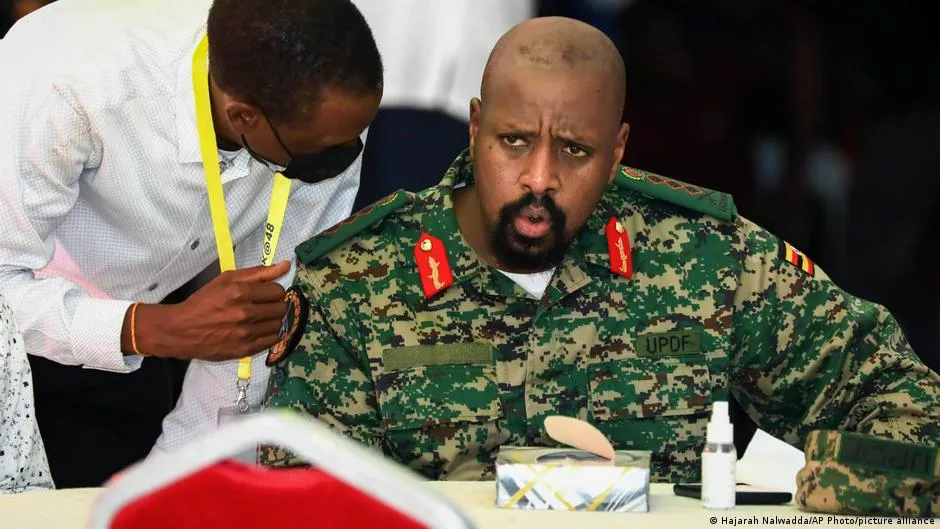
Muhoozi Kainerugaba, Uganda's military chief, said he issued an order shutting media outlets because he does not
Muhoozi Kainerugaba said he issued the order shutting media outlets because he does not “believe in a free press.” The statement lands with extra force because Kainerugaba is the son of President Yoweri Museveni, the leader who has held his grip on power for decades.
The immediate consequence is straightforward and urgent: media outlets were shut under the authority of Uganda’s military leadership, with the rationale openly framed as rejection of free press principles. For decision-makers watching Uganda, that is not a rhetorical flourish. It is a governance signal, the kind that changes how information flows, who can publish, and what business and civil society partners will do to avoid scrutiny.
To understand why this matters beyond the headlines, it helps to look at how media freedom usually functions in political systems. Independent reporting provides information that markets and institutions use indirectly. It surfaces allegations, tracks policy implementation, and forces governments to respond to scrutiny. When a military figure publicly links his actions to not believing in a free press, that weakens the informational infrastructure around the state. Even companies that believe they are “just operating” are still operating in a political environment where narratives can be controlled quickly.
There is also a power-and-incentives angle. Museveni has held power for decades, and his family connections can concentrate influence. When the military chief is also tied to the ruling household, the boundary between state authority and oversight shrinks. That can reduce internal checks that might otherwise slow down or constrain coercive actions against media. In practice, when the most visible enforcement arm of the state acts and justifies it with contempt for press freedom, it pressures editors, journalists, advertisers, and distribution partners to self-censor, avoid controversy, or exit altogether.
Regulatory background matters here even without new technical details. Across many countries, restrictions on media can be imposed through a mix of legal mechanisms, administrative enforcement, license actions, or direct shutdown orders. The specific source says Kainerugaba issued an order shutting media outlets, but it also clarifies the underlying worldview he attached to the decision: he does not “believe in a free press.” That combination is important because it signals intent, not merely compliance with procedure. When intent is explicit, stakeholders have to plan as though further tightening is possible.
Second-order implications for executives tend to look like operational risk, not just reputational risk. If media outlets are shut, information bottlenecks form. Rumors fill gaps. Policies can change without robust public explanation. In such conditions, companies may experience delayed awareness of regulatory shifts, sudden enforcement actions, or changes in licensing and inspections that are not preceded by transparent communication. Boards should treat that as a risk management issue: how quickly can management detect changes, and how resilient are internal reporting channels if public reporting is disrupted?
There is also an ecosystem risk. Media outlets are not only publishers. They are employers, contractors, and hubs for public-facing institutions such as NGOs, regulators, and businesses that rely on communications channels. Shutting outlets can reverberate into advertising revenue, public trust, and the ability of institutions to explain decisions. If partners cannot communicate reliably, collaboration becomes harder, especially for international firms and investors who need predictable, documented narratives to do due diligence.
For anyone in leadership roles who has operations in politically sensitive jurisdictions, the strategic stake is clear. Kainerugaba’s position as military chief, his explicit rationale, and his relationship to Museveni all point toward a governance model where control over information can be exercised directly. That makes the environment less about “policy announcements” and more about signals from power. The peers who will manage this best are the ones who treat information freedom as an operational variable, not a distant civil liberties issue.
This story's Key Insights and Take-aways are locked.
Create a free account to unlock Executive Actions for one credit.
Register to UnlockAlways free for Executives Club members. Join the Club
More in Politics
Obama Defends Ilhan Omar After Agents Search Her Home in Trump Inquiry
The former president's intervention raises the stakes in a federal probe into immigration paperwork that has put a prominent progressive lawmaker in the crosshairs.

Blair-era minister: cut welfare to fund youth job support
Alan Milburn's call for welfare cuts to fund employment support opens a Labour fight over benefits and the Neet crisis.
Hot September CPI: energy costs surge, voters feel the squeeze before midterms
The latest inflation print lands as Trump campaigns for GOP control of Congress, putting cost-of-living worries at the center of the midterm fight.