
Musk calls $500M GOP bet 'foolish': 'I'm not Maga' now
Elon Musk's DealBook reversal and Palantir's Alex Karp softening show Silicon Valley CEOs hedging against a blue wave that could reshape tech policy.
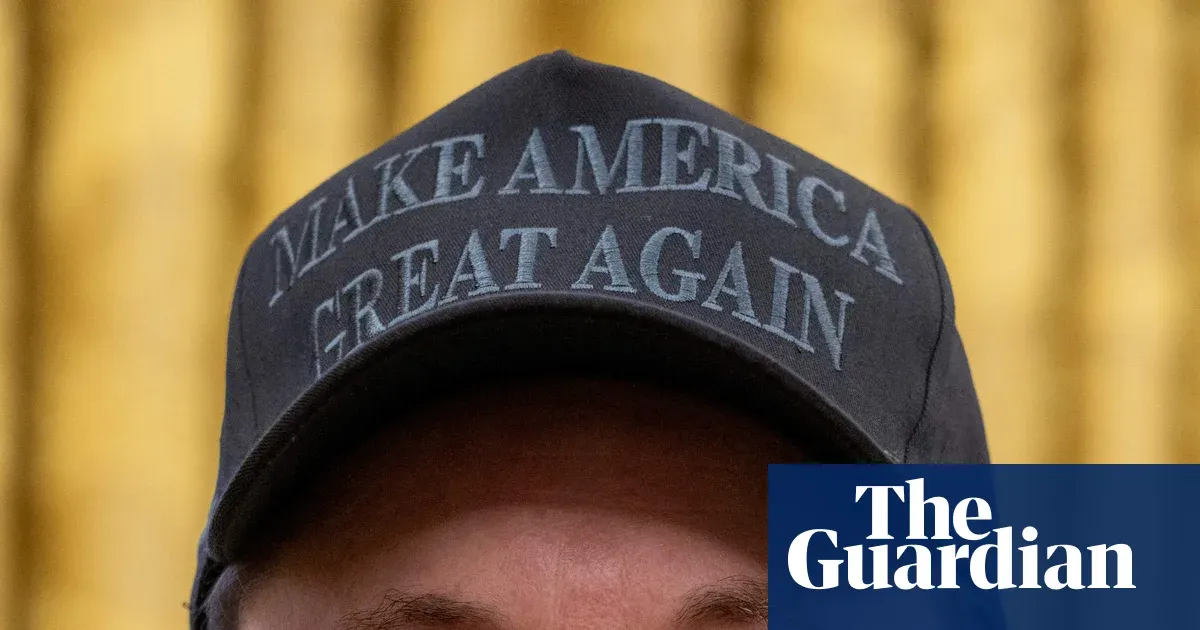
Elon Musk told the New York Times DealBook conference he is 'not Maga' and feels 'foolish' for spending about $500 million to elect Republicans, while Palantir's Alex Karp is among CEOs softening hardline stances. The pivot signals that tech leaders expect a Democratic influx and are repositioning before policy, procurement, and regulatory leverage shifts.
Elon Musk, the richest person in the world, walked back his MAGA branding on Wednesday at the New York Times DealBook conference. 'I'm not Maga,' he said. 'Well, at least I'm not sure what Maga means.' The admission landed with a price tag attached: Musk said he felt 'foolish' for spending some $500 million to elect Republicans in the midterms. 'If I could rewind the clock, I would have spent less money,' he said. He added that he did not have 'some sort of blind adherence to a set of policies by the Republican party.' The contrast with his own recent past is stark. A short two years ago, standing before tens of thousands of people in New York City, Musk declared: 'I'm not just Maga. I'm dark, gothic Maga.'
Musk is not the only tech chief changing tone. The Guardian reports that from Musk to Palantir's Alex Karp, CEOs are softening hardline stances in expectation of an influx of Democrats after a blue wave. The shift is not a philosophical conversion. It is a repricing of political risk. When one party looks likely to hold or gain power, the cost of being identified with the other party rises. For executives whose companies depend on government contracts, regulatory approvals, tax treatment, immigration policy, and data rules, that cost is not abstract. It shows up in procurement decisions, antitrust scrutiny, and access to the officials who write the rules.
The $500 million figure is the hook because it turns a culture-war story into a capital-allocation story. Musk's midterm spending was a bet. He now says he would have spent less. That is a rare public admission from a CEO who usually projects certainty. It also gives peers a template for how to retreat: frame the past support as an error of enthusiasm, not a rejection of voters or ideas. 'I'm not sure what Maga means' does that work. It creates distance without a full apology. For boards watching their own executives' political footprints, the message is that hardline branding is now a liability to be managed, not an asset to be flaunted.
Silicon Valley has always been fair-weather in its politics. The region's leaders have historically donated to both parties, courted whichever administration controls the levers they need, and wrapped self-interest in ideology when convenient. The current pivot is a reminder that tech's political identity is often a function of the policy calendar. Antitrust enforcement, AI regulation, chip subsidies, export controls, and government cloud contracts all sit in Washington's hands. A blue wave would change who holds those hands. CEOs who spent the last cycle loudly backing Republicans are now recalculating what that loudness costs.
Palantir's Alex Karp is a useful signal because his company operates in a policy-sensitive sector where government rules and contracts matter. The source does not detail Karp's specific comments, but his inclusion in the pivot shows the shift reaches beyond Musk's personal brand. For defense-adjacent and enterprise software firms, political neutrality is often a commercial necessity. Alienating the party in power can mean losing seats at the table, delayed contracts, or unwanted hearings. Softening a hardline stance is not necessarily a moral choice. It can be a sales strategy.
The second-order effects run through talent, customers, and capital. Employees and customers increasingly watch what executives say and fund. Investors, meanwhile, are not monoliths: some want ideological alignment, others want returns without political noise. A CEO who becomes a partisan symbol can energize one constituency and repel another. The DealBook comments suggest Musk is trying to lower the temperature without abandoning the relationship. That is a delicate move, and it is one many founders will study.
For decision-makers, the practical question is not whether the blue wave arrives. It is whether their political exposure is hedged. That means auditing past donations, public statements, and executive branding against the range of likely policy outcomes. It means preparing for a world where the officials who oversee antitrust, AI, privacy, and procurement may be different people with different priorities. And it means recognizing that a $500 million bet can be written off, but a reputation as a partisan warrior is harder to rewind.
Musk's reversal is the headline, but the broader story is the herd. When the richest person in the world says he would have spent less to elect Republicans, and when Palantir's CEO is named among those softening hardline stances, the signal to every founder and board is clear: political alignment is being repriced in real time. The executives who win the next cycle will not be the loudest. They will be the ones who kept their options open, their relationships warm, and their capital ready to move when the policy weather changes.
This story's Key Insights and Take-aways are locked.
Create a free account to unlock Executive Actions for one credit.
Register to UnlockAlways free for Executives Club members. Join the Club
More in Technology

Anthropic mathematician claims Claude helped crack the Riemann hypothesis
If the proof holds, AI has toppled math's most famous open problem; if it does not, it is a case study in announcing breakthroughs before anyone verifies them.

AI's $4 Trillion Wipeout Erases Nasdaq's Gains for the Year
A brutal week took roughly $4 trillion off the AI sector and left the Nasdaq flat for the year, and the damage ran the full length of the supply chain.

Anthropic mathematician says AI proved the Riemann hypothesis. Verification will take time.
A single unverified claim from inside Anthropic now sits against more than 160 years of open mathematics, and the gap between asserting a proof and surviving peer review is the entire story.