
Musk joins 165,000 demanding Nvidia rehire Jensen Huang four days after exit
An open letter wants the board to reinstate Huang pending an independent investigation, while the US treasury secretary pushes for a 'dramatic shake-up' instead.
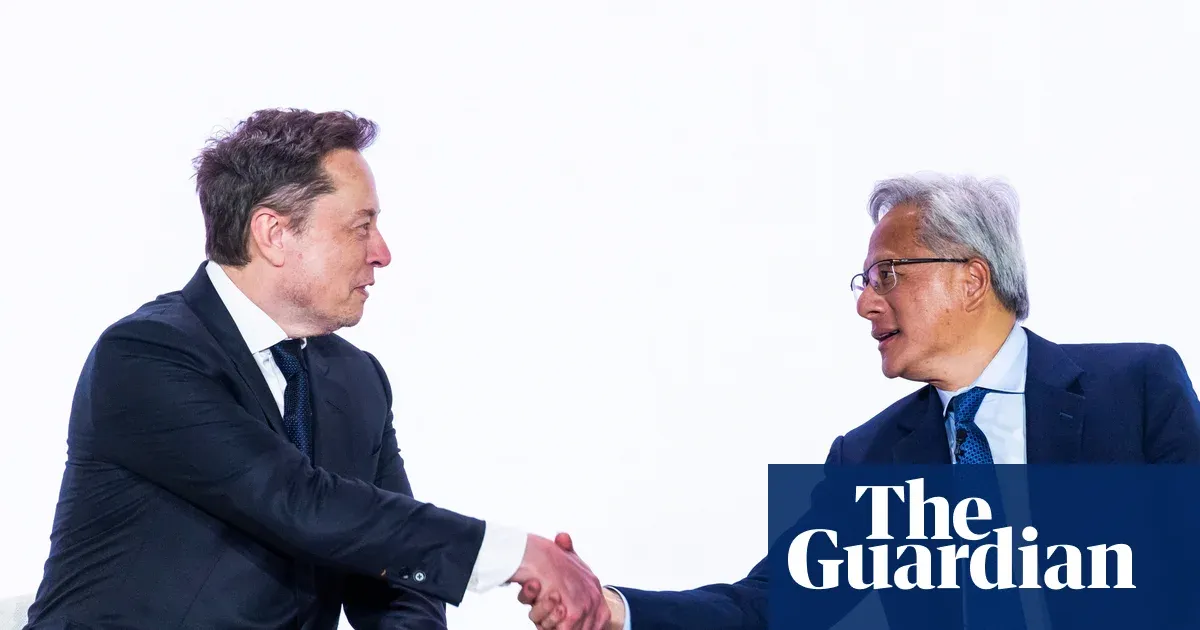
Elon Musk and more than 165,000 signatories have backed an open letter demanding that Nvidia's board reinstate Jensen Huang, four days after he resigned as chief executive following an affair with a suspected Chinese spy. The standoff splits corporate sentiment from Washington, where the US treasury secretary is urging a 'dramatic shake-up' instead, leaving Nvidia's directors to choose between a leadership vacuum and a credibility risk.
Elon Musk and a host of other tech bosses have signed an open letter demanding that Nvidia's board reinstate Jensen Huang, four days after he resigned as chief executive. The letter has more than 165,000 signatories and asks the company's board members to "bring Jensen back while an independent investigation establishes the facts." That single sentence is the entire ask, and it is an extraordinary one: a mass public petition, amplified by one of the most-followed figures in technology, aimed at reversing a board decision that is only days old.
The facts around the exit are what make the demand combustible. Huang was ousted after an affair with a suspected Chinese spy, according to reports, and is already reportedly plotting a return to the chip company. Washington is not marching with the signatories. The US treasury secretary has urged a "dramatic shake-up" instead, language that frames the episode as a governance and security failure rather than a private matter to be settled quietly. Megaspeed has said it is a "legitimate and lawful business."
Boards almost never reverse a CEO resignation, and the convention is not sentimental. Once a chief executive steps down under a cloud, the board's job shifts from defending the leader to protecting the institution. Reinstating him before an investigation concludes inverts that sequence and puts directors in the position of vouching for someone whose conduct is still under examination. The letter's own wording concedes the problem: it pairs reinstatement with an independent inquiry, which means the board would be asked to run two contradictory processes at once, restoring the man while formally reserving judgment on him.
For context on why this is not just an HR story: Nvidia is the company whose chips became the scarce input of the AI buildout, and its leadership is treated as a proxy for the health of the sector around it. Any wobble at the top of a firm in that position ripples outward, to suppliers, to customers building data centers, and to investors who have priced AI capacity as a multi-year certainty. The US has also spent years tightening controls on advanced chip exports to China, which means the national security machinery already has a standing interest in who runs one of the most strategically important chipmakers in the world. A suspected spy in the CEO's personal orbit is exactly the kind of detail that turns a boardroom problem into a government problem.
Musk's involvement changes the temperature. He is named in the headline, and his signature converts a corporate governance dispute into a global news cycle the board cannot outrun. The signatory count matters for the same reason. 165,000 names is not a shareholder vote and it binds no one, but it is a credible claim that the company's talent pool, customer base, and fan base are watching. In a labor market where AI talent is scarce and expensive, that is a real cost, even if it is not a formal one.
The treasury secretary's call for a "dramatic shake-up" points the other way, and that split is the story. One camp wants continuity and an investigation that runs its course. The other wants visible rupture, on the theory that a company this strategically exposed cannot afford ambiguity about who is in charge or what it knew. Boards caught between those two forces usually discover that delay is its own decision: every day without a permanent, unambiguous leader is a day competitors, regulators, and customers make their own assumptions about the company's direction.
Megaspeed's statement that it is a "legitimate and lawful business" is the other thread to watch. Companies named in a national security story typically fight the framing first and the facts second, because reputational damage lands long before any finding does. Whether that defense holds will shape how aggressively regulators treat the wider network of firms and individuals around the case, and how much of the story stays about one executive versus an entire ecosystem.
The strategic lesson for every board is uncomfortable and simple. Succession plans that assume a founder-CEO is irreplaceable are not plans. Investigation protocols with no answer for "what if the public demands his return" are not protocols. And a communications strategy that assumes four days is enough time for a story to cool is not a strategy. Nvidia's directors now have to choose between two kinds of damage, and the signatories, the treasury secretary, and the market are all watching which one they pick.
This story's Key Insights and Take-aways are locked.
Create a free account to unlock Executive Actions for one credit.
Register to UnlockAlways free for Executives Club members. Join the Club
More in Technology

Anthropic mathematician claims Claude helped crack the Riemann hypothesis
If the proof holds, AI has toppled math's most famous open problem; if it does not, it is a case study in announcing breakthroughs before anyone verifies them.

AI's $4 Trillion Wipeout Erases Nasdaq's Gains for the Year
A brutal week took roughly $4 trillion off the AI sector and left the Nasdaq flat for the year, and the damage ran the full length of the supply chain.

Anthropic mathematician says AI proved the Riemann hypothesis. Verification will take time.
A single unverified claim from inside Anthropic now sits against more than 160 years of open mathematics, and the gap between asserting a proof and surviving peer review is the entire story.