
Nadella: AI finds bugs faster than we can patch, so more outages are coming
Microsoft's CEO told DealBook that AI-accelerated bug discovery has outrun the industry's ability to fix what it finds, and he apologised for the outage that took down Outlook.
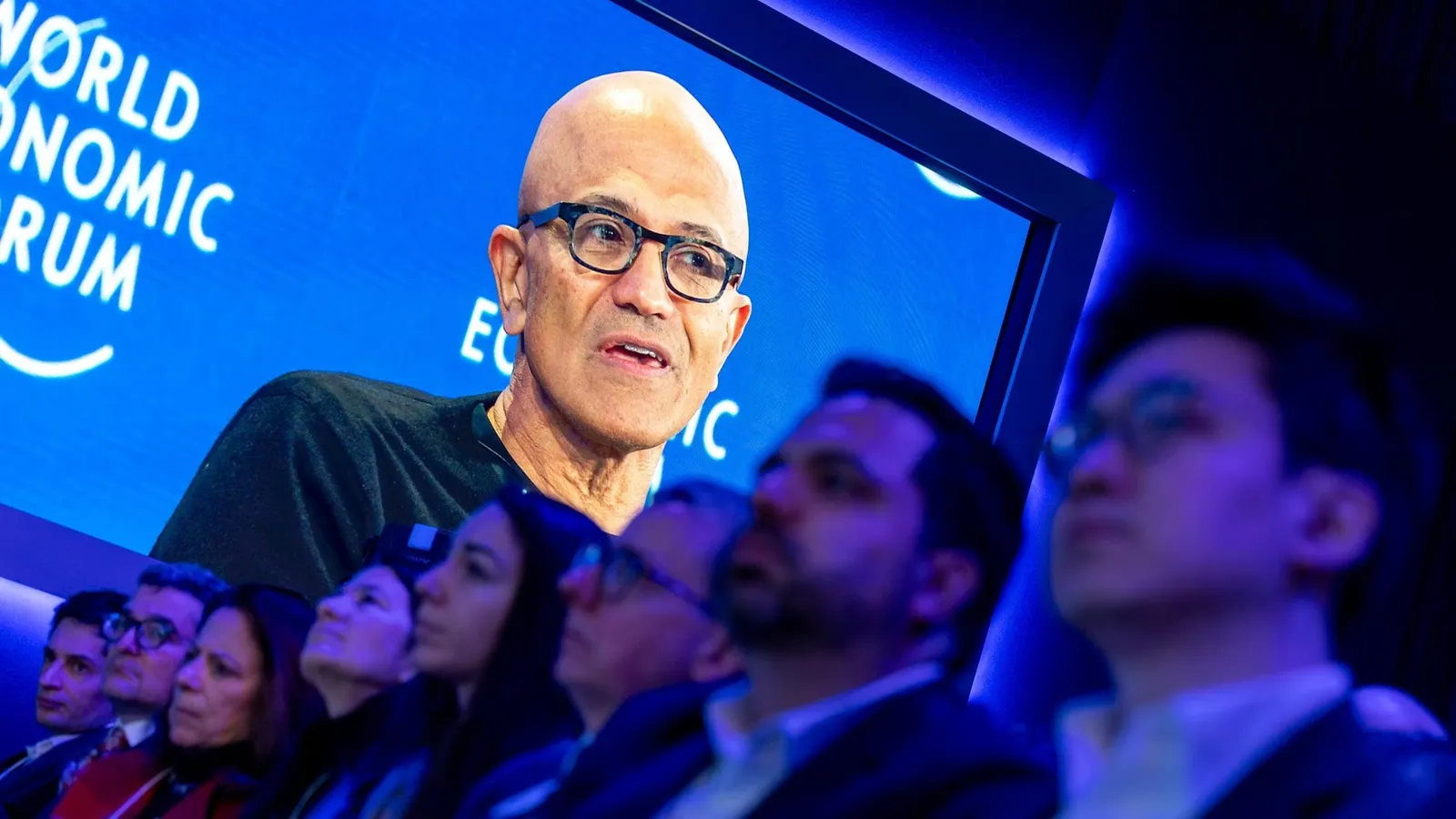
Microsoft CEO Satya Nadella told The New York Times' DealBook Summit that he expects more outages like the one that took down Outlook last week, because AI now finds software flaws faster than companies can safely fix them. For executives, the warning reframes cybersecurity risk from a detection problem into a remediation-capacity problem that boards will have to fund and govern.
Satya Nadella does not think last week's Outlook outage was a one-off. He thinks it was a preview. Speaking to Andrew Ross Sorkin at The New York Times' DealBook Summit in New York on Wednesday, the Microsoft chief executive said he expects more outages like the one that took down Outlook, because AI now finds software flaws faster than companies can safely fix them. He also apologised for Microsoft's own outage, a striking move for the CEO of a company whose cloud business is sold on the promise of reliability.
The logic is uncomfortable and simple. AI models can scan code, dependencies and configurations at a speed and scale no human review team can match, which means the discovery half of security has been industrialised. The fixing half has not. A patch still has to be written, tested against years of legacy code, staged, rolled out and verified. Historically that cycle has been measured in weeks, and inside large enterprises it is typically gated by change freezes, compliance windows and a well-founded fear of breaking something that currently works. Compress discovery, leave remediation alone, and the queue of known-but-unfixed flaws grows. That queue is where outages come from.
That is the reversal Nadella is describing, and it runs against the way the industry has been talking about AI and security. For the past three years the story has mostly been defensive: models that spot anomalies, summarise threat intelligence, triage alerts and write detection rules. His point is that the same capability cuts the other way, and it cuts faster than the defensive tooling matures. Attackers and defenders both get the bug-finding speed-up. Only one of them has to wait for a maintenance window.
For context, enterprise patching has always run on a rhythm that has nothing to do with how fast flaws are found. Microsoft historically ships its security updates on a monthly cadence, a schedule that became an industry habit precisely because testing takes time. Regulated industries layer their own change control on top: banks, hospitals and utilities often cannot push an update the day it lands. The result is that a vulnerability can be publicly known, actively exploited, and still sitting unpatched on production systems for weeks. AI does not change any of that. It only adds more items to the list.
Regulators have already moved the disclosure goalposts in a way that makes the arithmetic worse. For context, the SEC's cybersecurity rules require listed companies to disclose material incidents within four business days of determining they are material, and the EU's Cyber Resilience Act adds its own reporting obligations for products sold in Europe. Meanwhile, catalogues of known exploited vulnerabilities, such as the one CISA maintains, make it easy for anyone to see which flaws are being used in the wild. The window between 'we found it' and 'we have to talk about it' is shrinking at the same time the volume of findings is rising.
For boards, the practical question is capacity, not awareness. The instinct will be to buy more tooling, because tooling is a line item that can be approved in a single meeting. The harder question is whether the fix side of the house has the headcount, the test infrastructure and the organisational authority to say no to shipping. Nadella's admission that even Microsoft, with its security budget and its own AI stack, is exposed is a useful corrective to the assumption that scale solves this. It does not. Scale just means the queue is bigger.
There is a commercial dimension too. Cloud and SaaS vendors compete on uptime, and an outage is not only an engineering event, it is a trust event. Trust is the actual product. Nadella apologising publicly for his own company's outage, at a summit where he was otherwise there to talk about the upside of AI, is the tell. The person selling the technology is also the person warning about its second-order costs.
The thing to watch is whether the industry treats this as a warning or as a forecast it can live with. Nadella framed it as a warning, and warnings are only useful if they change spending. If AI-driven discovery keeps outpacing remediation, 'more outages' stops being a prediction and becomes a baseline that enterprises price in, the way they already price in downtime. The companies that get ahead of it will be the ones that invest in the unglamorous half of the problem: testing, rollback, and the discipline to patch faster than the queue grows.
This story's Key Insights and Take-aways are locked.
Create a free account to unlock Executive Actions for one credit.
Register to UnlockAlways free for Executives Club members. Join the Club
More in Technology

Anthropic Mathematician Claims Claude Helped Prove Riemann Hypothesis in Six Weeks
Levent Alpöge says the AI tool helped him develop a solution to one of math's most important unsolved problems in about six weeks, a claim that, if verified, would reshape AI's role in research.

Asahi Pours $85M Into AI Cyber Defense After Ransomware Hit
Japan's beverage giant is rebuilding its security stack around AI, and the $85 million price tag is a warning to every board still treating cyber risk as an IT line item.
Signal kills mobile screenshots to fight the 'existential threat' of AI surveillance
The encrypted messaging app is closing the one hole encryption never covered, the screenshot button, as AI tools get better at reading everything on your screen.