

New clues suggest Dyson spheres could glow in infrared around red and white dwarfs
A study points astronomers to the star types most likely to host energy-harvesting megastructures, and tells executives what to watch.
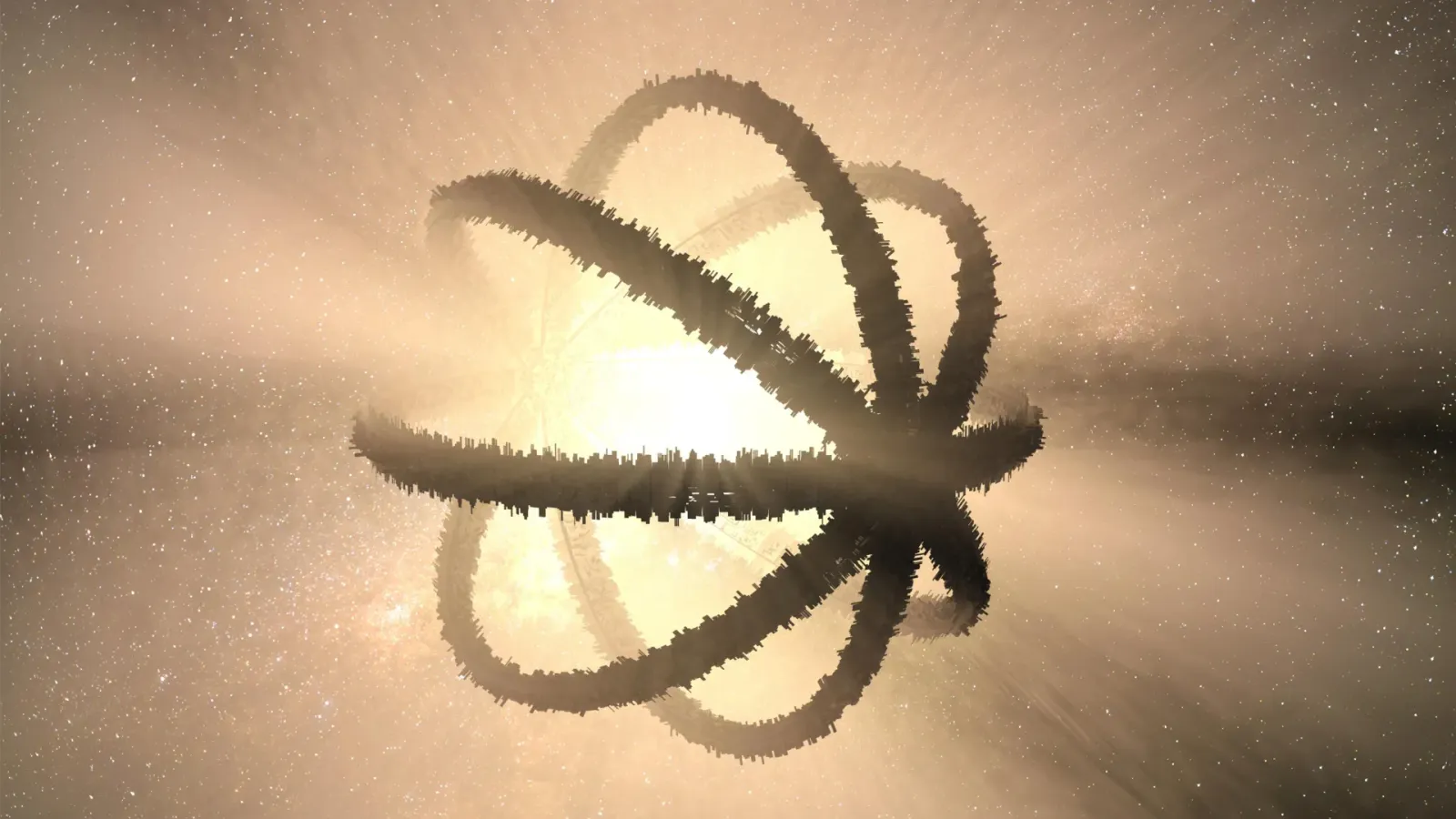
Scientists say they have identified new clues for spotting Dyson spheres, the hypothetical alien megastructures. The study argues red dwarfs and white dwarfs are the best targets because advanced civilizations could build energy-harvesting swarms that stand out in infrared and may flicker in unusual ways.
A Dyson sphere is still hypothetical. But a new study is sharpening the search by narrowing where astronomers should look first: red dwarfs and white dwarfs.
The core idea is simple, which is exactly why it is useful. If an advanced civilization builds energy-harvesting swarms around these stars, the result would not look like a normal star. Instead, the objects would stand out by glowing in infrared light rather than visible light. They would also lack the dusty signatures ordinary stars typically show, and they might even flicker in unusual ways. That is the observational punchline. It turns a science-fiction concept into a testable pattern.
Now zoom out to why this matters beyond telescopes. In the real world, detection problems are almost never solved by one clever idea. They are solved by matching the right signal to the right environment. Red dwarfs and white dwarfs are the “environments” in this case, because the study suggests advanced civilizations could potentially build energy-harvesting swarms around them more easily. Even if you take the premise as speculative, that is still a strong methodological move: pick target objects where the megastructure would be easier to build or more likely to be stable, then look for the most distinctive electromagnetic fingerprint.
Think of it like how investors and regulators evaluate risk. You do not just ask, “Could something exist?” You ask, “Where would it be easiest to hide, and where would it be hardest to miss?” For Dyson spheres, the proposed hiding place is the visible spectrum. The study points in the other direction, saying the telltale sign would shift into infrared. That matters because “infrared-bright but dusty-different” is a more specific profile than “weird light somewhere.” If the proposed lack of dusty signatures holds up in data, it gives astronomers a cleaner way to separate genuine megastructure candidates from ordinary astrophysical explanations.
There is also a second-order implication that decision-makers in any technical field would recognize: search strategies tend to crystallize around observables that are both measurable and scarce. If the candidate signal is primarily infrared with potential flickering, it becomes the kind of target that benefits from coordinated instrumentation and repeated observation. You cannot make the case with a single snapshot. Flicker signals, in particular, suggest variability patterns that could require time-domain follow-up. That is a practical reason why choosing the star types matters. Better targets reduce wasted observing time, which in turn shapes budgets, scheduling, and the priorities of teams competing for access to telescopes.
From a governance perspective, the study’s emphasis on specific star categories is also the opposite of hand-wavy. Hypotheses about alien megastructures often balloon because they are hard to falsify. Here, the article frames the expectation as a directional prediction: look at red dwarfs and white dwarfs, expect infrared glow instead of visible light, expect no dusty signatures of ordinary stars, and look for unusual flickering. In real research ecosystems, that kind of clarity is what helps boards and funders decide whether to keep backing a line of inquiry. It is easier to evaluate progress when the hypothesis translates into a checklist of what should be seen.
And for executives who care about strategic signaling, there is a broader message under the astronomy. Technologies and organizations that want to be “found” in noisy systems must optimize for the signals that are most robust under filtering. In this case, the study suggests a megastructure would be detectable because it changes where energy shows up (infrared) and what typical byproducts are missing (dusty signatures). That is the same logic behind how companies differentiate in crowded markets. You do not blend in. You create an identifiable signature that survives the noise.
So the stakes for decision-makers and industry watchers are not that a Dyson sphere is confirmed today. The stakes are that astronomers now have a more focused playbook for spotting one, based on where the signal would likely land and how it would look. If future observations find infrared glow in red and white dwarf systems without the dusty traits of ordinary stars, plus unusual flickering behavior, that would turn this from “interesting idea” into a serious candidate for follow-up. In the meantime, the study is a reminder that even the most far-out hypotheses become actionable when researchers specify the observational fingerprints and the star types most likely to host them.
This story's Key Insights and Take-aways are locked.
Create a free account to unlock Executive Actions for one credit.
Register to UnlockAlways free for Executives Club members. Join the Club
More in Science

Quest wreck images show how Shackleton’s doomed ship became an Arctic-style living system
The Royal Canadian Geographic Society released first photos, revealing a worst-case wreck turned thriving marine habitat.

2022 Yangtze heat and drought revealed why natural forests outlast planted ones
A record-breaking 2022 event gave researchers a rare, real-world stress test for forest resilience under heat and water shortages.

Zooniverse hits 1 billion classifications for NASA, proving citizen science scales fast
NASA grantee Zooniverse turns 1 billion volunteer contributions into discoveries, publications, and a future-ready research pipeline.