

New Four-Winged Dinosaur Species Proves Flight Was Widespread
A newly identified species with feathered limbs suggests dinosaurs took to the air far more often than scientists thought, and the lesson for business is about hidden capabilities.

Paleontologists have identified a new four-winged dinosaur species, indicating that flight was far more common among dinosaurs than previously believed. For decision-makers, the discovery underscores how breakthrough capabilities often emerge from repurposing existing structures.
A newly identified four-winged dinosaur species is forcing paleontologists to rewrite the story of how flight evolved. The discovery adds to growing evidence that the ability to take to the air was far more widespread among dinosaurs than previously thought, not a rare evolutionary accident but a recurring strategy.
Four-winged dinosaurs had feathered limbs on both their arms and legs, creating four wing-like surfaces that could generate lift and control during gliding or early flapping. The new species fits that model, shedding light on how some dinosaurs achieved liftoff. It also suggests that the four-winged body plan was not a failed experiment but a successful approach that evolved more than once.
For decades, the origin of bird flight was one of paleontology's most contested questions. The discovery of Archaeopteryx in the 19th century linked birds to reptiles, but it took the unearthing of feathered dinosaurs in China to reveal that plumage was widespread long before true birds appeared. The new species adds another data point to that revolution, reinforcing the idea that flight was not a single, miraculous event but a gradual process with many experiments along the way.
The four-winged hypothesis first gained traction after the discovery of Microraptor in 2003, a small dinosaur with feathers on its legs as well as its arms. Researchers argued that these hindlimb feathers helped early fliers steer and generate extra lift, much like the biplane design used in early aviation. The new species appears to support that theory, indicating that four-winged dinosaurs were not a one-off oddity but a diverse group that thrived across different environments.
For executives, the dinosaur story is a reminder that breakthrough capabilities often come from repurposing existing assets. The four-winged dinosaur did not invent feathers from scratch; it took a structure that already existed for insulation or display and adapted it for a new function. Companies face the same opportunity: the next product or service may already be hiding in the tools, data, or talent they currently use for something else.
The discovery also has implications for how scientists understand extinction and survival. If flight was more common among dinosaurs, then the line between birds and non-avian dinosaurs becomes even blurrier. It raises the question of why some flying dinosaurs survived the mass extinction 66 million years ago while others did not, and whether the ability to fly was a decisive advantage or simply one of many factors.
For boards and leadership teams, the lesson is to look for underused capabilities within their own organizations. Many companies assume that innovation requires a completely new approach, but the fossil record suggests that incremental adaptations of existing structures can unlock entirely new markets. The four-winged dinosaur did not need a new body plan to take flight; it needed to see the potential in what was already there.
The newly identified species may be extinct, but its strategy is timeless. In a world where disruption is constant, the ability to repurpose what you already have into something new is often the most reliable path to growth. That is the real takeaway from a dinosaur that learned to fly with four wings.
This story's Key Insights and Take-aways are locked.
Create a free account to unlock Executive Actions for one credit.
Register to UnlockAlways free for Executives Club members. Join the Club
More in Science
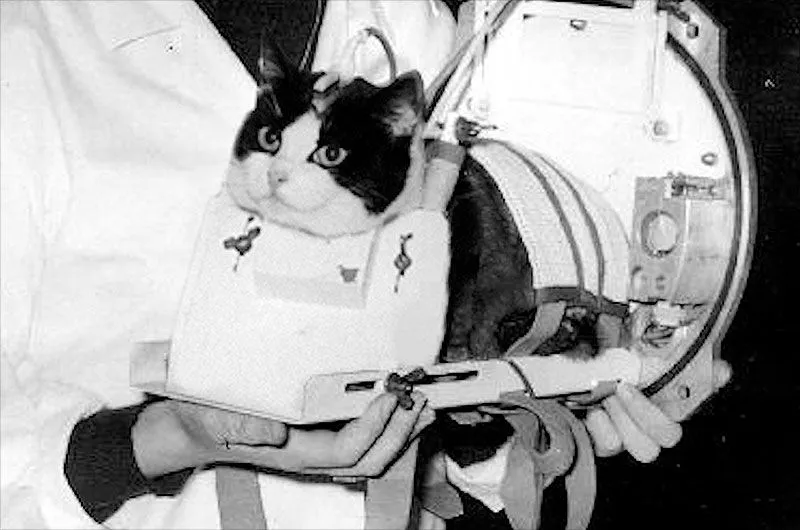
France euthanized Félicette, the first cat in space, two months after her flight
Félicette's 1963 flight made France a space-race player, but her euthanasia and a crowdfunded statue reveal how high-risk programs are remembered.

Ultracold atoms just created a 'fractional Fermi sea' that breaks quantum rules
A new quantum state challenges decades of theory and hints at 'super-Fermions,' with real stakes for quantum computing and materials science.

Bangladesh's 202,000 measles cases are a 'real warning' to other nations
The world's worst measles outbreak is spreading as routine vaccination falters. Here is why every country's immunization program should pay attention.