
Nik Halik bought a nuclear silo for $10M. Now he wants AI inside
The Australian 'thrillionaire' is spending $30 million to turn a 165-foot-deep Titan I silo near Denver into a data center, betting Cold War concrete and 52-degree air beat the grid.
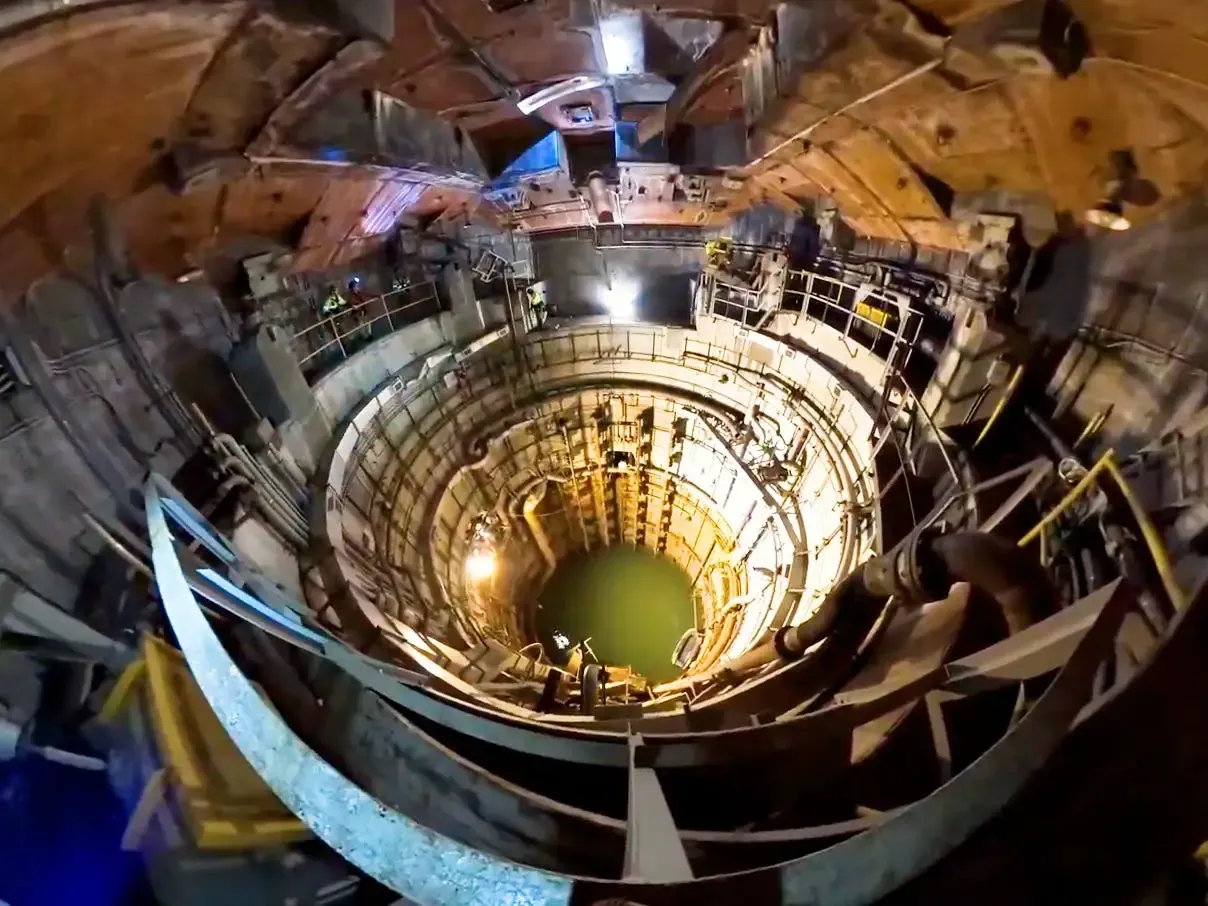
Australian venture capitalist Nik Halik bought a decommissioned Cold War nuclear missile silo near Denver from the US government in 2021 for more than $10 million and is now renovating the 200,000-square-foot facility into an AI data center at an estimated cost of $30 million. The project shows how AI's power and cooling crunch is pushing operators toward unconventional, off-grid sites, and it flags the remediation, access, and permitting risks that come with repurposed defense infrastructure.
Nik Halik, an Australian venture capitalist, bought a decommissioned Cold War-era nuclear missile silo near Denver from the US government in 2021 for more than $10 million. Five years later, he is turning it into an AI data center. The facility spans 200,000 square feet, descends 165 feet below the surface, and is made up of 17 distinct chambers stitched together by 4,500 feet of tunnels. Halik is renovating it at an estimated cost of $30 million, a project he has been running for over four years with help from others. The pitch is simple: AI needs enormous amounts of power and a safe, reliable place to put servers. A hole in the ground built to survive nuclear war happens to offer both.
The silo was built in Colorado in 1959 for $47 million, or roughly $350 million in today's dollars. It housed Titan I intercontinental ballistic missiles, 98 feet tall, capable of delivering a nuclear warhead more than 6,000 miles. According to the National Park Service, 54 Titan I missiles were operational between April 1962 and January 1965. All were removed by early 1965, made obsolete by rapid technological development and the arrival of the Titan II and Minuteman I. Eighteen silos like Halik's were built across the US. After decommissioning, the government stripped valuable materials and sold most of the facilities to public and private owners. Halik said his bunker was later used by government defense contractors and the Defense Advanced Research Projects Agency.
Two features make the site interesting to anyone who has priced a data center lately. The first is temperature: the bunker holds at 52 degrees Fahrenheit even during the summer, which is optimal for keeping servers from overheating. The second is power independence. Four large diesel engines ran the facility, and the fuel on site was enough to run roughly 2,000 houses for about two weeks. Just one of the silo's three diesel tanks can hold about 50,000 gallons, Halik told Business Insider. That off-grid capability lands at a moment when recent tech outages have pushed some people to stock up on generators and emergency kits. For AI operators, the binding constraint is increasingly electricity and cooling, not chips.
The renovation is not a clean-slate build. The basement level, Halik said, is riddled with cyanide, lead paint, mercury, and asbestos. He has taken a hands-on role despite the safety risks, documenting every step on the YouTube channel Nuclear Bunker Living, whose first episode in September 2021 shows him exploring the bunker alone for the first time. On one occasion he crawled through a rusty pipe and later realized it carried a live wire that he said could have electrocuted him instantly. "There are so many variables of danger here," Halik said in a video. "This place is unforgiving, and it always reciprocates with interest."
Some of the structure is overbuilt in ways a modern developer could never justify. One portion was built with what Halik called "Hoover Dam-type engineering": multiple layers of steel-reinforced concrete, each square inch able to withstand roughly 15,000 pounds of pressure. That was the control room, where operators stood ready for a call from the Pentagon to launch missiles 300 times more powerful than the bomb dropped on Hiroshima. "The fate of the Western world was in the hands of these 21- to 22-year-olds who had the keys to the missiles, ready to employ them on the instructions of the Pentagon from the president," Halik said. Relics remain, including pieces of the desk where a launch would have been programmed. Recently his team found papers containing launch codes, times, and other protocols. Halik wants to turn part of the facility into a museum.
Other rooms get stranger treatment. Halik envisions a nightclub with a DJ, bar, consumption lounges, and Cirque du Soleil dancers. At a different decommissioned missile site in New Mexico, that vision may already be live: the Twistflower Nuclear Missile Silo in Roswell will host the upcoming ATOMIKA festival, which Halik promotes and which describes itself as an "experimental, annual gathering that fuses immersive art, deep inquiry, and powerful music."
Strip away the novelty and the deal is a bet on three things that are getting scarce: land, power, and physical security. Underground sites offer blast resistance, thermal stability, and a moat no fence line can match. They also come with fiber routing problems, difficult access for staff and hardware, decades of environmental remediation, and a permitting conversation few jurisdictions have had before. Halik frames his edge as a builder's instinct rather than a technologist's. "I'm immersed in the world of castles and underground bunkers," he told Business Insider. "I'm a value-facturer. I like things that I can add value to." His resume supports the appetite for risk: skydiving over Mount Everest, training in Russia as a civilian cosmonaut, and diving five miles deep to the deck of the Titanic. He calls himself a "thrillionaire."
For executives watching AI infrastructure costs, the lesson is not that every data center should go underground. It is that the constraint has moved. When power, cooling, and security set the ceiling on compute, assets written off as Cold War relics start looking like inventory. The question for boards is whether the next wave of capacity gets built on cheap land with expensive power, or on expensive land with power that never touches the grid. Halik is spending $30 million to find out.
This story's Key Insights and Take-aways are locked.
Create a free account to unlock Executive Actions for one credit.
Register to UnlockAlways free for Executives Club members. Join the Club
More in Business

Anthropic's record IPO lands a day before Nvidia's longest losing streak since 2008
Anthropic's record Nasdaq debut and Nvidia's longest weekly losing streak since 2008 landed within 24 hours of each other, and the contrast shows how fast the market is re-pricing the AI trade.
New World's HK$24.9B rights issue triggers 41% plunge as HK$50B debt target looms
New World Development has three levers left to erase up to HK$50 billion in borrowings by 2031, and shareholders just told the market what they think of the first one.
Chip supply chain warns new US export controls will spread beyond the target list
Suppliers, distributors and equipment makers say the latest US restrictions will not stay contained to the firms named on paper, putting orders, inventory and delivery timelines at risk across the global chip chain.