
Nvidia CEO Jensen Huang Resigns Over Scandal, Shaking Global AI Security
The departure of the Nvidia visionary raises immediate questions about corporate governance and the future of the US-China AI arms race.
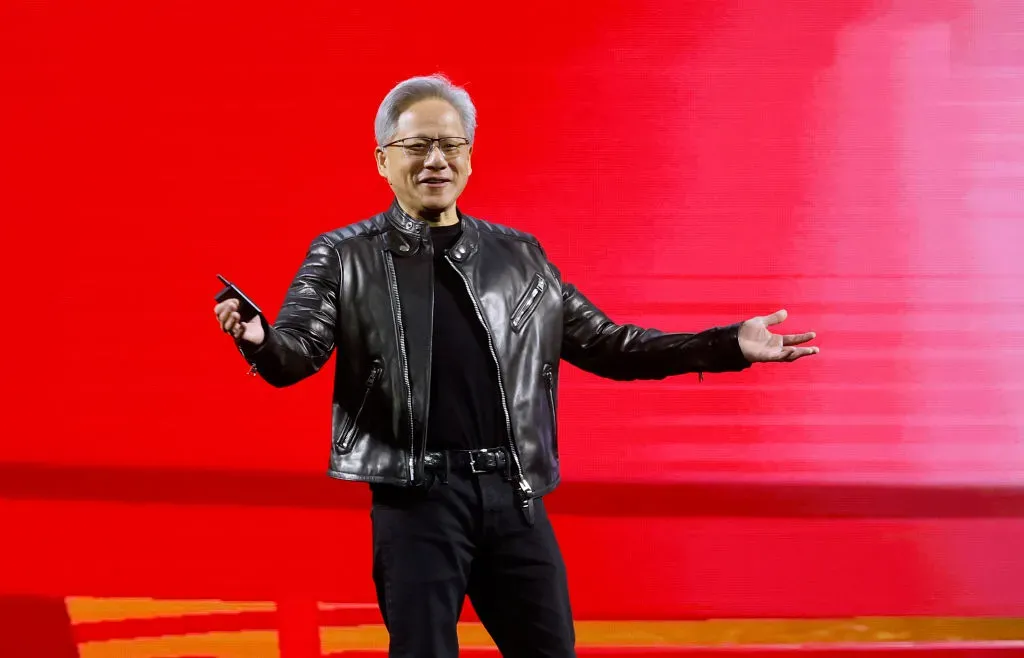
Jensen Huang has resigned as CEO of Nvidia following a personal scandal. This sudden leadership change introduces massive uncertainty into the global AI infrastructure race, impacting national security interests.
The news that Jensen Huang, the visionary behind Nvidia and a titan of the semiconductor industry, has resigned from the company is not merely a corporate shakeup; it is a seismic event with profound geopolitical implications. Huang's departure comes amid reports of a personal affair, a scandal that, while rooted in private life, has instantly become entangled with the highest stakes in modern technology: the global race for artificial intelligence supremacy. For investors, regulators, and national security strategists, this is far more than a C-suite personnel change; it is a moment of intense scrutiny into corporate governance and the integrity of the world's most critical AI supply chain.
Nvidia has long been the undisputed linchpin of the modern AI revolution. Its GPUs are the foundational hardware upon which the most advanced large language models and AI infrastructure are built. This dominance means that Nvidia is not just a tech company; it is a strategic asset for the United States and its allies. The fact that its CEO is stepping down under a cloud of personal controversy immediately raises questions about the stability of the leadership guiding the company through a period of unprecedented technological and geopolitical pressure. The market, which has been captivated by Nvidia's exponential growth and its role in accelerating AI development, is now forced to grapple with the human element at the apex of this technological power.
To understand the gravity of this situation, one must look beyond the scandal itself and focus on the context of the US-China AI competition. This race is not about market share alone; it is viewed by Washington and Beijing as a critical battle for future economic and military dominance. The ability of a nation to develop and deploy cutting-edge AI infrastructure is increasingly seen as a prerequisite for maintaining global power. Nvidia, with its specialized hardware, sits directly in the crosshairs of these strategic tensions. Any instability at the highest levels of the company, especially involving its chief architect and public face, introduces a layer of risk that transcends typical quarterly earnings reports.
When a company holds such a central position in a national security framework, the personal conduct and perceived reliability of its leadership become matters of intense interest to government agencies and defense contractors. The concern is not simply about a lapse in judgment, but about the potential for compromised decision making or the introduction of vulnerabilities into a system that underpins critical national infrastructure. The US and China are pouring billions into AI research and development, and the hardware provided by Nvidia is the engine of that effort. Therefore, the resignation of its CEO, regardless of the specific nature of the affair, forces a reevaluation of how these critical technologies are governed and overseen.
For the executive community, this event serves as a stark, high-stakes case study in the intersection of personal risk and corporate liability. In an era where tech giants are increasingly viewed as quasi-governmental entities due to their strategic importance, the line between personal conduct and corporate risk is thinner than ever. Boards of directors are now facing a renewed imperative to establish robust governance frameworks that account for reputational risk, ethical standards, and geopolitical sensitivity simultaneously. The market is watching to see how the successor handles this transition and whether the company can insulate its core mission from the turbulence surrounding its former leader.
Furthermore, this event has immediate implications for the investor narrative. While the underlying technology and market demand for Nvidia's products remain robust, the uncertainty surrounding leadership can introduce volatility. Investors are now looking not just at the next chip launch, but at the stability of the organizational structure and the clarity of the strategic vision moving forward. The ability of the incoming leadership to reassure global partners, particularly those involved in sensitive government contracts, will be paramount to maintaining Nvidia's strategic value in the eyes of both domestic and international stakeholders.
This story's Key Insights and Take-aways are locked.
Create a free account to unlock Executive Actions for one credit.
Register to UnlockAlways free for Executives Club members. Join the Club
More in Technology

Anthropic mathematician claims Claude helped crack the Riemann hypothesis
If the proof holds, AI has toppled math's most famous open problem; if it does not, it is a case study in announcing breakthroughs before anyone verifies them.

AI's $4 Trillion Wipeout Erases Nasdaq's Gains for the Year
A brutal week took roughly $4 trillion off the AI sector and left the Nasdaq flat for the year, and the damage ran the full length of the supply chain.

Anthropic mathematician says AI proved the Riemann hypothesis. Verification will take time.
A single unverified claim from inside Anthropic now sits against more than 160 years of open mathematics, and the gap between asserting a proof and surviving peer review is the entire story.