
Nvidia Lifts 2028 Sales Target by $20B Days After Its Founder Resigned
Interim CEO Colette Kress beat Q3 estimates and raised fiscal 2028 growth guidance to 75%, answering investors who wiped a trillion dollars off Nvidia after Jensen Huang's exit.
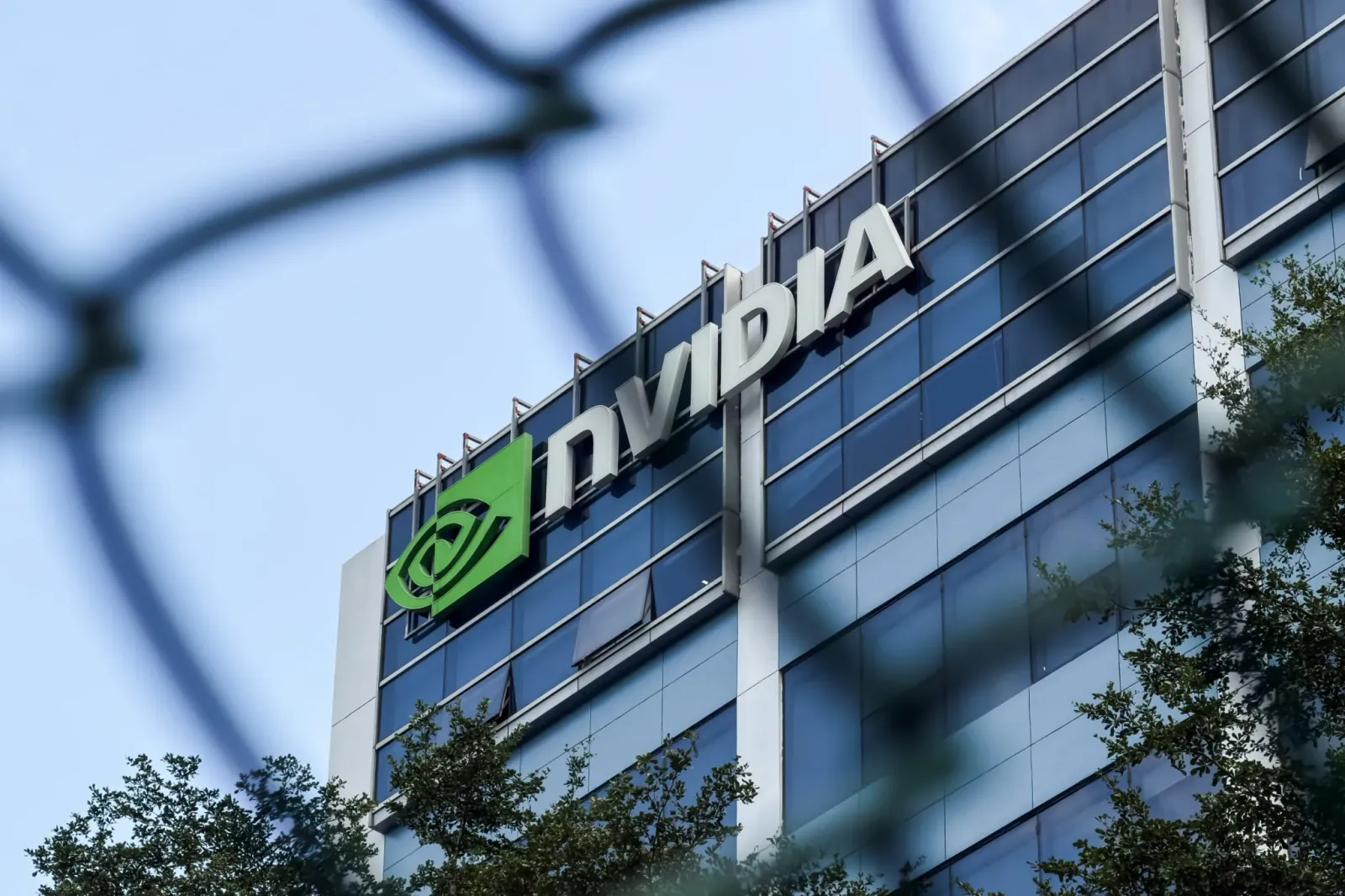
Nvidia interim CEO Colette Kress raised the company's fiscal 2028 sales forecast by $20 billion or more and posted better-than-expected quarterly results days after cofounder Jensen Huang resigned, while board chair Harvey Jones said directors will not reinstate him. The quarter gives boards a live test case in founder-risk succession, and it puts Nvidia's ecosystem financing and export-control exposure under fresh scrutiny.
Nvidia raised its sales forecast for fiscal 2028, a year roughly equivalent to calendar 2027, by the equivalent of $20 billion or more on Tuesday, lifting its year-over-year growth target from 70% to 75% just days after cofounder and CEO Jensen Huang resigned. The guidance landed alongside better-than-expected third-quarter results, and interim CEO Colette Kress, Nvidia's longtime finance chief, used her debut earnings call to deliver the message the market had been waiting for. "We got this," Kress said, flanked by newly appointed board chair Harvey Jones. Shares rose more than 5% in after-hours trading. For a company that had shed more than a trillion dollars in market value in a month, it was the first clean answer to the only question that mattered: does the demand leave when the founder does?
The quarter says no. Revenue for the three months ended October 25 totaled $115.8 billion, roughly twice what Nvidia generated in the year-ago period and above the $109 billion analysts expected. Net income climbed 105% to $65.3 billion, or $2.70 per share. For the current quarter, Nvidia guided to $130 billion in revenue, plus or minus 3%, which beats the $125 billion analysts expected at the low end and could exceed it by billions. Dan Ives, a partner and analyst at Yorkville Ives, put it plainly in a note to investors: "The quarter answers the first question the market had about Nvidia without its founder: demand did not leave with him."
The board spent the same call closing a different door. Jones said at the start that directors "do not intend to reinstate Jensen as CEO," and confirmed Nvidia has retained executive recruiting firm Hedrick & Struggles to run a search for a permanent chief executive. That was a direct rebuttal to Huang, who is seeking to reclaim the CEO role just days after resigning amid revelations of multiple affairs, one reportedly with an Nvidia employee who reported to him and another with a woman some believe may be a Chinese spy. The cost of that vacuum was visible in the tape: Nvidia stock had fallen more than 36% over the prior month, wiping out more than a trillion dollars in market value as investors digested both the leadership shock and broader worries about the durability of the AI boom.
What makes the raised forecast sting is who set the old one. Huang himself delivered the 70% growth projection three months ago, framing it as an unusually far-reaching number that reflected exceptional strength in the business. Kress lifted it to 75%, citing improvements in supply and ongoing strength in demand. In dollar terms, that is a $20 billion-plus increase to an annual revenue target, announced by the interim CEO, on her first call, with the founder watching from outside the building. Kress also said Nvidia would file its official 10-Q with the U.S. Securities and Exchange Commission in "the coming weeks," rather than on the same day as its earnings announcement as it traditionally has done, a timing change worth watching.
Then there is the export-control cloud that helped trigger the crisis. Huang's affair with Alice Huang (no relation), a former executive of Singapore-based cloud computing company Megaspeed, raised questions about whether Nvidia's advanced AI chips were being diverted to China in violation of U.S. export controls. On Monday, the U.S. Department of Justice announced it was pursuing a criminal investigation of Megaspeed for potential export control violations, and the Trump administration announced stricter rules around chip exports to companies like Megaspeed. Megaspeed has said its business is "legitimate and lawful," and that Alice Huang, who some U.S. intelligence officials reportedly believe is connected to Chinese intelligence, left the company in August 2025. Kress said Nvidia is assessing the new rules but stressed confidence in overall demand and in its revenue forecast.
The other open question is Nvidia's role as the AI industry's de facto banker. The company provides billions of dollars in equity investments and financial guarantees to other players in the ecosystem, including neoclouds building data centers and startups developing AI software. Kress said Nvidia would continue to financially support companies in the AI ecosystem, but signaled it may not be as supportive as it has been in the past. Nvidia will take a "very strong look" at the types of companies that get help, she said, because "a lot of things have changed over this last quarter." Translation: the checkbook stays open, but the underwriting gets tighter.
For every board watching, Nvidia is now a live case study in founder risk. The company lost its cofounder, its stock lost more than a third of its value, and its answer was to raise guidance, move the CFO into the interim seat, install a new chair, hire a search firm, and project a business-as-usual attitude until the numbers made it credible. That is a succession plan executed under maximum pressure, and it held for one quarter. The harder tests are still ahead: a permanent CEO search, a DOJ probe touching a former executive of a partner company, tighter export rules, and a capital allocation strategy that may be quietly narrowing. Kress bought Nvidia time. She did not buy it certainty.
This story's Key Insights and Take-aways are locked.
Create a free account to unlock Executive Actions for one credit.
Register to UnlockAlways free for Executives Club members. Join the Club
More in Technology

Anthropic mathematician claims Claude helped crack the Riemann hypothesis
If the proof holds, AI has toppled math's most famous open problem; if it does not, it is a case study in announcing breakthroughs before anyone verifies them.

AI's $4 Trillion Wipeout Erases Nasdaq's Gains for the Year
A brutal week took roughly $4 trillion off the AI sector and left the Nasdaq flat for the year, and the damage ran the full length of the supply chain.

Anthropic mathematician says AI proved the Riemann hypothesis. Verification will take time.
A single unverified claim from inside Anthropic now sits against more than 160 years of open mathematics, and the gap between asserting a proof and surviving peer review is the entire story.