
Nvidia's Huang resigns amid affair allegations; CFO Colette Kress named interim CEO
Kress, reportedly disparaged by Huang at a summer meeting, inherits the AI chipmaker while the board weighs Ian Buck and Arm's Rene Haas for the permanent job.
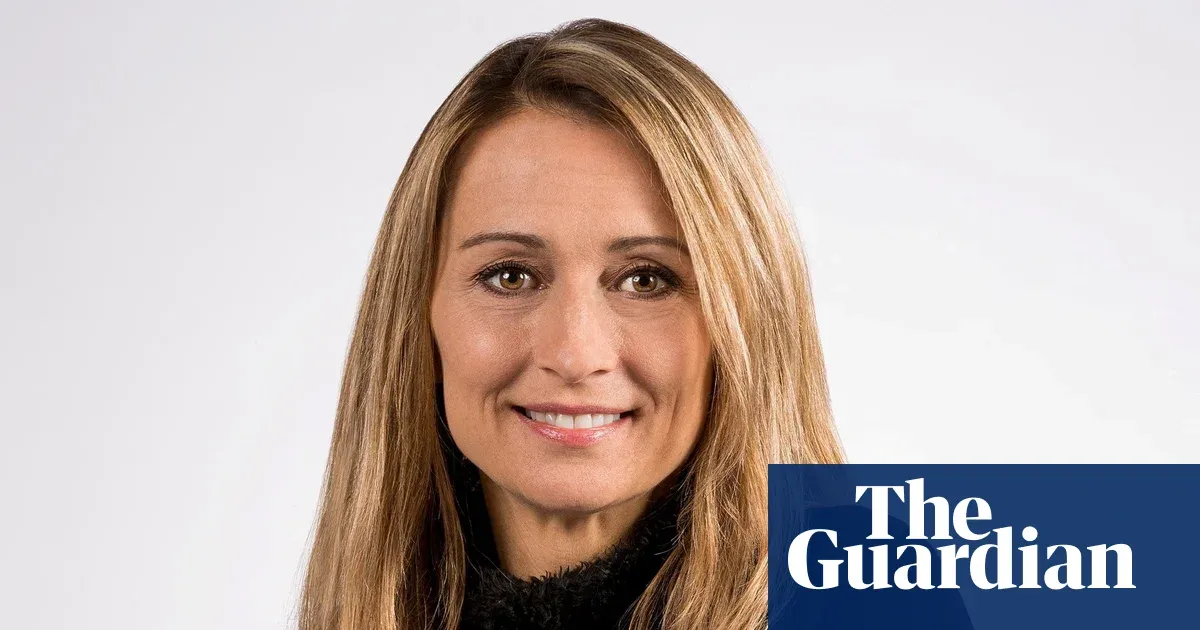
Nvidia immediately named chief financial officer Colette Kress as interim CEO after co-founder and chief executive Jensen Huang resigned amid multiple allegations of extramarital affairs, including one involving an alleged Chinese spy and two involving company employees. The board must now decide whether to keep Kress permanently or pick from a shortlist that includes internal AI products chief Ian Buck and Arm Holdings CEO Rene Haas, a decision that will shape the most strategically exposed company in the AI supply chain.
Nvidia named chief financial officer Colette Kress as interim CEO, moving immediately after co-founder and chief executive Jensen Huang resigned amid multiple allegations of extramarital affairs. Per the reporting on his exit, those allegations include one involving an alleged Chinese spy and two involving company employees. Kress now sits in the top chair on a short-term basis, and the company has left open the possibility that she stays on permanently or that another candidate takes the full-time role. The detail that will follow her into every boardroom conversation: she was reportedly disparaged by Huang during a summer meeting, which makes her elevation simultaneously a stabilizing move and an awkward piece of internal politics.
The hunt for a permanent CEO is already running. Two names have been floated: Ian Buck, who manages Nvidia's AI hardware and software products, and Rene Haas, a former Nvidia employee who is now CEO of Arm Holdings, the UK-based chipmaker. Buck represents continuity of the product roadmap and deep credibility with the engineers who build on Nvidia's stack. Haas represents a homecoming with a sitting CEO's title and a licensor's view of the entire industry. Both carry complications. Buck is an operator rather than a public-market chief executive, and Haas would have to leave a company that is as much a partner to Nvidia as a peer. No timeline for the decision has been disclosed.
Why this matters beyond one company: Nvidia designs the processors that train and run the large AI models now being embedded in everything from search to drug discovery. It sits at the center of the AI buildout, which means a leadership vacuum at the top is not a routine succession story. It is a supply-chain and capital-markets event. Cloud providers, model developers, and governments that have staked multi-year roadmaps on Nvidia's release cadence now have to price in execution risk at the exact moment competition in AI silicon is intensifying. Historically, customers in this position do not switch vendors overnight, but they do start qualifying second sources, and that habit outlasts the crisis that started it.
Kress's transition is a specific kind of promotion. CFOs who step into the top job typically arrive with hard-won credibility on capital allocation, margins, and disclosure discipline, and with a thinner record on product and engineering storytelling. For an AI chipmaker, that second gap is the one that gets tested in front of developers and hyperscalers. Her interim mandate is likely to be continuity: hold the roadmap, hold guidance, hold the largest customer relationships, and give the board room to run a real search. Interim CEOs historically face one trap in particular. They are graded on the quarter they were handed, while the permanent candidate is graded on the story they tell about the next five years.
The nature of the allegations raises questions that go past succession. An alleged foreign-intelligence connection, even unproven, invites scrutiny from regulators, lawmakers, and customers who operate under security clearances. Semiconductor firms already live inside export controls and national-security review, so a leadership scandal that touches those same nerves compresses the distance between a board problem and a policy problem. Boards typically respond by tightening disclosure, walling the investigation off from the CEO search, and handing the process to an independent chair or lead director. Whether Nvidia takes any of those steps has not been reported.
Haas is the most strategically loaded name on the list. Arm licenses the processor architecture behind most of the world's mobile silicon and a growing share of data-center designs, which makes it a partner to Nvidia as much as a competitor. Hiring its sitting CEO would be a raid on a key ally and would place someone with deep visibility into Arm's roadmap inside Nvidia. For context, Nvidia's earlier attempt to acquire Arm was abandoned in the face of regulatory resistance, so the relationship already carries history. Any courtship would draw antitrust attention before it drew a signature.
The broader lesson for boards is that succession risk and conduct risk are the same risk. A chief executive's personal behavior can become a disclosure event, a national-security question, and a customer-trust problem inside a single news cycle. Nvidia bought stability by naming an interim leader immediately. Companies that hesitate instead tend to bleed through leaks, employee anxiety, and customer silence. The second lesson is about bench strength. The fact that the two floated names are an internal product executive and a former employee running a partner company suggests a thin external pipeline for a role that now demands geopolitical fluency as much as chip design.
For investors, the near-term questions are whether Kress keeps guidance intact and how fast the board converts "interim" into "permanent." For rivals, it is whether a distracted Nvidia drops a design win or slips a launch window. For everyone else, it is a reminder that the most valuable companies in the world are still run by people, and that one week can reset the top of the AI stack.
This story's Key Insights and Take-aways are locked.
Create a free account to unlock Executive Actions for one credit.
Register to UnlockAlways free for Executives Club members. Join the Club
More in Technology

Anthropic mathematician claims Claude helped crack the Riemann hypothesis
If the proof holds, AI has toppled math's most famous open problem; if it does not, it is a case study in announcing breakthroughs before anyone verifies them.

AI's $4 Trillion Wipeout Erases Nasdaq's Gains for the Year
A brutal week took roughly $4 trillion off the AI sector and left the Nasdaq flat for the year, and the damage ran the full length of the supply chain.

Anthropic mathematician says AI proved the Riemann hypothesis. Verification will take time.
A single unverified claim from inside Anthropic now sits against more than 160 years of open mathematics, and the gap between asserting a proof and surviving peer review is the entire story.