
Nvidia's Ian Finder bets one 88-core Vera CPU can cover most datacenter workloads
Ian Finder says Intel and AMD have oversupplied datacenter CPU variants for years, so Nvidia is fielding one 88-core Vera SKU and SMT to win the bulk market.
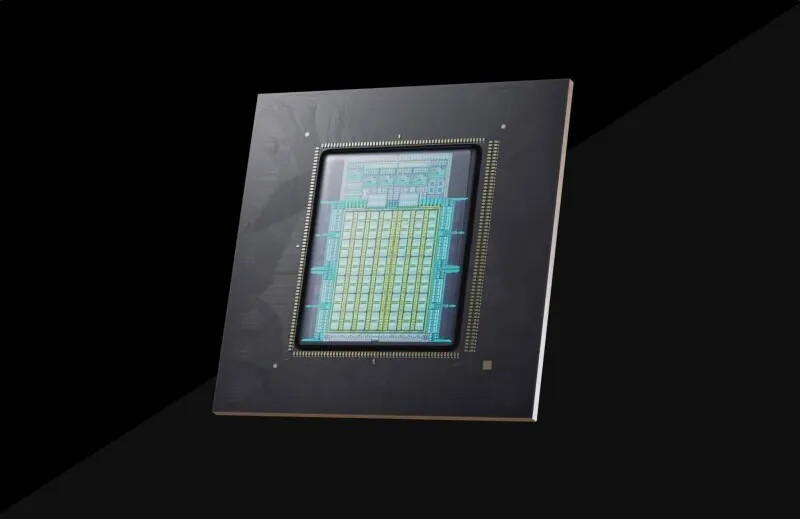
Ian Finder, who heads development of Nvidia's datacenter CPUs, says the company's new 88-core Vera chip is designed to cover most datacenter workloads with one SKU rather than the dozens of core-count and frequency variants sold by Intel and AMD. That bet matters because it could simplify procurement for hyperscalers and HPC buyers while pressuring incumbent CPU vendors' SKU-heavy portfolios.
Ian Finder, who heads development of Nvidia's datacenter CPUs, has a blunt diagnosis for the server market: Intel and AMD have spent years overproducing variants. Speaking to The Register on the sidelines of Supercomputing 2026, Finder said that for the vast majority of use cases, the dozens of Xeon and Epyc SKUs that differ by core count, clock speed, I/O and power are overkill. "There was sort of an overskewing, for many years on the other vendors side of things," he said. Nvidia's answer is Vera, a datacenter CPU that, at least on paper, uses one SKU with 88 cores clocking to 3.3 GHz across a new rack with 192 Vera CPUs aimed at high-performance computing, the Vera-Rubin superchips, standalone CPU racks, storage and context memory systems. That is the bet in the headline: one part, not a menu.
Vera is not Nvidia's first CPU. Grace launched in 2023, but it did not see widespread deployment outside AI headnodes, high-end NICs and a handful of standalone CPU deployments by hyperscalers such as Meta. Vera is meant to be a different beast, and the single-SKU strategy is unusual in a market where CPUs with different combinations of cores, clocks, I/O and power have historically been used for different roles. Finder's argument is that most datacenter CPUs have not been loaded that heavily, so the industry has optimized for unloaded latency. The trade-off is familiar: chips that rely on high core counts to boost throughput often suffer from elevated loaded latencies, while chips tuned for loaded latency usually give up throughput.
AMD's recent Epyc generations show the split clearly. The company has designed both space-efficient Zen-C cores that prioritize throughput and fatter frequency-optimized versions that prioritize latency. More than Moore analyst Ian Cutress told The Register that the physics is real. "As more cores are up and running, your latency to memory gets higher because you have to deal with congestion on the connectivity buses," he said. "What Nvidia is saying is right. Sometimes, you do have to pick between core count and core latency."
Vera's answer is a balanced architecture that Nvidia says maintains low latencies and high throughput even when all 88 cores are loaded. That requires compromises: Nvidia acknowledges that the CPU's vector unit isn't the beefiest. But Nvidia's math depends on the buyer having GPUs to run vectorized code, and if you are buying Vera you almost certainly do. "If you do a few things like that, you can actually get a part that, for the workloads people care about - knowledge agents for CI/CD, for software engineering, or databases and analytics - you can build a part that gets you the same performance per core as the frequency-optimized x86 parts at the same throughput per watt as the density-optimized parts," Finder argued.
Nvidia is not alone in questioning the SKU sprawl. Cloud providers have long passed on the highest core-count parts in Intel's or AMD's lineup in favor of parts that deliver the right mix of throughput, latency, memory bandwidth and capacity. In part, that is because cloud providers do not know exactly what their customers will do with those cores, so a well-rounded part is often safer than one with the highest clocks or lowest latency. The same logic works for agent sandboxes, where workloads can be mixed and unpredictable. "Nvidia is confident that it understands the market well enough that one chip will cover most use cases," Cutress said. "You could argue that Nvidia just wants to corner that bulk market."
The counterargument is that agents are not one workload but many, which is precisely why AMD has argued throughout its latest launch cycle that a broader portfolio makes for better agentic CPUs. Some workloads benefit from higher core counts; others benefit from higher frequency. AMD's more diverse portfolio offers choice. Vera does have one trick up its sleeve: a split personality. It is one of the few Arm chips that supports simultaneous multithreading (SMT), but the way it works differs wildly from what Intel would call Hyperthreading. When enabled, SMT effectively bifurcates Vera's Olympus cores. Eighty-eight cores turn into something that functionally looks more like 176 narrower cores. If you need more throughput than 88 cores afford, or your workload does not benefit materially from a wider core, Vera offers some flexibility.
Binning is the quiet reason a broader SKU stack helps. Chip manufacturing is not perfect, and defective cores show up from time to time. Binning lets chipmakers sell those imperfect chips at a discount. Cutress suspects Nvidia is probably doing this for customers and simply not advertising the variants as different SKUs the way Intel and AMD have for the past few decades. For instance, a hyperscaler might be happy to take a 72-core variant of Vera that clocks a little higher or delivers more memory bandwidth per core for the same amount of power. But for now there is just one Vera SKU. The strategic stakes are clear: if Nvidia can use its GPU position to make one CPU cover the bulk market, it can simplify qualification and procurement for buyers, pressure incumbents' SKU-heavy portfolios, and turn CPU choice into another lever in the AI infrastructure stack. Intel and AMD will have to prove that their menu is worth the complexity.
This story's Key Insights and Take-aways are locked.
Create a free account to unlock Executive Actions for one credit.
Register to UnlockAlways free for Executives Club members. Join the Club
More in Technology

Anthropic mathematician claims Claude helped crack the Riemann hypothesis
If the proof holds, AI has toppled math's most famous open problem; if it does not, it is a case study in announcing breakthroughs before anyone verifies them.

AI's $4 Trillion Wipeout Erases Nasdaq's Gains for the Year
A brutal week took roughly $4 trillion off the AI sector and left the Nasdaq flat for the year, and the damage ran the full length of the supply chain.

Anthropic mathematician says AI proved the Riemann hypothesis. Verification will take time.
A single unverified claim from inside Anthropic now sits against more than 160 years of open mathematics, and the gap between asserting a proof and surviving peer review is the entire story.