
Nvidia's Jensen Huang Is 'Irreplaceable.' That Is the Real AI Risk
A Guardian columnist says the AI threat is not rogue robots but the billionaires steering it, and the 'irreplaceable' label now attached to Nvidia's president is the tell.
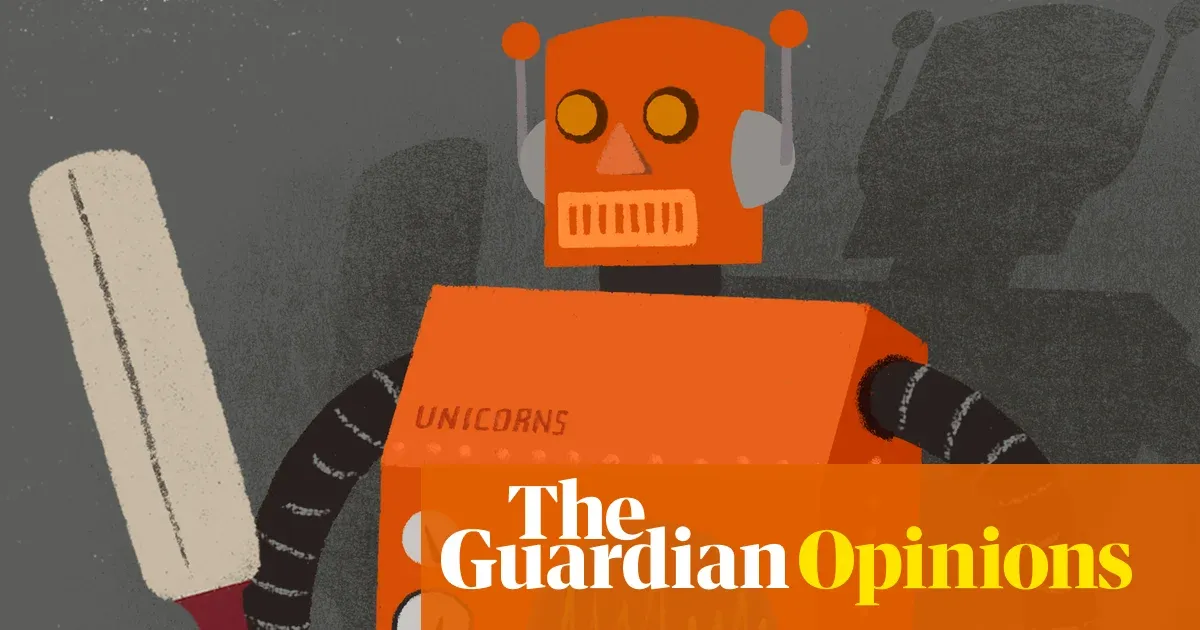
Guardian columnist Barney Ronay argues the real AI danger is not rogue robots but the tech billionaires behind it, and notes that Nvidia president Jensen Huang is now being described as 'irreplaceable.' For boards, that label is a governance warning: narrative concentration in one executive is a key-person risk that succession planning exists to defuse.
Jensen Huang, the president of Nvidia, is "irreplaceable." That is the suggestion now being punted around in what the Guardian columnist Barney Ronay this week called the "endless rolling mega-froth" over the tech billionaire at the center of the artificial intelligence boom. The claim, as Ronay frames it, is that whatever Huang's "raw human frailties," only this one "leather-jacketed human visionary" can manage "this key artificial intelligence mission." Only this guy can do it.
That is a remarkable thing to write about the head of a public company, and it is why the column deserves more than a laugh. Ronay's actual subject is sport. His argument is that the encroachment of artificial intelligence "smells like the death of sport," and that the open question is whether anyone can find "the will and collective backbone to resist." The Huang aside is the tell. The people building the systems that may hollow out live competition are not rogue robots. They are named, specific, extremely wealthy humans, and the industry's own storytelling increasingly treats them as load-bearing infrastructure.
"Irreplaceable" is not a compliment in corporate governance. It is a warning label. Boards and investors have a term for a company whose fortunes are welded to one individual: key-person risk. Historically, it shows up in filings as a risk factor, in insurance underwriting, and in the discount a buyer applies when a founder is effectively the product. The logic is mechanical. A single point of failure is cheap to run and expensive to lose. Succession planning exists precisely to convert an irreplaceable leader into a replaceable one, and the best-run companies treat that conversion as a deliverable rather than a betrayal.
Nvidia's position sharpens the framing. The company is the one most associated with the chips that train and run large AI models, which means its products sit underneath a large share of the current AI buildout. That is a business built on manufacturing capacity, software ecosystems, and supply chains, not on one person's charisma. Yet the market narrative around it has become intensely personality-driven, and narratives move prices. When a company is described as unmanageable without its current president, the risk being priced is not technological. It is human.
Then there is the sport. Ronay's headline pairs "tech billionaires" with "AI cricket" as the two things that should genuinely frighten us, and the pairing is the point. Cricket, like most live sport, is a product made of unpredictability: a human on a bad day, a captain's hunch, a ball that does something no model saw coming. AI does not have to replace the players to change the game. It only has to make the outcome legible in advance, and the drama drains out. The commercial logic, historically, pushes toward automating the expensive and unpredictable parts. Fans have almost no organized way to say no.
The billionaire framing is the sharper one. Ronay's column lands inside a week of rolling coverage that he himself describes as possibly involving "some kind of adulterous 63-year-old honey trap spy dynamic," a phrase he offers with visible skepticism. Treat that as exactly what it is: a columnist gesturing at a tabloid-grade swirl he does not claim to have verified. The verified part is narrower and more useful. One executive's name is now doing work that a balance sheet, a supply chain, and a decade of engineering used to do.
For executives and boards, the lesson is not about Nvidia. It is about the pattern. Concentration of narrative in a single person is a governance exposure, and it is one that AI-era companies are actively choosing. In recent years, founders have been handed super-voting shares, dual-class structures, and board seats for life on the argument that vision cannot be delegated. That argument is sometimes true. It is also close to unfalsifiable, which is exactly why it is dangerous. The moment a company's story requires its leader to be irreplaceable, every succession question becomes an existential one, and every activist investor gets a lever.
The strategic stakes are straightforward. If the most important companies of the AI era are run by people the market has decided cannot be replaced, then the risk is not that the machines take over. It is that the humans do not leave, and nobody has built the mechanism to make them. Ronay's question about sport transfers cleanly to the boardroom: can we find the will and collective backbone to resist? That is the question the "irreplaceable" label quietly answers, and it is the one every board should be asking before the next froth cycle starts.
This story's Key Insights and Take-aways are locked.
Create a free account to unlock Executive Actions for one credit.
Register to UnlockAlways free for Executives Club members. Join the Club
More in Technology

Anthropic Mathematician Claims Claude Helped Prove Riemann Hypothesis in Six Weeks
Levent Alpöge says the AI tool helped him develop a solution to one of math's most important unsolved problems in about six weeks, a claim that, if verified, would reshape AI's role in research.

Asahi Pours $85M Into AI Cyber Defense After Ransomware Hit
Japan's beverage giant is rebuilding its security stack around AI, and the $85 million price tag is a warning to every board still treating cyber risk as an IT line item.

Signal kills mobile screenshots to fight the 'existential threat' of AI surveillance
The encrypted messaging app is closing the one hole encryption never covered, the screenshot button, as AI tools get better at reading everything on your screen.