
One California Order Just Pulled Waymo Off Freeways Nationwide
A single state regulator restricted the country's best-known robotaxi operator after several incidents, and Waymo answered by grounding highway rides in every market it serves.
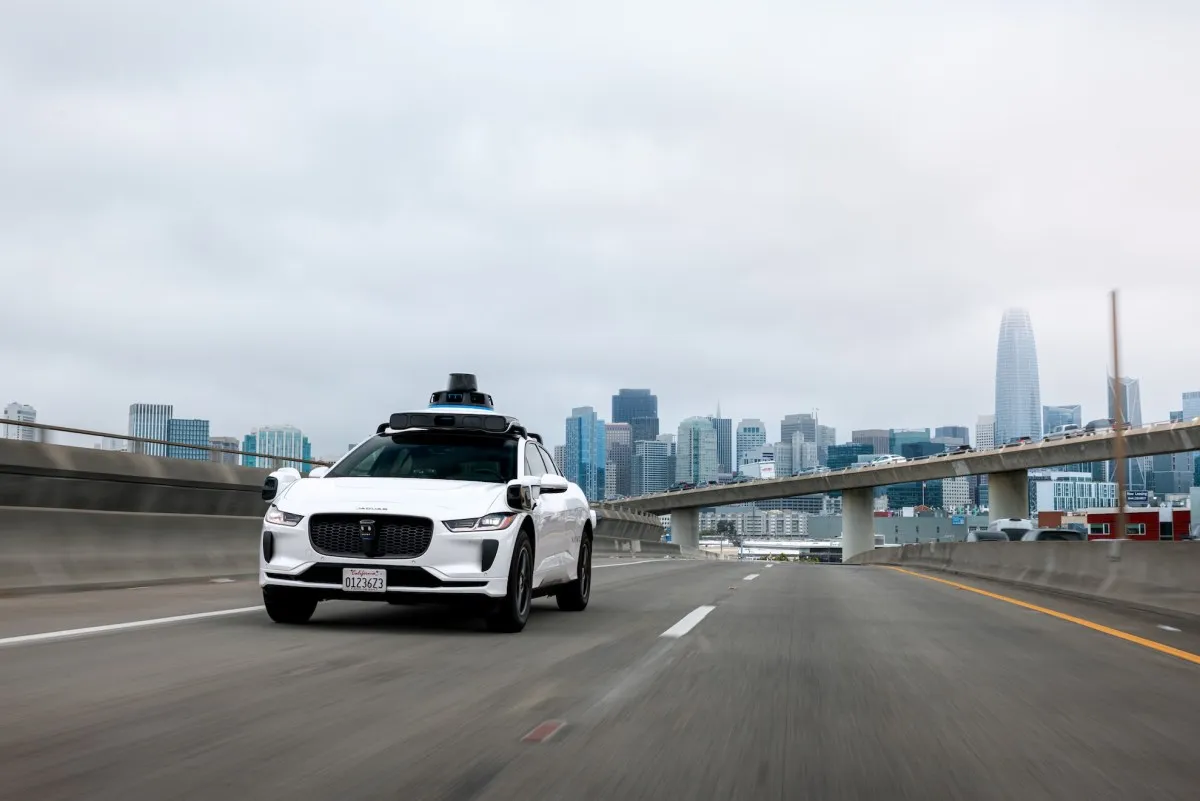
Waymo suspended freeway rides nationwide after the California Department of Motor Vehicles, which regulates autonomous vehicle testing and deployment in the state, issued operational restrictions following several incidents. For decision-makers, the episode shows how fast a single state regulator can redraw the operating envelope of a national autonomy business.
Waymo has suspended freeway rides across the country after the California Department of Motor Vehicles issued operational restrictions on the company. Read that again slowly, because the geography is the story: the order came from one state's regulator, and the fallout covers every market where the Alphabet-owned autonomous driving company offers rides. The DMV, which regulates the testing and deployment of autonomous vehicles in California, issued those restrictions following several incidents, according to TechCrunch. Waymo's response was not a narrow, California-only pause. It was a nationwide stop on highway driving.
That is the payoff on the headline, and it deserves a plain-English unlock. Robotaxis do not operate in one undifferentiated blob of road. Surface-street driving and freeway driving are different technical and regulatory problems, and companies typically hold separate permissions, separate validation work, and separate internal sign-offs for each. Freeways are where the hardest miles live: higher speeds, shorter reaction windows, merging traffic, debris, construction zones. They are also where the money lives. The long trips, the airport runs, the suburb-to-suburb commutes that make a paid robotaxi ride a genuine substitute for owning a car all lean on highway miles. Take the freeway out of the product and what remains is a shorter, cheaper, more novelty-shaped trip.
Now the regulatory mechanics, because this is where boards tend to get caught flat-footed. The DMV's tool here was an "operational restriction," a middle-weight instrument. It is not the nuclear option of yanking a permit outright, and it is not a polite suggestion either. It narrows what a company is allowed to do while leaving the underlying approvals intact, which makes it fast to impose and comparatively easy for a regulator to defend. California has historically been the most closely watched proving ground for autonomous vehicles in the United States, so its judgments travel. Other states and cities rarely draft their own rulebooks from scratch when a large, well-resourced regulator has already done the analysis. A restriction in Sacramento becomes a template in Phoenix, Austin, or anywhere else a permit application lands on a desk.
The trigger matters as much as the tool. The source of this action was "several incidents," a phrase that tells you the regulator was reading a pattern rather than reacting to a single event. That is the standard failure mode for any safety-critical operator: one event is an anomaly, a cluster is a signal. Regulators typically move when the internal narrative stops matching the external evidence, and the intervention tends to arrive suddenly after months of quiet accumulation. For a company, that means the most dangerous period is not the bad week. It is the stretch when the bad weeks are being explained away internally.
On the business side, the near-term damage is measured in coverage, not cash. Waymo has the balance sheet of its parent behind it, and capital has never been the binding constraint on this particular ambition. Regulators are. That distinction reshapes the whole competitive map. Rivals racing to scale autonomous ride-hailing now face a clearer picture of the real bottleneck: not sensors, not compute, not unit economics, but the willingness of a state agency to keep saying yes. Every operator in the field is now studying the California action to figure out which of its own approvals could be narrowed by a single phone call, and how quickly it could comply if one were.
Second-order effects will show up in places most operators do not staff for. Cities and airports that host robotaxi pickups and drop-offs will want to know whether highway segments are affected before they renew anything. Insurers underwriting autonomous fleets will re-examine how they price the risk of a regulator-imposed service change, which is a different exposure from a crash. And the companies that treat incident reporting, telemetry, and regulator communication as core product, rather than as legal overhead, will find that discipline turning into a moat. Trust with a regulator compounds just like trust with a customer, and it is considerably harder to rebuild once withdrawn.
The strategic stakes for peers are blunt. If your business depends on a permission granted by a state agency, you do not have a national business. You have a stack of state businesses that happen to share a logo, and the weakest link sets your operating boundary. The operators that come out of this cycle ahead will be the ones that can answer three questions on short notice: which approvals are single-state-triggered, what fraction of revenue depends on the restricted driving category, and how fast can service be narrowed and restored without losing customer trust in the process.
What to watch next is the restart, not the stop. The interesting details will be the conditions attached when freeway rides resume and whether the California framing gets adopted by regulators in other states before Waymo gets back on the highway. Watch those two things and you will know whether this was a bad month for one company or a permanent change in how autonomous vehicles get supervised in America.
This story's Key Insights and Take-aways are locked.
Create a free account to unlock Executive Actions for one credit.
Register to UnlockAlways free for Executives Club members. Join the Club
More in Technology

Anthropic mathematician claims Claude helped crack the Riemann hypothesis
If the proof holds, AI has toppled math's most famous open problem; if it does not, it is a case study in announcing breakthroughs before anyone verifies them.

AI's $4 Trillion Wipeout Erases Nasdaq's Gains for the Year
A brutal week took roughly $4 trillion off the AI sector and left the Nasdaq flat for the year, and the damage ran the full length of the supply chain.

Anthropic mathematician says AI proved the Riemann hypothesis. Verification will take time.
A single unverified claim from inside Anthropic now sits against more than 160 years of open mathematics, and the gap between asserting a proof and surviving peer review is the entire story.