
Pete Hegseth asks for up to $70B in emergency war funding after months in Iran
The Defense Secretary is requesting emergency spending, including a $37.5B war-cost estimate, reshaping budget pressure fast.
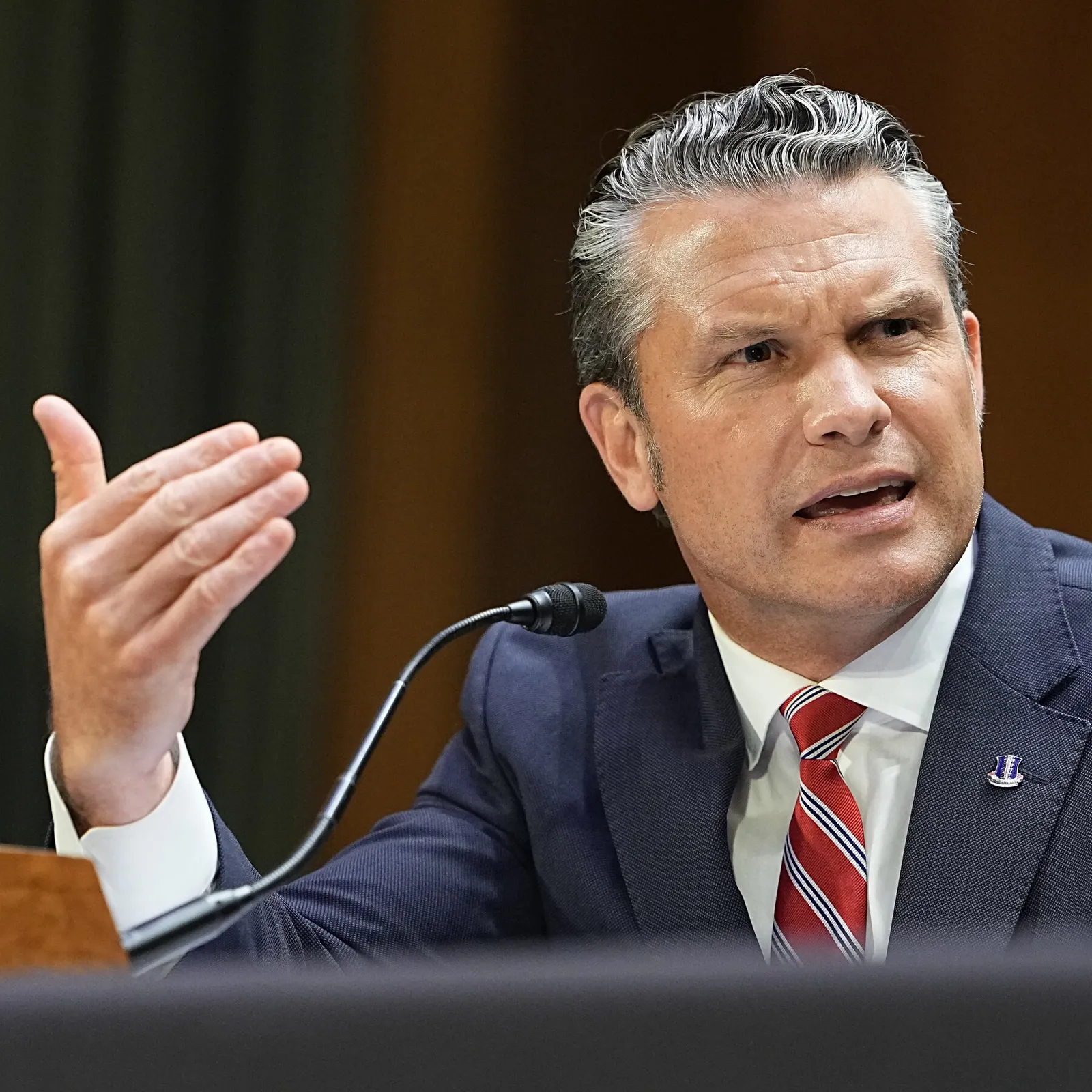
Defense Secretary Pete Hegseth is requesting as much as $70 billion in emergency military spending after nearly five months of war. For decision-makers, this is an immediate stress test of government funding priorities and the speed at which new costs are being socialized.
Defense Secretary Pete Hegseth is requesting as much as $70 billion in emergency military spending after nearly five months of war. That headline number matters because it signals more than battlefield momentum. It is a budget acceleration, the government trying to match real-time operational demand with a funding timeline that normally moves much more slowly.
Within that request sits an estimate that the war has cost $37.5 billion, according to the framing in the coverage. Put simply: by the time you get to roughly five months, the government is already working with a very large cost baseline, and now it is asking for a fresh, emergency pool that could nearly double what has already been spent. For executives and investors watching policy as a driver of risk and opportunity, the second-order effect is the same every time budgets get treated as emergency: procurement, contracting, and downstream industrial demand can shift quickly, but the administrative and political friction also ramps up.
Emergency spending requests in Washington are rarely just about the amount. They are also about timing, flexibility, and the procedural path the money takes to get out the door. When leaders seek emergency authorization, they are implicitly arguing that normal appropriation processes are too slow for the scale and pace of current events. That can matter for the defense ecosystem, because the winners in these moments are often the programs and supply chains positioned to respond under compressed timelines. It also matters for governance: emergency authorities can compress oversight cycles, pushing boards and compliance teams in government-linked contractors to prepare for faster contracting decisions and more frequent documentation needs.
There is also a capital markets angle, even if this story is political. When governments move quickly to fund military operations, it can change how markets think about fiscal risk and long-term obligations. The near-term consequence is straightforward, the state is drawing on resources now. The longer-term consequence is more complicated, emergency spending can set expectations that future budgets will keep being revised upward in response to evolving threats. For companies that sell into defense or that rely on stable government planning, that expectation influences procurement forecasting and backlog decisions.
The stakes get sharper when you zoom out to the structure of defense spending. Most defense funding is planned through multi-step budget cycles that require coordination across agencies and legislative processes. Emergency requests interrupt that rhythm. That increases pressure on policy actors to define requirements clearly, because ambiguities tend to create procurement churn. In these situations, leaders often need to translate operational realities into funding categories that can move through approvals. The $70 billion request after nearly five months of war tells you that translation is happening under intense time constraints, and that the spending profile is being treated as something that evolves with events, not something pre-committed months in advance.
For decision-makers in the broader economy, the important question is not only “How much?” It is also “How fast, and with what follow-on obligations?” A request on this scale can ripple into workforce planning, manufacturing capacity, logistics capacity, and the ability to source components. Even companies that are not directly contracted can experience spillovers through subcontractors and suppliers. Meanwhile, scrutiny can rise, because large emergency funding moves tend to invite oversight debates about accountability, effectiveness, and whether the spending matches strategic priorities.
For boards and leadership teams that manage risk across government-facing operations, this is the familiar reckoning: funding can move at the speed of geopolitics, while internal controls and compliance readiness often lag. If emergency spending becomes a recurring pattern, governance becomes a competitive advantage, not just a legal requirement. The strategic takeaway is clear: leaders in adjacent industries and in defense-linked supply chains should be prepared for rapid requirement shifts and accelerated contracting timelines, while also expecting that oversight and documentation demands may not move as fast as the dollars.
In short, Hegseth’s emergency request is a fiscal statement dressed as a defense measure. After nearly five months of war, the U.S. is signaling that the financial burden is already massive at $37.5 billion and that it wants the ability to fund the next phase with up to $70 billion. For executives, the story is a reminder that policy can reprice operational and financial assumptions in real time.
This story's Key Insights and Take-aways are locked.
Create a free account to unlock Executive Actions for one credit.
Register to UnlockAlways free for Executives Club members. Join the Club
More in Politics

LA County: DOJ's 20,000 'noncitizen' voter list is 'unreliable,' includes U.S.-born
Preliminary review by Los Angeles County election officials finds errors in the federal list, raising the stakes for voter roll integrity ahead of November.

Trump's $1.5B Pentagon chip investment lands in North Carolina
A $1.5 billion defense infusion for North Carolina chipmaking signals a new era of Pentagon-backed reshoring - here's what it means for the industry.

Nigeria confirms first Ebola case in Abuja, a woman just off a Uganda flight
Health Minister Muhammad Ali Pate says the patient flew in from Uganda, putting Africa's latest outbreak on Nigeria's doorstep.