
Putin admits a “certain deficit” of fuel as Ukraine burns another southern oil refinery
The Kremlin concedes shortages for the first time, while Ukraine escalates drone attacks on Russia’s oil infrastructure.
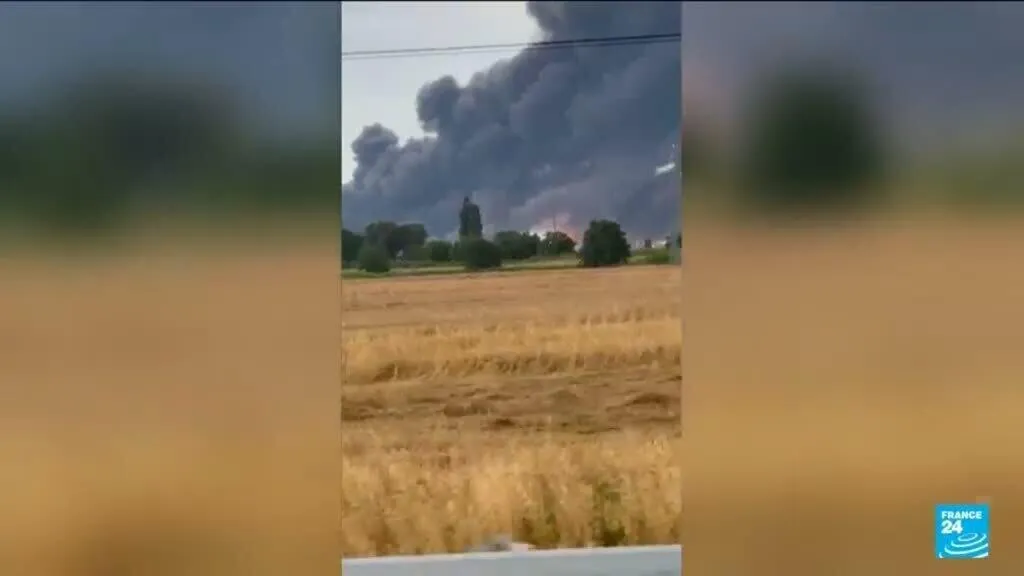
President Vladimir Putin acknowledged for the first time on Sunday that Russia is facing a “certain deficit” of fuel as Ukraine kept up heavy drone assaults and set fire to a major oil refinery in the south. The admission raises pressure on decision-makers managing energy supply, facility risk, and public confidence in fuel availability.
Ukraine kept up its heavy drone assault on Russia, setting fire to a major oil refinery in the south, as President Vladimir Putin acknowledged for the first time on Sunday that the country was facing a “certain deficit” of fuel. That pairing matters. It is not just battlefield noise. It is an explicit admission from the top that Russia is seeing a supply gap, and it is happening while its refining capacity is being hit.
In other words, the Kremlin is conceding the problem at the same moment the physical cause is on display. Ukraine’s strike fires up a southern refinery. Putin’s response is a vow to strengthen protection of oil facilities and boost fuel output. Together, they frame the real executive question: if refineries are under attack and fuel demand does not magically pause, how fast can supply be rebuilt or rerouted without letting shortages become political and operational?
For anyone running an energy company, this is the grim version of operational risk management. A refinery is not a switch you flip. Attacks can damage units, disrupt throughput, and force complex rerouting decisions across a network. Even when a facility is not fully destroyed, fire and damage can reduce usable capacity, tighten inventories, and increase the likelihood that fuel shortages show up somewhere, even if the country has other assets. That is the second-order reason a “certain deficit” admission is so consequential: it signals that the system is not balancing cleanly anymore.
Putin’s “for the first time” framing is also a communications move with real downstream effects. When leaders finally put a number to conditions, procurement and planning behaviors tend to change. Buyers and counterparties start planning for scarcity rather than treating it as a temporary variance. Internally, it can accelerate emergency timelines, prioritize the most critical sites, and redirect capital towards both protection and production. The source also says Putin vowed to strengthen protection of oil facilities and boost fuel output, which implies a near-term shift toward hardening and capacity restoration as policy levers, not just operational ones.
Ukraine’s side, meanwhile, is escalating through continued drone attacks, targeting the infrastructure that converts crude into usable products. The immediate effect is visible on the ground, with the fire at the southern oil refinery. But the longer-term impact is economic and logistical. Refining disruptions can ripple into transport bottlenecks, pricing pressure, and shortages of specific fuel types, depending on what is being produced and how quickly units come back. When assaults stay consistent, they compress repair windows and raise the burden on maintenance teams. That is why this kind of campaign can be strategically powerful even without a dramatic headline collapse in production from day one.
In the background, there is always the regulatory and compliance layer that executives can sometimes forget until it bites. Fuel supply and refinery operations are heavily constrained by safety rules, environmental obligations, and reporting requirements. In a conflict setting, companies and governments still have to navigate licensing, incident response protocols, and oversight. If facilities are repeatedly targeted, incident reporting and operational approvals can become bottlenecks for restart timelines. While the source does not spell out specific regulatory actions, the direction of travel is clear: stronger protection and output boosts are essentially policy-grade interventions that have to work inside whatever regulatory framework exists.
Second-order for boards and C-suite teams outside Russia: the story is a warning about what happens when energy infrastructure becomes a direct target of war. Supply chain resiliency usually assumes disruptions like weather, strikes, or single-plant downtime. Here, the stressor is deliberate and sustained. That means executives should think about protective investments as core business continuity, not optional capex. It also means scenario planning should include infrastructure degradation, not just demand shocks, because a “certain deficit” can emerge when conversion capacity is repeatedly impaired.
For decision-makers who rely on fuel availability, trading desks, logistics operators, and industrial buyers, the stakes are immediate. If a major producer acknowledges a deficit and promises action, that can stabilize certain expectations while still leaving real operational uncertainty. But it also increases the urgency to secure supply routes, monitor facility risk, and anticipate how output boosts will be implemented. The strategic chess match in this briefing is simple: Ukraine is attacking the conversion nodes. Russia is trying to harden and increase output. The next phase will likely be decided by which side can reduce downtime faster, protect capacity more effectively, and keep shortages from turning into a structural problem.
This story's Key Insights and Take-aways are locked.
Create a free account to unlock Executive Actions for one credit.
Register to UnlockAlways free for Executives Club members. Join the Club
More in Politics

Obama Defends Ilhan Omar After Agents Search Her Home in Trump Inquiry
The former president's intervention raises the stakes in a federal probe into immigration paperwork that has put a prominent progressive lawmaker in the crosshairs.

Blair-era minister: cut welfare to fund youth job support
Alan Milburn's call for welfare cuts to fund employment support opens a Labour fight over benefits and the Neet crisis.

Hot September CPI: energy costs surge, voters feel the squeeze before midterms
The latest inflation print lands as Trump campaigns for GOP control of Congress, putting cost-of-living worries at the center of the midterm fight.