

Putin admits “difficult period” as Ukrainian drones spark refinery blaze in Russia
Debris from downed drones ignited a major Russian oil refinery, underlining how Ukraine’s strikes target fuel and military delivery lines.
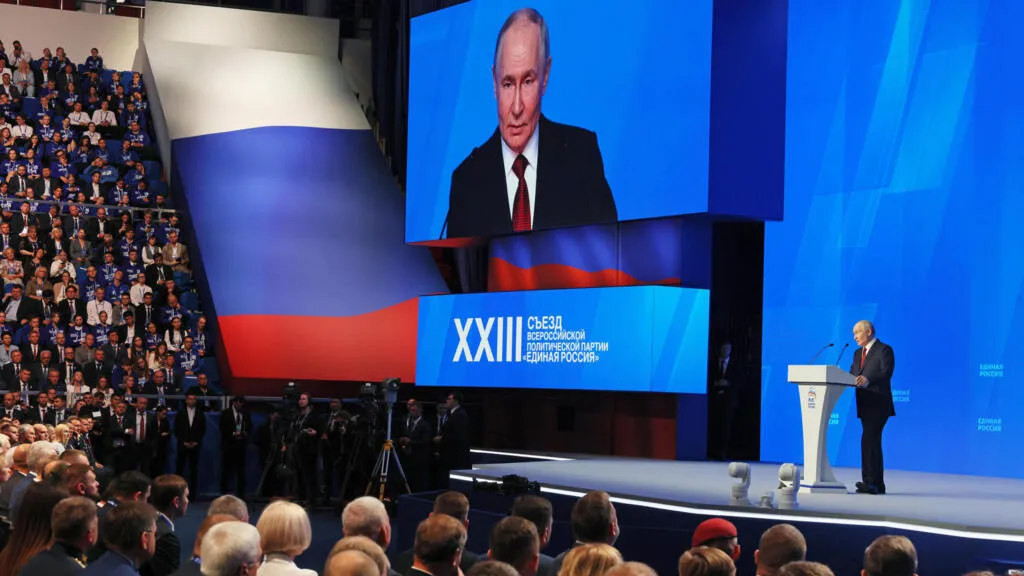
Local authorities say debris from downed Ukrainian drones sparked a blaze at a major oil refinery in Russia on Sunday. Russian President Vladimir Putin said Russia was “going through a difficult period,” as Ukraine steps up long-range attacks on Russian military facilities.
A Sunday blaze at a major oil refinery in Russia was sparked by debris from downed Ukrainian drones, local authorities said. The incident lands in the middle of a broader pattern: Ukraine has been increasing long-range strikes on Russian military facilities, and those attacks are aimed at the fuel and logistics that keep military operations moving.
The second headline inside this one is the political admission from Russian President Vladimir Putin. He said Russia was “going through a difficult period.” In other words, the refinery fire is not being presented as an isolated mishap. It is being framed in the language of strain, where disruptions to energy infrastructure and military support networks start to matter more than the battlefield headlines.
To understand why executives should care, you have to zoom out from the flames. Oil refineries are not just industrial scenery. They are conversion points in the energy chain, turning crude inputs into usable products like fuels that power transport, equipment, and, in wartime contexts, military delivery systems. When strikes or disruptions hit at that level, they do not just affect a single plant. They can ripple into supply availability, downstream pricing, and operational planning for anyone relying on predictable fuel flows.
This is where the Ukraine-Russia dynamic gets strategically sharp. The source notes that “in recent months” Ukraine has stepped up its long-range attacks on Russian military facilities. The stated aim is to choke Moscow’s fuel supplies and military deliveries. That matters because fuel is the dependency behind nearly every operational tempo decision. If delivery cycles tighten, military planners face hard tradeoffs: move less, risk delays, or adjust routes and resupply timing. In peacetime, energy disruptions are disruptive. In war, they can be decisive.
From a governance and risk perspective, this is the sort of event boards and C-suite teams should translate into scenario thinking. An oil refinery blaze driven by external attack is different from normal maintenance risk. It is influenced by air-defense effectiveness, drone interception rates, and the evolving tactics of a non-state actor with long-range reach. That means risk management cannot be limited to internal controls. It also has to account for geopolitical spillovers and the possibility of repeat incidents.
There is also a market psychology component, even when the source does not provide specific volumes or damage estimates. Energy markets price uncertainty. A refinery fire in a major production area can raise concerns about throughput disruptions and logistics friction, which can show up indirectly in pricing, contract behavior, and hedging strategies for companies exposed to refined products or shipping. For decision-makers, the key is not to overfit one incident. It is to treat it as evidence that the conflict is increasingly touching the energy backbone.
Regulatory and compliance angles are relevant too, even though the source does not name specific regulators. When energy infrastructure is impacted by conflict-driven attacks, governments and counterparties often revisit sanctions enforcement, trade compliance, and exposure limits. Boards that manage supply chains in or around sanctioned regions typically have to ensure their risk frameworks still match the reality of how disruptions are occurring, including changes in routing, documentation, and counterparties.
Second-order implications extend beyond the immediate location of the refinery. When fuel supply and military deliveries face pressure, the entire operational system is stressed. That can force shifts in procurement patterns, logistics routes, and potentially the timing of operations. For peers in energy, logistics, and industrial sectors, the strategic stake is clear: if the conflict continues to target fuel and delivery infrastructure, then volatility becomes a structural feature, not a temporary shock.
In executives terms, this is a reminder that infrastructure risk is now inseparable from geopolitical risk. A blaze sparked by downed drones might look like operational news. But alongside Putin’s “difficult period” framing, it reads like part of a larger pressure campaign that directly threatens the energy and delivery inputs of military capability. The companies and leaders best positioned will be the ones who can convert that into resilient planning, not just incident response.
This story's Key Insights and Take-aways are locked.
Create a free account to unlock Executive Actions for one credit.
Register to UnlockAlways free for Executives Club members. Join the Club
More in Politics

Obama Defends Ilhan Omar After Agents Search Her Home in Trump Inquiry
The former president's intervention raises the stakes in a federal probe into immigration paperwork that has put a prominent progressive lawmaker in the crosshairs.

Blair-era minister: cut welfare to fund youth job support
Alan Milburn's call for welfare cuts to fund employment support opens a Labour fight over benefits and the Neet crisis.

Hot September CPI: energy costs surge, voters feel the squeeze before midterms
The latest inflation print lands as Trump campaigns for GOP control of Congress, putting cost-of-living worries at the center of the midterm fight.