

Raph Koster pits Stars Reach’s simulated planets against WoW, even as Steam doubts him
Ultima Online and Star Wars Galaxies legend doubles down on a science-of-worlds MMO, and skepticism follows.
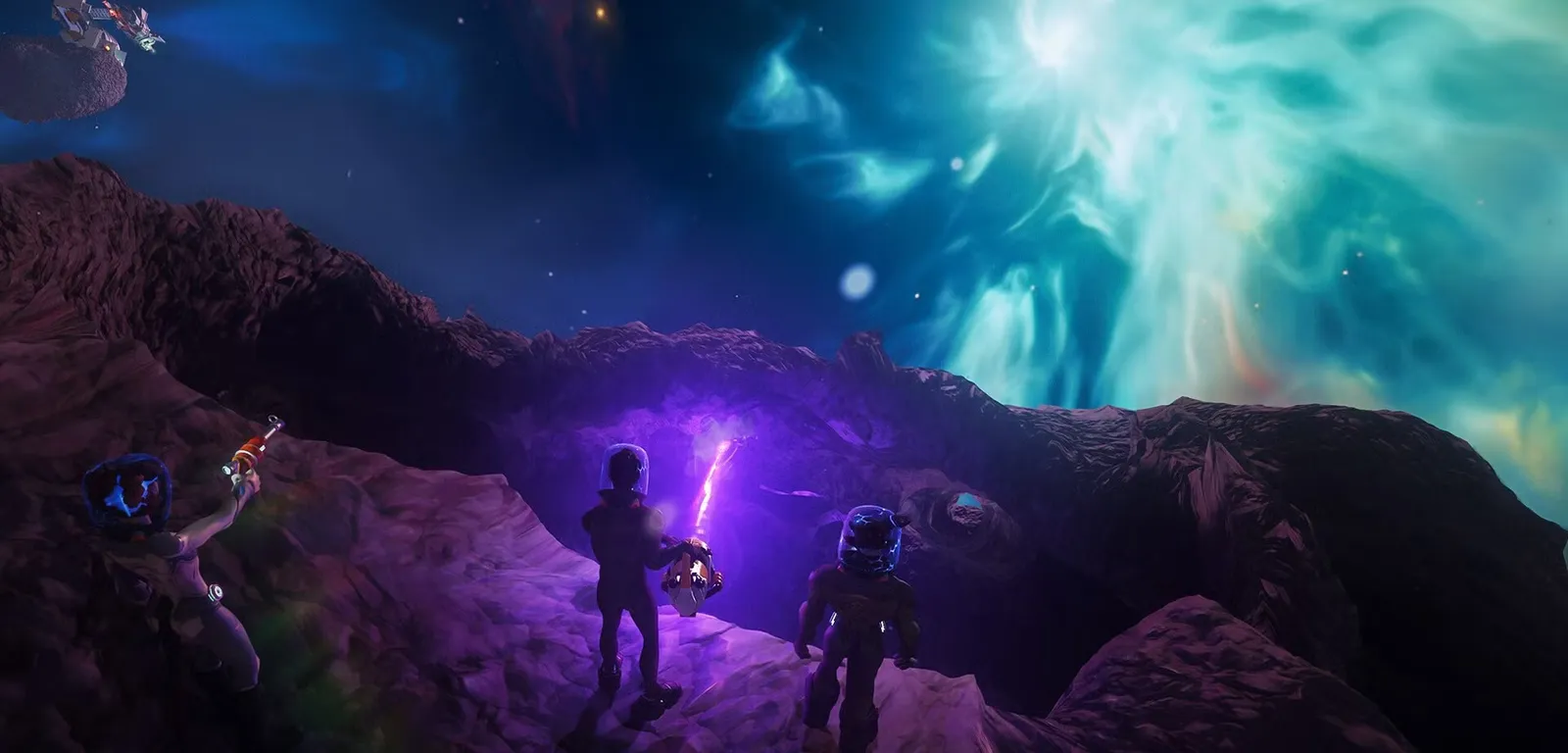
Raph Koster, known for Ultima Online and Star Wars Galaxies, is building Stars Reach, his dream MMO project. His highly simulated planet systems are drawing skepticism from Steam players despite the obvious ambition.
Raph Koster is doing something that would make most MMO investors reach for the exit button: he is trying to “counter” World of Warcraft not by copying what works, but by replacing the entire foundation of how a game world behaves. In Stars Reach, the world is not just pretty scenery. Rain falls. Water pools. Rivers carve paths through terrain. Lakes freeze in winter. Trees propagate. Forests burn. Cave ceilings collapse due to overmining. And the really central claim is that every cubic meter of every planet has temperature, humidity, geology, and hundreds of material properties.
At that point, the natural question is not “can this be fun?” It is the one the story bluntly raises: why does it have to be this detailed. Koster’s own explanation, as described, includes mechanics like players being able to melt stone into lava, cool it into new rock formations, and the possibility of accidentally creating ecological disasters. The design is basically world simulation as a gameplay system, where your actions can ripple through the environment in ways that are not just skin-deep consequences.
This is where decision-makers should pay attention, even if you are not a game dev. MMOs are capital heavy, long-cycle products. “Believability” is not a vibe, it is a requirement: players need to trust that the world reacts consistently enough for them to plan around it. Stars Reach is effectively making a bet that depth is the differentiator, not convenience. That is a risky posture when the market already has giants who win on familiarity, content cadence, and social gravity. World of Warcraft is not just a game, it is a system players organize their time around. To compete, Koster is trying to offer a different organizing principle: a world that behaves like it could actually exist.
The other reason this matters is incentives. Koster is not a random studio chasing a trend. He is “the man behind Ultima Online and Star Wars Galaxies,” which signals long-standing credibility in MMO design and a history of betting on worlds that feel alive. That credibility can help on early rounds of community support, but it can also raise expectations from players and backers who know what a “dream project” usually costs in scope. The story notes that Steam players are skeptical over ambition, which is a classic early-warning system: when a community starts questioning feasibility, it usually reflects not just taste, but concerns about execution risk.
Execution risk is not just about graphics or bandwidth. It is about simulation costs, edge cases, and player behavior. The described world mechanics imply an enormous space of outcomes. If you can melt stone into lava and cool it into new rock formations, you also need the game to keep running stable after thousands of messy player experiments. Forest fires, ecological disasters, cave collapses from overmining, and dynamic terrain formation are the kind of systems that can create emergent stories, but they can also become the source of frustration if the rules are hard to predict or recover from. When a game makes the world a physics problem and an ecology problem, QA turns into a never-ending treadmill.
Then there is the governance angle. In games, “regulatory” is not usually the headline, but there is a real analogue: how platforms and communities set norms for risk. Steam players questioning ambition is a market signal that affects what developers prioritize next, how publishers judge traction, and how boards evaluate whether the company can hit milestones without burning through goodwill. Even if no regulator is involved directly in a consumer game, platforms create their own pressure through reviews, refund behavior, and visibility algorithms. Community skepticism can function like an informal constraint, steering roadmaps toward deliverables that appear more immediately shippable.
Second-order implications for executives and boards: if you fund or advise similar projects, you should treat simulation-driven design as both a differentiator and a liability that compounds over time. The more the world can “do,” the more the studio must prove it can “manage.” Stars Reach is essentially saying that the world will have temperature, humidity, geology, and hundreds of material properties for every cubic meter. That is an incredible creative pitch. But the business question becomes: can the team translate that pitch into sustainable production velocity, clear progression for players, and performance that holds under real usage?
In the end, Koster’s Stars Reach is framed as a counter to World of Warcraft, driven by a dream of living planets. The strategic stakes are simple for peers watching from the sidelines. If Koster pulls it off, it validates a new form of MMO credibility, where simulation replaces familiar content beats. If he stumbles, it will reinforce the market lesson that ambition is not the same thing as shipping. Either way, the industry is about to learn how far “world realism” can go before practicality breaks it.
This story's Key Insights and Take-aways are locked.
Create a free account to unlock Executive Actions for one credit.
Register to UnlockAlways free for Executives Club members. Join the Club
More in Science

Alaska's 1,580-foot tsunami had warning signs. Scientists just found them.
Rapid glacier retreat, heavy rainfall, and thousands of tiny tremors preceded Alaska's 1,580-foot tsunami, a warning for every coastal community in a warming world.

The rare mutation that lets high-risk brains dodge Alzheimer's
Scientists found a natural defense against protein buildup, opening a new path to preventive treatments.

3,000 steps a day may halve Alzheimer's decline, study finds
New research links a modest daily walk to less tau buildup and nearly half the cognitive and functional decline, even for those with early signs.