
Russian satellite shadowed a US commercial spacecraft to within meters - Ukraine is likely why
Russia's Kosmos 2612 shadowed ICEYE-X36, a commercial satellite that feeds Ukraine's military - a sign that low Earth orbit is now a contested battlefield.

Victoria Samson, chief director of space security and stability at Secure World Foundation, says Russia's Kosmos 2612 shadowed ICEYE-X36, a commercial satellite that feeds Ukraine's military, in a close approach. The move, she says, is a demonstration of military prowess that Ukraine cannot match in space - a warning for any company operating assets in low Earth orbit.
A Russian satellite just got uncomfortably close to an American commercial spacecraft - and the likely reason is Ukraine. Between Oct. 15 and Oct. 19, Russia's Kosmos 2612 rendezvoused with ICEYE-X36, a private Earth-observing satellite operated by ICEYE US, in a maneuver that satellite tracker Marco Langbroek called "a worrisome cat-and-mouse game" in orbit. At one point, the two spacecraft may have been separated by just a few meters. This was no accidental flyby; it was a deliberate, non-consensual inspection of a commercial asset, and it has space watchers on edge.
Why the close encounter? ICEYE-X36 is part of a constellation that feeds high-resolution synthetic aperture radar (SAR) imagery to Ukraine's Ministry of Defence. In January, ICEYE signed a contract firming up that data-sharing relationship, ensuring the Ukrainian military gets "persistent situational awareness on tactical timelines," according to the company. Russia, which invaded Ukraine in February 2022 and continues to assault it with ground troops and missile and drone attacks, certainly seems to think the satellite is a threat - and that likely explains the risky inspection. The rendezvous was not an isolated incident either; Kosmos 2612 launched in April with five other spacecraft, and in May, four members of that fleet, including Kosmos 2612, conducted fuel-hungry maneuvers to get into a co-planar orbit with ICEYE-X36. Such maneuvers are not performed lightly.
To be clear, satellite inspections are not unheard of in the final frontier. Russia, the United States, and China have all maneuvered spacecraft close to other nations' hardware in recent years, but most of that activity has taken place in geostationary orbit (GEO), 22,236 miles above Earth, where spacecraft "hover" over one spot and are popular targets for shadowing. What makes Kosmos 2612's behavior different is that it happened in low Earth orbit (LEO), and it got far closer than previous Russian efforts. According to Victoria Samson, chief director of space security and stability for the nonprofit Secure World Foundation, Russia has conducted uncooperative rendezvous in LEO before - Kosmos 2543 got within about 19 miles of USA 245 in January 2020, and Kosmos 2558 got within about 43 miles of USA 326 in August 2022 - but Kosmos 2612 closed to within meters of its target. That is a dramatic escalation in proximity.
The other big difference: USA 245 and USA 326 are classified spy satellites managed by the U.S. National Reconnaissance Office. ICEYE-X36 is a private commercial craft. There are about 80 ICEYE spacecraft in LEO, some operated by the Finnish parent company and others by its American subsidiary, ICEYE US. At least some of them provide imagery to Ukraine, making them legitimate military intelligence assets in Russia's eyes. That likely explains why Russia has taken such a keen interest in this particular satellite, and why it was willing to burn fuel and risk a collision to get a closer look.
What was Russia hoping to gain? Samson stressed that the purpose is still unclear. Possibilities include assessing ICEYE's capabilities, figuring out what the satellite is studying on the ground, or actively interfering with its sensors or communications. But Samson leans toward a simpler explanation: frustration. "I think they're getting frustrated," she said. "They've been kind of in a stalemate, particularly for the past six months or so. And so I think it's just more a matter of demonstrating military prowess in a manner that the Ukrainians cannot respond to." She added, "The Ukrainians are just as good, perhaps even better than, the Russians on drones. But when it comes to space stuff, they're not peers, and this is just a way to remind everyone that that's the case."
For executives, this is a wake-up call. Space is becoming an increasingly competitive and contested domain, and commercial assets are no longer bystanders. The U.S. has long held the advantage above Earth, fielding the most capable reconnaissance and communications craft, but Russia and China are challenging that dominance. This drama is unfolding above our heads now, and it affects everyone on the planet - especially companies that operate satellites, insure them, or rely on their data. The close approach to ICEYE-X36 shows that a private spacecraft can become a geopolitical pawn, and that the rules of engagement in LEO are being rewritten in real time.
Samson also wishes governments were more forthcoming about these activities. We learned about Kosmos 2612's shenanigans from private trackers and civilians poring over government tracking data, not from the U.S. Space Force. "I think it just speaks to the importance of transparency, and sharing information about these sort of things," she said. "As much as you may want to, you cannot keep the existence of satellites classified, because people can see them." For boards and CEOs, the lesson is clear: if you have assets in orbit, you need to know who is watching them, and you need a plan for when a "cat-and-mouse" game turns into something more dangerous. The next close encounter might not end with just a few meters to spare.
This story's Key Insights and Take-aways are locked.
Create a free account to unlock Executive Actions for one credit.
Register to UnlockAlways free for Executives Club members. Join the Club
More in Technology
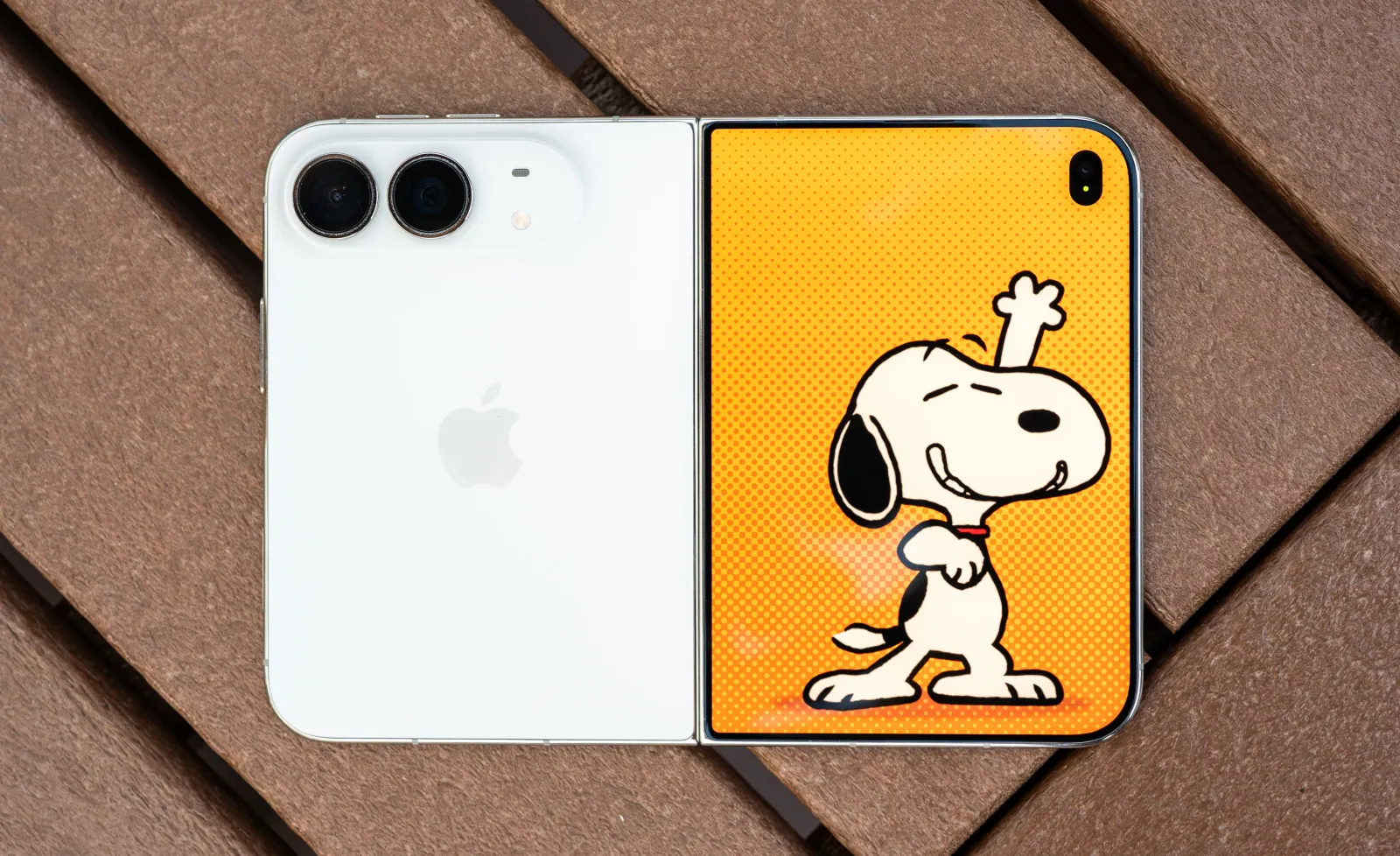
Apple's First Foldable Is Astonishingly Good. The Catch: iOS and Apps
The iPhone Duo nails the hardware, but the review warns iOS and third-party apps need time to catch up. Here's what that means for buyers and developers.

AI data centers guzzle water. Nvidia's DSX blueprint can cut it to near zero
European infrastructure firms are building AI factories on Nvidia's DSX reference design, which the chipmaker says slashes cooling water use to almost zero.

Nvidia's 'AI trailer parks' cut datacenter buildouts from 6 months to 2 weeks
Nvidia's DSX pods, fully wired modular containers, promise to shrink AI factory deployment from six months to two weeks, starting with Vera Rubin systems in 2027.