

SEC reportedly opens Nvidia probe after CEO Jensen Huang exits amid spy affair
The reported investigation lands on one of the most systemically important companies in tech, and the board now owns both the exit and the disclosure timeline.
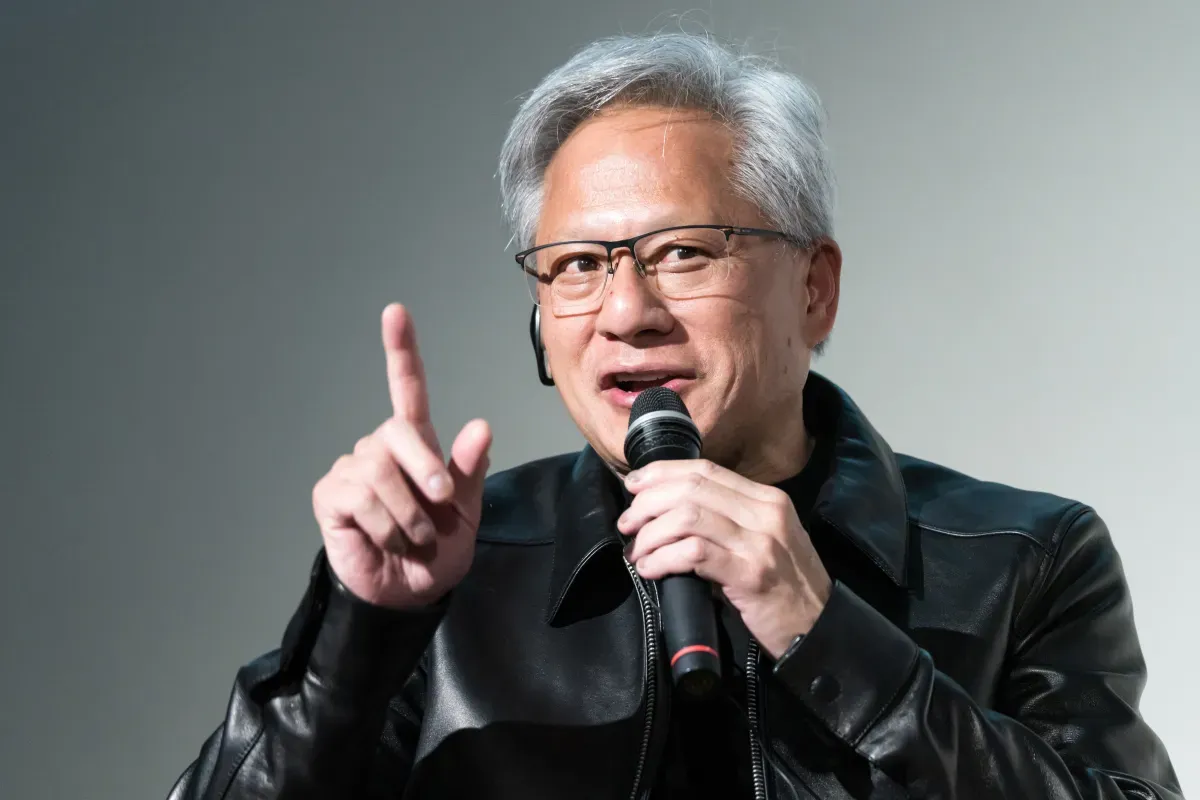
The SEC is reportedly opening a probe into Nvidia after CEO Jensen Huang departed, following his admission of an affair with an alleged Chinese spy, according to The Wall Street Journal. For boards and investors, the case fuses a governance crisis with a national security question, and the disclosure timeline is now the thing to watch.
The Securities and Exchange Commission is reportedly opening a probe into Nvidia, and the trigger is not a revenue restatement or an accounting dispute. It is the departure of CEO Jensen Huang, who admitted to an affair with an alleged Chinese spy, according to The Wall Street Journal, which first reported the investigation. TechCrunch relayed that report. That is the whole of what is publicly established right now: a regulator, a company, a departed chief executive, and an admission. The scope of the probe, whether it is an informal inquiry or a formal investigation, what documents have been requested, and whether Nvidia itself is a target or merely the entity under review, have not been detailed in the reporting.
The sequence matters. The exit came first; the regulatory attention followed. That ordering is what turns a personnel story into a corporate one. When a chief executive leaves under a cloud, the questions that follow are rarely about the executive alone. They are about what the board knew, when it knew it, and what the company told the market. Those are the questions securities regulators historically care about, because public companies carry a continuous obligation to disclose material information to investors. A probe that begins with a leadership shock tends to end up in the same place: the paper trail.
Nvidia is not a peripheral name. For context, its chips sit at the center of the global AI buildout, and it has ranked among the most valuable public companies in the world. A probe of any kind at a company of that scale ripples outward: into index funds held by ordinary retirement savers, into the supply chains of the cloud providers that buy its hardware, and into the dozens of startups that have built their own roadmaps around access to its products. That is why a single reported investigation can move more than one company's story.
Huang's personal standing compounds it. He has been the most recognizable figure at Nvidia for a long stretch of its history, and in tech, founder-led or long-tenured leadership is often treated as a moat in itself. Investors price continuity. When continuity breaks abruptly, and when the reason involves an admitted affair and an allegation of foreign intelligence ties, the market has to reprice something it had treated as fixed. That repricing does not wait for the SEC to finish anything.
The spy allegation is the part that does not fit neatly into a securities file. For context, Washington has spent years tightening rules around advanced semiconductor exports and scrutinizing foreign investment in US technology through the CFIUS process. An allegation of a foreign intelligence connection touches a different set of agencies and a different set of statutes than the SEC's disclosure regime. The reporting does not say whether any national security agency is involved. But the mere presence of that allegation in the same story as a regulatory probe is what makes this a board-level crisis rather than a compliance item.
What an SEC probe typically looks like: requests for documents and communications, interviews, and a long timeline measured in quarters, not weeks. Companies usually disclose such inquiries once they are material, and they typically say little else. That silence is not an admission. It is also not reassurance. For a board, the practical work runs in parallel: confirming the succession plan, auditing internal controls, and making sure that whatever the company has already told investors still holds. Directors who have not rehearsed that sequence are learning it in public.
The second-order effects are where peers should be paying attention. Any company with a founder-CEO, a concentrated leadership structure, or a bench that has never been tested will get asked the same question by its own directors: what happens if our top person leaves tomorrow, for a reason nobody planned for? Succession planning is usually a document that sits unread. Stories like this are why it gets read. The same logic applies to customers and suppliers who have quietly accepted single-name concentration risk because the name always delivered.
What to watch next: whether Nvidia confirms or comments on the reported probe, whether the inquiry is described as formal or informal, whether the board names an interim or permanent successor, and whether any other agency surfaces. Until then, the honest read is that the facts are thin and the stakes are not. A regulator, a departed CEO, and an allegation with geopolitical weight have landed on the same company at the same time. That combination is what makes this more than a headline.
This story's Key Insights and Take-aways are locked.
Create a free account to unlock Executive Actions for one credit.
Register to UnlockAlways free for Executives Club members. Join the Club
More in Technology

Anthropic mathematician claims Claude helped crack the Riemann hypothesis
If the proof holds, AI has toppled math's most famous open problem; if it does not, it is a case study in announcing breakthroughs before anyone verifies them.

AI's $4 Trillion Wipeout Erases Nasdaq's Gains for the Year
A brutal week took roughly $4 trillion off the AI sector and left the Nasdaq flat for the year, and the damage ran the full length of the supply chain.

Anthropic mathematician says AI proved the Riemann hypothesis. Verification will take time.
A single unverified claim from inside Anthropic now sits against more than 160 years of open mathematics, and the gap between asserting a proof and surviving peer review is the entire story.