
Shadow docket overtakes merits: Supreme Court issued 63 secret orders vs 56 last term
ProPublica found the court decided more cases in the “shadow docket” than in open court, with fewer signed explanations.
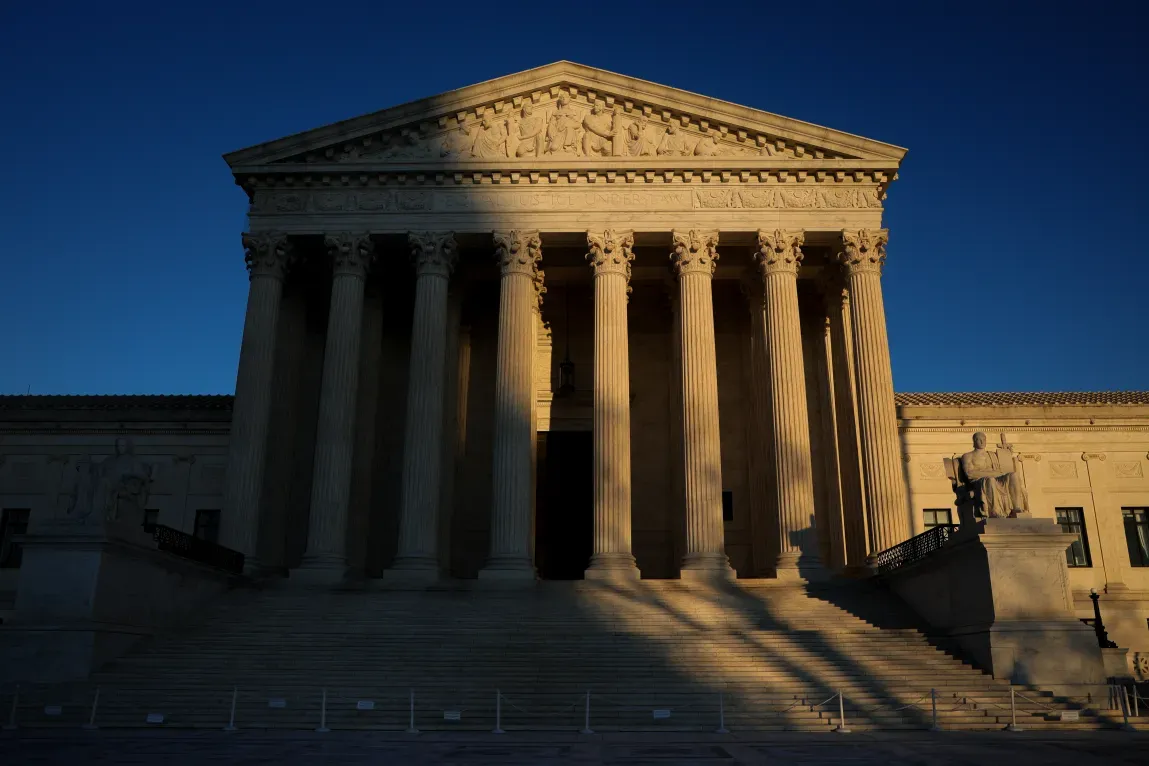
The Supreme Court’s term ended last October saw it issue 63 orders on the shadow docket versus 56 on the traditional merits docket, according to ProPublica’s analysis. For decision-makers, the consequence is a faster, less explained pipeline to nationwide impacts on courts, agencies, and even detention.
For the first time, the Supreme Court decided more cases in secret via its “shadow docket” than it did in open court last term. ProPublica’s analysis found 63 orders on the shadow docket when the term ended last October, compared with 56 orders on the more traditional merits docket, where justices hear oral arguments and issue signed opinions. The gap is not just procedural. Shadow docket decisions move faster, include fewer signed reasons, and often arrive before lower courts and regulated industries have much clarity about what, exactly, just changed.
This is happening while the court increasingly uses unsigned orders and limited explanation to resolve emergency requests. Those decisions are part of what’s known as the shadow docket, a fast-track mechanism for freezing or upending lower court rulings and government policies while a case works its way through appeals. ProPublica reports that the justices’ emergency path rarely includes arguments, typically has limited briefings and expedited timetables, and that justices infrequently explain how they voted or cite legal precedent. In short: the Supreme Court can effectively set policy momentum without the usual paper trail that builds public confidence and guides lower courts.
To understand why executives and board-level legal teams should care, you have to understand what emergency actions do in practice. A shadow docket case is often a request to skip the normal order of things and get a quick Supreme Court ruling. The court can grant or deny an application, sometimes with terse indications, and in rare situations, with an opinion. ProPublica found that just 17% of votes cast had any kind of public record of a vote or opinion. That’s a big deal for organizations that live under regulatory regimes where timing matters: when the Supreme Court intervenes quickly, it can reshape the operating environment before agency timelines play out, before nationwide injunctions are tested, and before lower courts settle into a stable interpretation.
The stakes are not abstract. ProPublica says these consequential outcomes include limiting federal courts’ ability to issue nationwide injunctions and diminishing Congress’ authority over federal agencies. The analysis also ties shadow docket rulings to allowing the detention of American citizens by immigration agents. And because the shadow docket can directly contradict longstanding legal precedent, the second-order effect is disruption: lower courts’ processes are thrown into turmoil, and legal systems struggle to decide which rules are now controlling.
ProPublica’s analysis looked across more than two decades of Supreme Court rulings, covering all years under Chief Justice John Roberts and going back as far as the online archives allow. It also found the broader context that matters to anyone tracking judicial risk: the court’s increased willingness to bypass the regular merits process has come as President Donald Trump’s administration has also increased use of executive authority. The court has repeatedly green-lit policies Trump supported that lower courts had blocked, and ProPublica frames this as an empowerment dynamic, not a coincidence.
The article also highlights why scrutiny intensified. In September 2021, the Supreme Court used the shadow docket to issue a one-paragraph, unsigned opinion that further rolled back abortion rights established by the 1973 Roe v. Wade ruling. The court refused to block Texas’ Senate Bill 8, the “Heartbeat Act,” which banned abortion after an embryo’s cardiac activity is detectable, typically at six weeks of pregnancy and before many people know they are pregnant. Protests erupted nationwide, and the Senate held a hearing on the shadow docket. ProPublica notes that Justice Elena Kagan referenced the shadow docket by name in a dissent, accusing the majority of green-lighting a “patently unconstitutional law” with only a cursory review in less than 72 hours. Even when that dissent is the exception, the episode shows how quickly emergency decisions can reach real life.
The incentives around this process are also a source of conflict. Parties file emergency applications, and Justice Samuel Alito argued, according to ProPublica, that the court is not to blame for the rise in shadow docket cases, saying, “We do not file these emergency applications.” But ProPublica reports that in recent years justices have referred more such appeals for full-court review. Until the past Supreme Court term, emergency applications fluctuated year to year without a clear upward trend, but last term’s surge under Trump changed the calculus, helping shift the balance such that shadow docket overtook merits docket when both more cases and more referrals to the full court were in play.
For executives, board members, and investors, the practical risk is that the legal environment can shift faster than internal compliance cycles, contracting assumptions, and regulatory strategies. When the Supreme Court can intervene with limited explanation and rare transparency of votes, the “how we got here” matters less than the “now what” of enforceable outcomes. ProPublica reports that representatives from the Supreme Court did not respond to a detailed list of questions, and a White House spokesperson said, “President Trump has faced a historically unprecedented number of injunctions by liberal lower court judges, the same judges who would rather push their own policy schemes and undermine the Administration’s lawful agenda. President Trump will not stop implementing the America First initiatives on which he was elected.” Whether you interpret that as context or justification, the governance reality is the same: when courts accelerate and explanations lag, compliance uncertainty becomes a business cost. Boards that treat legal developments as slow-moving background noise are now working under a system where the “emergency” pipeline is increasingly the main event.
This story's Key Insights and Take-aways are locked.
Create a free account to unlock Executive Actions for one credit.
Register to UnlockAlways free for Executives Club members. Join the Club
More in Politics

Glacial collapse, not rain, killed 180 in Nepal's Himalayan flood
The Himalaya's extreme geography hid the true cause of Nepal's catastrophic flood, a glacial collapse that turned a geological battleground into a mass-casualty zone.

Iran’s Esmail Baghaei says Oman talks start shipping via Hormuz, not US talks yet
Temporary route plans with Oman aim to restart commerce while Tehran says Washington dialogue is not on the table.

Standards watchdog opens probe into Reform UK deputy leader Richard Tice over interests
The parliamentary standards commissioner says it began an investigation on 28 July into a possible undeclared interest.