

Sheinbaum rejects extradition for Sinaloa’s Rocha after April 29 drug-corruption indictments
The U.S. wants arrests of 10 Mexican officials; Mexico says no, and the punishment question is now on deck.
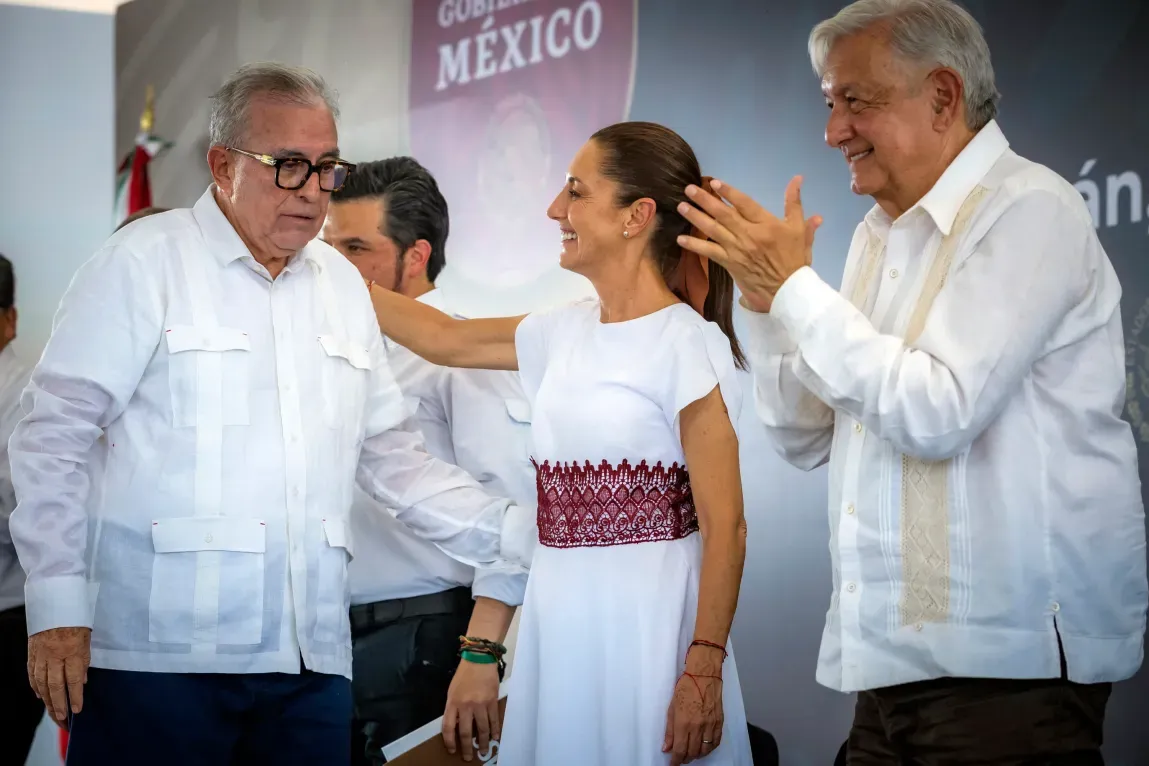
President Claudia Sheinbaum is refusing to arrest or extradite Rubén Rocha Moya and other Mexican officials charged in a New York federal court in indictments announced April 29. The standoff tests whether the Trump administration will escalate beyond threats into real pressure on Mexico’s political class.
President Claudia Sheinbaum’s answer to the U.S. request is blunt: she will not arrest Rubén Rocha Moya and other Mexican officials charged in the United States. The impasse follows indictments announced April 29 in a New York federal court, including the governor of Mexico’s Sinaloa state, Rocha, a close ally of Sheinbaum and a prominent figure in her leftist party. While U.S. Justice Department officials have yet to present a full picture of their evidence, Mexican officials said Sheinbaum has decided no on extraditing Rocha and the others.
That decision matters because the Trump administration has been escalating pressure on Mexican drug traffickers and, increasingly, on Mexican government figures accused of protecting the drug trade. By elevating the drug issue and threatening harsh economic penalties if Sheinbaum would not join forces, Washington pushed Mexico to dramatically escalate counter-drug efforts. And while Sheinbaum’s security forces have worked with U.S. intelligence and law enforcement agencies, destroying clandestine drug labs, seizing large caches of drugs, and killing or capturing ranking crime bosses, the key question now is whether the U.S. can compel high-level political accountability in a way Mexico will accept.
Zoom out and you get the shape of the fight: both countries have intensified cooperation, but U.S. officials acknowledge privately that it has emphasized tactical strikes and short-term gains rather than a coherent longer-term strategy to undermine organized crime groups, confront endemic corruption, or strengthen Mexico’s criminal justice system. To many senior Trump administration officials, especially in the Justice Department and the White House, attacking the high-level corruption that sustains the drug trade is the crucial next step. They have argued it is something U.S. prosecutors should take aggressively if Mexico will not do it, according to U.S. officials who spoke on condition of anonymity to discuss internal deliberations.
But diplomacy is not just a legal puzzle. Some diplomatic and intelligence officials are wary of pushing Sheinbaum too hard, viewing her position as precarious. Their concern is second-order and political: demanding she take on her own party’s old guard could backfire, prompting her to pull back on cooperation with the U.S. on drug enforcement and immigration policies. In other words, this is not only about Rocha. It is about whether Washington’s legal pressure strategy strengthens or strains the operational partnership.
The impasse also sits inside a Mexican power question that Mexico’s political class has been obsessing over nearly two years into Sheinbaum’s presidency: how independent is she from Andrés Manuel López Obrador, the commanding figure in their National Regeneration Movement. After keeping largely silent on Mexico’s changing relationship with Washington, López Obrador thrust himself into the debate on June 3 with a blistering attack on the New York indictments. He claimed U.S. officials were using drug corruption as a pretext to undermine Morena, Mexico’s leftist party, writing: “To be clear,” some U.S. officials are plotting to weaken Morena and strengthen the rightist opposition in Mexico with the idea of once again having a submissive, corrupt, mafioso and cruel government, and that such a regime would be more amenable to Washington’s “interventionist designs.” Sheinbaum tried to downplay the significance of the former president’s screed, but Mexican officials said the missive did not dispel suspicions that López Obrador continues to pull strings.
In this framing, Sheinbaum’s unyielding response looks less like defiance for its own sake and more like risk management. A Mexican security expert, Eduardo Guerrero, said in an interview that the message from López Obrador was essentially: “Claudia, you have to stop this or they are going to destroy us.” The logic is that if accused officials cooperate with U.S. authorities in the Rocha case, the Trump administration could target other Morena leaders, including key allies of López Obrador. The threat is not only legal, it is cascading. Guerrero also added a grim timeline implication: the longer Rocha is not turned over, the tougher the punishment from the United States is going to be.
For executives and boards watching this kind of cross-border enforcement, here is the operational reality behind the headlines: Sheinbaum inherited security and political constraints from her predecessor, and the U.S.-Mexico relationship has been evolving under fire. Rocha’s political trajectory helps explain why the standoff is so combustible. When Rocha was elected in 2021 as governor of Sinaloa, an enduring stronghold of the drug trade, he was known as a skilled political operator and a close friend of López Obrador. Opposition parties and civic groups assailed his campaign for what they called the “blatant role” criminal gangs played on Rocha’s behalf, including intimidating voters, stuffing ballot boxes, and kidnapping and threatening numerous opposition candidates, despite complaints to Mexico’s elections authorities. López Obrador and Sheinbaum defended Rocha, and Rocha insisted he had nothing to do with the mafias while suggesting governing the state required coordination with them: “You have to find a way to do it,” he said in a television interview during the campaign.
Then came July 2024, when questions exploded again after Joaquín Guzmán Loera, known as El Chapo, was followed by an audacious kidnapping involving his longtime partner in the Sinaloa cartel, Ismael Zambada García. A son of El Chapo, Joaquín Guzmán López, kidnapped his father’s partner and flew Zambada across the U.S. border, delivering him to U.S. agents on an airstrip in New Mexico while surrendering himself. Zambada, in a statement released by his lawyer, said he was kidnapped outside Culiacán, Mexico’s state capital, when he went to meet Rocha and a Sinaloa congressman, Héctor Cuén, who Zambada claimed wanted the drug boss to mediate a dispute. Instead, Zambada claimed he was betrayed by Guzmán while Cuén, described by Zambada as “a longtime friend,” was murdered. Rocha at the time denied any involvement, saying he was traveling in Los Angeles. A spokesperson for the state government, from which Rocha has taken a leave of absence, said it would not comment on the accusations.
The current standoff, anchored by the April 29 indictments, now puts the Trump administration’s escalation theory to the test. U.S. enforcement chief Terrance C. Cole, head of the Drug Enforcement Administration, told the Senate Appropriations Committee in May that the Sinaloa indictments were “just the start,” and when asked two weeks after the indictment about plans for dealing with Mexican corruption, said: “I can assure you this is just the start about what’s to come in Mexico.” That statement collides with Mexico’s refusal and Sheinbaum’s need to manage her internal political coalition. The second-order stakes are clear: if Washington’s pressure triggers a reduction in Mexico’s operational cooperation, counter-drug effectiveness could be undermined even as corruption cases expand. If it does not, the message to other political figures is that legal exposure can outrun diplomatic friction.
In the end, the impasse is a stress test of enforcement credibility on both sides. For leaders, it is a question of whether partnerships based on shared tactical wins can survive a shift toward targeting political corruption at the top. For everyone watching from adjacent industries and policy ecosystems, it is also a reminder that cross-border enforcement is a systems problem. One missed arrest can ripple into intelligence-sharing, immigration coordination, and the political stability required to keep the next crackdown running.
This story's Key Insights and Take-aways are locked.
Create a free account to unlock Executive Actions for one credit.
Register to UnlockAlways free for Executives Club members. Join the Club
More in Politics

Glacial collapse, not rain, killed 180 in Nepal's Himalayan flood
The Himalaya's extreme geography hid the true cause of Nepal's catastrophic flood, a glacial collapse that turned a geological battleground into a mass-casualty zone.

Iran’s Esmail Baghaei says Oman talks start shipping via Hormuz, not US talks yet
Temporary route plans with Oman aim to restart commerce while Tehran says Washington dialogue is not on the table.

Standards watchdog opens probe into Reform UK deputy leader Richard Tice over interests
The parliamentary standards commissioner says it began an investigation on 28 July into a possible undeclared interest.