

Shoebox satellite could sniff nuclear warheads from orbit, Nature reports
A new orbital detector concept aims to spot the telltale signal of hidden nuclear devices, with bigger implications for space security.
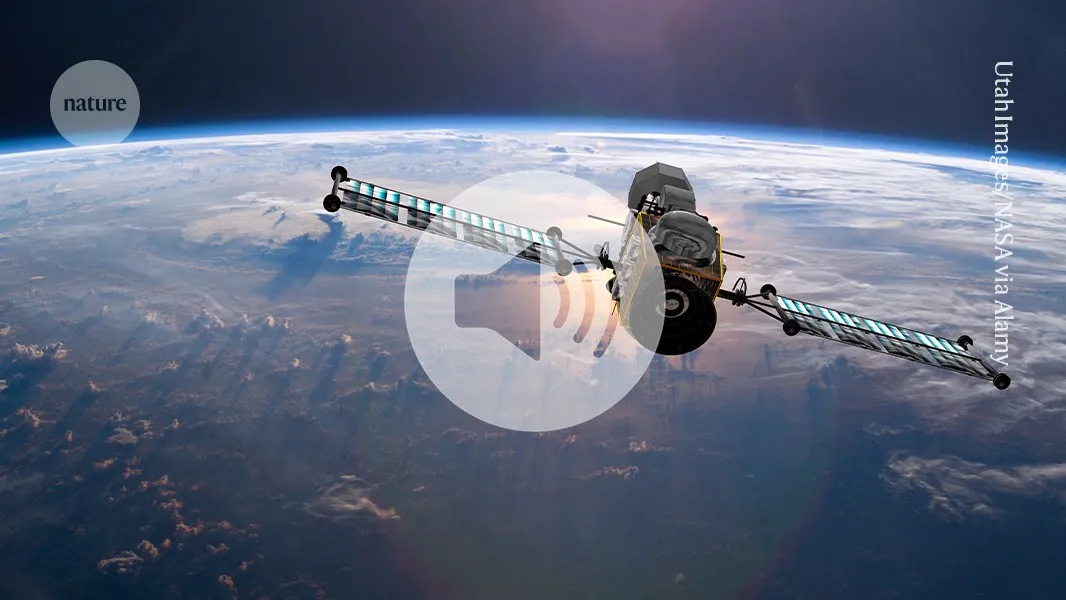
Nature reports on a shoebox-sized detector satellite designed to identify the telltale signal of a hidden nuclear device. For decision-makers, it raises new questions about how quickly deterrence and verification tools can move into orbit.
Nature, in a piece published online 08 July 2026 (doi:10.1038/d41586-026-02141-z), describes a shoebox-sized detector satellite that could identify the telltale signal of a hidden nuclear device. The core idea is simple: instead of relying only on ground-based monitoring and intelligence, a small orbital detector could look for a signature that warheads give off, even when devices are hidden.
That matters because nuclear verification is hard, slow, and politically loaded. If the “tell-tale signal” is detectable from orbit, then the information gap between a suspected test or deployment and a confirmed assessment shrinks. In other words, a satellite-based sensor is not just a technical upgrade. It is a potential shift in who gets early clarity, and how quickly decision-makers can act. This is exactly the kind of capability change that can alter bargaining leverage, escalation risk, and the timeline for diplomacy.
So why is a detector the size of a shoebox a big deal? In space, smaller is usually cheaper, faster to iterate, and easier to deploy in constellations. That can be strategically relevant. A single, bulky system is easier to miss, schedule, or defend against. A compact platform can be produced and launched with less friction, potentially allowing multiple viewpoints. If multiple satellites can scan the same region or pass over relevant orbits repeatedly, the chance of capturing a signal during critical windows improves. That is not a guaranteed outcome, but it is the kind of second-order logic that boards and governments pay attention to when they hear “small satellite” paired with “detection.”
There is also a regulatory and governance angle, because any sensor that could help detect nuclear devices touches sensitive international ground. Nuclear monitoring sits in a web of treaties, norms, and national security constraints. Even when the technology is described as an orbital detector with a specific signal target, the practical effect is broader: it changes the monitoring landscape. Decision-makers in defense, space, and arms control policy will immediately ask where data would come from, how it would be shared, and what happens when nations disagree on interpretation. Verification tools, by design, can become bargaining tools in real time.
And there is a second thread in the Nature report that decision-makers should not overlook. The same item notes that Indigenous plant knowledge is under threat. That may sound unrelated to nuclear detection, but it is a reminder that space security and scientific innovation do not happen in a vacuum. Space programs, detector development, and broader research ecosystems operate alongside environmental stewardship and cultural knowledge systems. Executives who sponsor research and build scientific partnerships increasingly have to manage both the technology agenda and the social license that comes with research activities.
For boards and leadership teams, the strategic stake is this: orbital detection concepts can compress uncertainty, which can compress decision timelines. That means organizations need to be ready for faster signals, faster scrutiny, and faster consequences. A capability that supports identifying a hidden nuclear device from orbit could influence how governments evaluate risks, how alliances coordinate, and how companies in space and defense position themselves. Even firms not directly building satellites will feel it, because the customers and regulators around them will move their priorities, budgets, and compliance expectations.
If you are an executive tracking space infrastructure, national security tech, or verification capabilities, the headline takeaway is not “nukes in space” as a headline fantasy. It is the more grounded shift: a shoebox-sized detector satellite concept is aimed at detecting the telltale signal of a hidden nuclear device. That kind of sensing, if feasible at scale, can make deterrence and verification more immediate, and it can force new governance questions faster than existing processes are usually designed to handle.
This story's Key Insights and Take-aways are locked.
Create a free account to unlock Executive Actions for one credit.
Register to UnlockAlways free for Executives Club members. Join the Club
More in Science

Alaska's 1,580-foot tsunami had warning signs. Scientists just found them.
Rapid glacier retreat, heavy rainfall, and thousands of tiny tremors preceded Alaska's 1,580-foot tsunami, a warning for every coastal community in a warming world.

The rare mutation that lets high-risk brains dodge Alzheimer's
Scientists found a natural defense against protein buildup, opening a new path to preventive treatments.

3,000 steps a day may halve Alzheimer's decline, study finds
New research links a modest daily walk to less tau buildup and nearly half the cognitive and functional decline, even for those with early signs.