
Sony's Walkman cost $200 in 1980. Today it would run about $780.
The TPS-L2's inflation-adjusted price tag explains why Sony's hi-res Walkman players still sell for thousands, and why the company that invented portable music lost the category anyway.
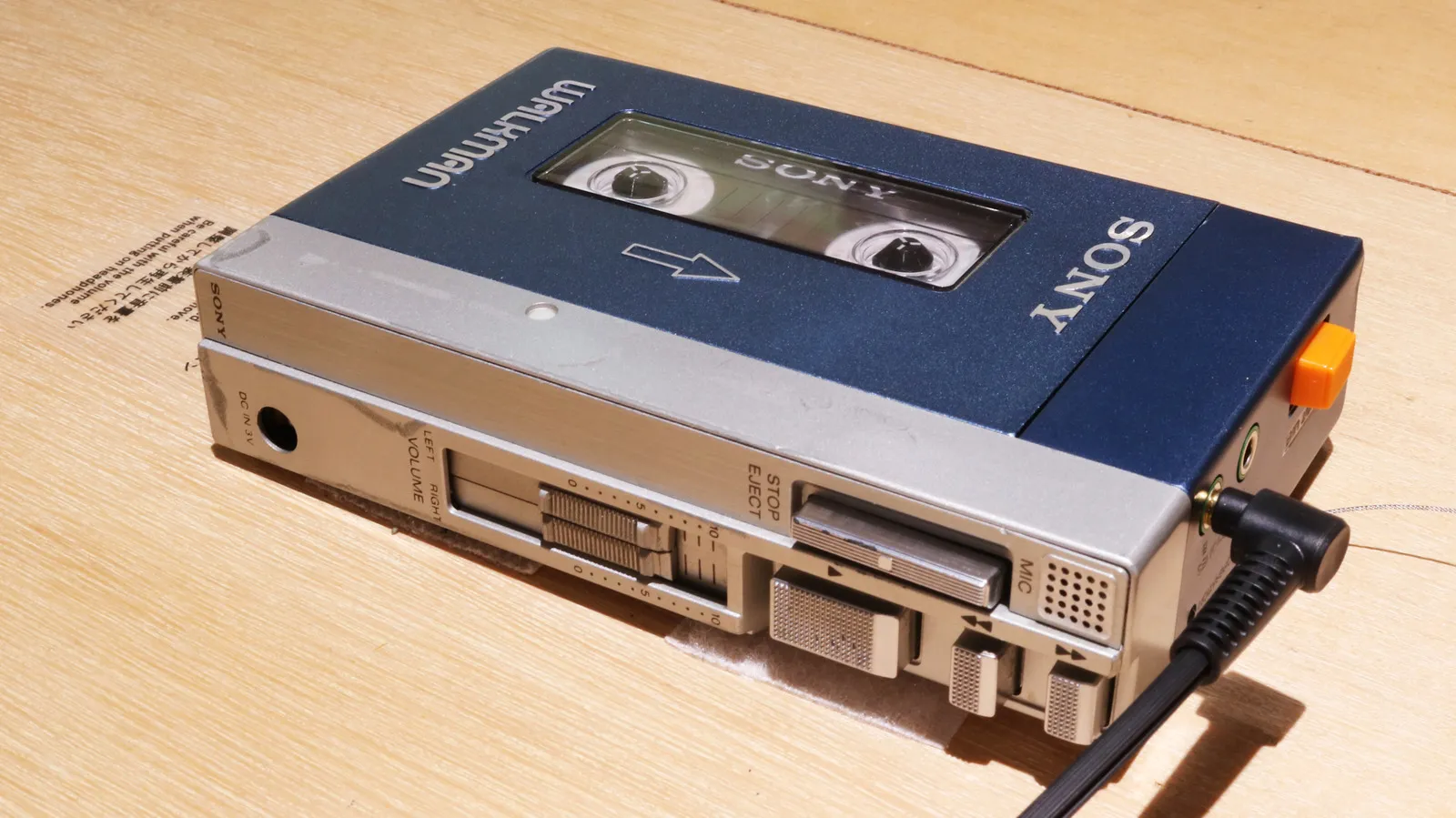
Sony's original TPS-L2 Walkman, launched in Japan in 1979 and in the US in 1980 at $199.95, would cost roughly $750 to $800 in today's dollars, a premium price point Sony still commands with its hi-res Walkman line. For operators, the number is a reminder that premium pricing power is a perishable asset: Sony held it for two decades before Apple took the category with a cheaper device.
Sony's first Walkman, the TPS-L2, went on sale in Japan on July 1, 1979, for 33,000 yen. When it reached the United States in 1980, it carried a list price of $199.95. Run that through four and a half decades of inflation and you land somewhere between roughly $750 and $800 in today's dollars, depending on which price index you use. That is the answer to the question Engadget set out to ask, and it is a stranger answer than it first looks. The gadget that invented the personal soundtrack cost more, in real terms, than a PlayStation 5 or a pair of AirPods Pro. And people bought it anyway.
Sony's own forecast was modest. By most accounts the company planned to move a few thousand units a month, a rounding error for a conglomerate already selling Trinitron televisions by the million. Instead, the TPS-L2 blew through its early production runs, and Sony had moved tens of thousands of units within the first two months. The lesson was not that people wanted cheap music. It was that they wanted private music, and they would pay a premium to get it. That is a pricing insight most hardware founders still underrate: willingness to pay is set by the experience, not the bill of materials.
The device exists because Masaru Ibuka, Sony's co-founder, wanted to listen to opera on long-haul flights. He asked for a portable stereo cassette player he could use with his own headphones. Akio Morita, the other co-founder, saw a consumer product where his partner saw a travel convenience. Sony's engineers stripped the recording function out of the Pressman TM-1, a portable cassette recorder built for journalists, and rebuilt it around playback. What they kept was telling. Two headphone jacks, so two people could listen at once. A 'hot line' button that let the wearers talk to each other without removing their headphones. The first Walkman was designed as a shared experience, not a solitary one.
The name was almost an accident. Sony's marketing teams wanted 'Soundabout' for the United States and 'Stowaway' for the United Kingdom. 'Walkman' was the Japanese-market placeholder, a piece of Japanese-English wordplay that executives reportedly disliked. Morita overruled them, and the placeholder became one of the most valuable brand names in consumer electronics. That decision is worth studying on its own. The company chose a weird, memorable, slightly awkward word over two safe, forgettable ones, and the weird word won. Naming is not a rounding error in a product launch. It is the first piece of positioning a customer ever hears.
The Walkman line went on to sell well over 200 million units across the cassette, CD, and MiniDisc eras. Sony finally stopped shipping cassette Walkmans in 2010, years after the iPod had taken the category. That is the part of the story that still stings. Sony invented the portable music player, owned the category for two decades, and then watched Apple build a better one on top of a hard drive and a music store. The company that had the nerve to name a product 'Walkman' did not have the appetite to cannibalize it.
The Walkman name did not die. Sony revived it for a line of high-resolution digital audio players aimed at people who will pay four figures for a headphone jack. The current flagship, the NW-WM1ZM2, sells for several thousand dollars and is built around a chassis machined from oxygen-free copper, a material chosen because it is non-magnetic and, in Sony's telling, produces a cleaner signal. The mid-tier NW-ZX707 sits in the high hundreds. These are not mass-market products. They are halo products, and they exist because a small, wealthy, obsessive segment of listeners never stopped caring about the difference between good enough and better.
Here is the executive takeaway hiding inside the inflation math. The TPS-L2's real price in 2026 dollars is roughly what Sony charges today for a premium hi-res player, which means the company has spent 45 years holding the line on a premium price point in a category that keeps getting commoditized. That is not luck. It is brand equity, and it is the single hardest asset for a hardware company to build and the easiest to lose. Apple proved that a better product at a comparable price can take a category in a few years. Sony proved that a category leader can spend a decade assuming it cannot happen.
For founders and operators, the Walkman's real lesson is about the window. Sony had a decade of dominance and a clear view of where digital was heading, and it still ceded the market. The inflation-adjusted price tag is a fun piece of trivia. The reason it deserves your attention is that it measures how much pricing power a genuinely novel product can command, and how quickly that power evaporates when the next novel product shows up. The TPS-L2 costs about $780 in today's money. The iPod launched at $399 in 2001, roughly $720 in today's dollars. The replacement was cheaper, and that was the whole point.
This story's Key Insights and Take-aways are locked.
Create a free account to unlock Executive Actions for one credit.
Register to UnlockAlways free for Executives Club members. Join the Club
More in Technology

Anthropic Mathematician Claims Claude Helped Prove Riemann Hypothesis in Six Weeks
Levent Alpöge says the AI tool helped him develop a solution to one of math's most important unsolved problems in about six weeks, a claim that, if verified, would reshape AI's role in research.

Asahi Pours $85M Into AI Cyber Defense After Ransomware Hit
Japan's beverage giant is rebuilding its security stack around AI, and the $85 million price tag is a warning to every board still treating cyber risk as an IT line item.
Signal kills mobile screenshots to fight the 'existential threat' of AI surveillance
The encrypted messaging app is closing the one hole encryption never covered, the screenshot button, as AI tools get better at reading everything on your screen.